
.svg)

CBSE Class 10 is an important academic year for students preparing for their Board examinations and planning their next academic step. For the 2026-27 session, students should follow the latest CBSE curriculum and use reliable study resources to build concepts, practise questions and revise effectively for the Board Exam 2027.
Educart brings essential CBSE Class 10 study material for 2026-27 together in one place, including the latest syllabus, NCERT books, NCERT solutions, notes, important questions, question banks, sample papers and previous year question papers.
Whether you are starting your preparation, practising chapter-wise questions or revising before the Board exams, use the resources below to plan your CBSE Class 10 preparation systematically.
CBSE Class 10 Subjects 2026-27
CBSE Class 10 students study languages, core academic subjects and, depending on their school and subject combination, skill or elective subjects. Common Class 10 subjects include:
- English Language and Literature
- Hindi A
- Hindi B
- Mathematics Standard
- Mathematics Basic
- Science
- Social Science
- Information Technology
- Artificial Intelligence
- Other languages, skill subjects and electives offered by the school
Students should check the latest subject-wise CBSE curriculum for the subjects applicable to them.
CBSE Class 10 Syllabus 2026-27
The CBSE Class 10 syllabus 2026-27 is the starting point for your Board exam preparation. It tells you what you need to study and provides important information about the course structure, prescribed books and assessment requirements.
Before beginning your preparation, use the latest syllabus to:
- Check all chapters and topics included in each subject.
- Understand the subject-wise course structure.
- Identify prescribed textbooks and learning resources.
- Check theory and internal assessment requirements.
- Plan your study schedule according to the syllabus.
- Track completed and pending topics during revision.
Tip: Keep the latest syllabus as your preparation checklist and revise it before starting a new study phase to make sure you are covering the prescribed curriculum.
Stay updated with the CBSE Date Sheet 2027 to plan your Class 10 board exam preparation timeline.
CBSE Class 10 NCERT Books 2026-27
NCERT Class 10 Textbooks are an essential part of CBSE Class 10 preparation. They provide the prescribed concepts, explanations, examples and exercises that students should understand before moving to additional practice material.
How to Use NCERT Books Effectively
- Read each chapter carefully and understand the concepts.
- Work through the examples and textbook exercises.
- Mark definitions, formulas, diagrams and concepts that need revision.
- Make short revision points for difficult topics.
- After completing a chapter, practise additional questions.
- Revisit the NCERT chapter while analysing mistakes in sample and previous year papers.
Best CBSE Class 10 Books 2026-27
Along with NCERT textbooks, students can use CBSE Class 10 reference books and practice books for additional preparation. Educart offers Class 10 books for question practice, revision and exam preparation, including question banks, One Shot Question Banks, sample papers, solved papers and NCERT Exemplar books.
Explore Educart Class 10 Books 2026-27
Which Class 10 Book Should You Choose?
Choose your study material according to your preparation stage. Use question banks for chapter-wise and competency-based practice, sample papers and solved papers for exam simulation, and One Shot Question Banks when you need focused revision and practice.
Explore All CBSE Class 10 Books 2026-27
CBSE Class 10 NCERT Solutions 2026-27
CBSE Class 10 NCERT Solutions help students check their answers and understand the steps involved in solving textbook questions. They are particularly useful for Mathematics and Science, as well as for checking explanations and exercise answers in other subjects.
Use NCERT solutions to:
- Check your answers after attempting questions yourself.
- Understand difficult steps and concepts.
- Identify calculation or conceptual mistakes.
- Revise textbook exercises before examinations.
- Improve your approach to written answers.
Study tip: Attempt the textbook questions on your own first. Use the solutions to understand your mistakes instead of simply copying the answers.
CBSE Class 10 Notes 2026-27
CBSE Class 10 Notes are useful for quick chapter-wise revision after you have studied the concepts in detail. Well-organised notes can help you revise formulas, definitions, key points, dates, diagrams and important concepts in less time.
Use notes alongside your NCERT textbooks rather than treating them as a replacement. During revision, focus on the concepts and questions where you need the most improvement.
CBSE Class 10 Important Questions 2026-27
Practising CBSE Class 10 Important Questions can help you revise key concepts and become familiar with different question formats. Use them after completing the relevant chapters to identify weak areas and improve answer-writing skills.
Important questions are useful for:
- Chapter-wise practice
- Concept revision
- Identifying weak topics
- Practising application-based questions
- Improving answer-writing speed
- Final revision
Do not depend only on predicted questions. Use important questions together with the complete syllabus, NCERT textbooks, sample papers and previous year question papers.
CBSE Class 10 Question Bank 2026-27
A CBSE Class 10 Question Bank provides additional practice across different types of questions. Depending on the subject, it may include objective questions, competency-based questions, case-based questions, assertion-reasoning questions, short-answer questions and long-answer questions.
How to Use a Question Bank
- Complete the relevant chapter from NCERT.
- Attempt a varied set of questions without checking the answers first.
- Analyse mistakes and revisit the related concept.
- Mark questions that need another attempt.
- Revisit difficult topics during revision.

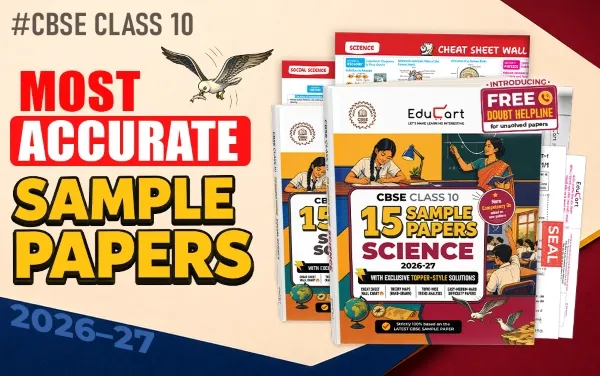
CBSE Class 10 Sample Papers 2026-27
CBSE Class 10 Sample Papers 2026-27 are useful for understanding the question paper format and practising under exam-like conditions. Solving sample papers regularly can improve speed, accuracy, time management and confidence.
Sample papers can help you:
- Become familiar with different question formats.
- Practise application and competency-based questions.
- Improve time management.
- Identify chapters that need more practice.
- Check your preparation under a fixed time limit.
- Improve answer presentation.
How to Solve a CBSE Class 10 Sample Paper
Treat each full-length sample paper like an actual examination. Follow the prescribed time limit, attempt the complete paper without referring to answers and evaluate your performance afterwards. Record the questions or concepts where you lost marks and revise them before attempting the next paper.
Note: Sample papers are practice resources and should not be treated as a guarantee of questions that will appear in the Board examination.
CBSE Class 10 Previous Year Question Papers
Solving CBSE Class 10 previous year question papers helps students practise questions asked in earlier examinations and understand how concepts have been assessed over time.
Previous year papers can help you:
- Understand different question formats.
- Practise complete papers within a time limit.
- Identify topics that require more practice.
- Improve speed and accuracy.
- Assess your preparation before the Board examination.
How to Use Previous Year Papers
Solve previous year papers after completing the relevant portions of the syllabus. For final preparation, attempt complete papers under timed conditions and analyse your mistakes afterwards. Pay attention not only to your score but also to the reason behind each lost mark—conceptual gaps, calculation errors, incomplete answers or poor time management.
CBSE Class 10 Exam Pattern 2026-27
Understanding the CBSE Class 10 exam pattern helps students prepare for the types of questions they may encounter and organise their practice accordingly. The exact paper structure and marks distribution can vary by subject, so students should always refer to the latest subject-wise CBSE curriculum and assessment documents.
During preparation, practise a mix of:
- Objective questions
- Short-answer questions
- Long-answer questions
- Application-based questions
- Case-based questions
- Competency-focused questions
- Source-based questions, where applicable
The focus should be on understanding and applying concepts rather than memorising answers.
CBSE Class 10 Board Exams 2027 – What Students Should Know
CBSE introduced the two-board-examination system for Class 10 from the 2026 examinations. Under the framework announced by CBSE, the first Board examination is mandatory for students, while eligible students can use the second examination to improve performance subject to the applicable rules.
Students preparing for the 2027 Board Exams should therefore follow the latest CBSE notifications and examination guidelines rather than relying on older information about the Class 10 examination system.
Keep track of:
- Board examination notifications
- Date sheets
- Subject-wise curriculum
- Sample question papers
- Examination guidelines
- Admit card updates
- Result and post-result facilities
CBSE Class 10 Preparation Tips for 2027
A consistent preparation strategy can help you cover the syllabus without depending on last-minute revision.
1. Start With the Latest Syllabus
Use the latest CBSE syllabus as your checklist and make sure every prescribed chapter and topic is covered.
2. Build Strong NCERT Concepts
Read the prescribed NCERT textbooks carefully and solve the textbook exercises before moving to additional practice material.
3. Follow a Realistic Study Schedule
Divide your time between subjects according to your strengths, weaknesses and school schedule. Include separate time for learning, practice and revision.
4. Practise Questions Regularly
Regular practice improves speed and accuracy. Mix chapter-wise questions with competency-based and application-based questions.
5. Solve Sample Papers and PYQs
Once you have completed enough of the syllabus, start solving full-length sample papers and previous year question papers under timed conditions.
6. Analyse Your Mistakes
Keep a mistake list and revisit recurring errors. Understanding why you lost marks is more useful than simply checking your final score.
7. Revise in Multiple Rounds
Plan more than one revision cycle. Use notes, formulas, important questions and marked textbook content for quick revision.
8. Improve Time Management
Practise completing papers within the prescribed time. Avoid spending too long on one question and leave time to review your answers.
9. Focus on Answer Presentation
Write clear, structured answers and use appropriate steps, headings, diagrams or examples wherever required by the subject.
CBSE Class 10 Study Plan
A simple three-stage approach can help you move from learning to exam readiness.
Stage 1: Learn
- Follow the CBSE syllabus.
- Complete NCERT textbooks.
- Understand concepts and examples.
- Make short revision notes.
- Identify difficult chapters.
Stage 2: Practise
- Solve NCERT exercises.
- Practise important questions.
- Use question banks for additional practice.
- Solve competency-based questions.
- Work on weak areas.
Stage 3: Test and Revise
- Solve sample papers.
- Attempt previous year papers.
- Follow exam-like time limits.
- Analyse mistakes.
- Revise formulas, concepts and difficult topics.
Frequently Asked Questions
Q1. What is the CBSE Class 10 syllabus for 2026-27?
Ans. The CBSE Class 10 syllabus 2026-27 contains the prescribed subjects, chapters, topics, course structure and assessment-related information for the academic session. Students should use the latest official syllabus for Board Exam 2027 preparation.
Q2. Which books should I use for CBSE Class 10 preparation?
Ans. NCERT textbooks should form the foundation of your preparation. You can supplement them with notes, important questions, question banks, sample papers and previous year question papers for additional practice.
Q3. Are NCERT books enough for CBSE Class 10?
Ans. NCERT books are essential for understanding the prescribed curriculum and building strong concepts. For additional practice and exam preparation, students can use question banks, sample papers and previous year question papers.
Q4. Where can I find CBSE Class 10 sample papers 2026-27?
Ans. You can find subject-wise CBSE Class 10 sample papers 2026-27 through the sample paper resources linked on this page. Also check the official CBSE Academic website for the latest official sample papers and assessment documents.
Q5. How many previous year papers should I solve for CBSE Class 10?
Ans. There is no fixed number that guarantees better preparation. Focus on solving enough papers to become comfortable with different question formats, improve time management and identify recurring weaknesses.
Q6. When should I start solving CBSE Class 10 sample papers?
Ans. Begin chapter-wise practice after completing the relevant topics. Once a substantial portion of the syllabus is complete, start attempting full-length sample papers under timed conditions.
Q7. How can I prepare for CBSE Class 10 Board Exam 2027?
Ans. Start with the latest syllabus and NCERT textbooks, build strong concepts, practise different question types, solve important questions and previous year papers, attempt sample papers under timed conditions and revise regularly.
Q8. Is Mathematics Basic different from Mathematics Standard in CBSE Class 10?
Ans. Yes. Mathematics Basic and Mathematics Standard are separate Class 10 Mathematics examination options. Students should follow the option applicable to them and check the latest CBSE rules and subject requirements.
Q9. What are the most important resources for CBSE Class 10?
Ans. The key resources include the latest syllabus, NCERT textbooks, NCERT solutions, notes, important questions, question banks, sample papers and previous year question papers.
Q10. Has CBSE introduced two Board Exams for Class 10?
Ans. Yes. CBSE introduced two Board examinations for Class 10 from the 2026 examinations. The first examination is mandatory, while eligible students may use the second examination for improvement according to the applicable CBSE rules. Students preparing for 2027 should check the latest official notifications for the current rules.
Q11. How can I score well in CBSE Class 10?
Ans. Follow the syllabus, understand NCERT concepts thoroughly, practise questions regularly, solve timed sample papers and previous year papers, revise multiple times and analyse your mistakes.
Q12. Where can I find the latest CBSE Class 10 updates?
Ans. For official announcements, students should check the CBSE and CBSE Academic websites. You can also follow Educart's CBSE Class 10 update and resource pages for study material and relevant academic updates.











.svg)

