.svg)
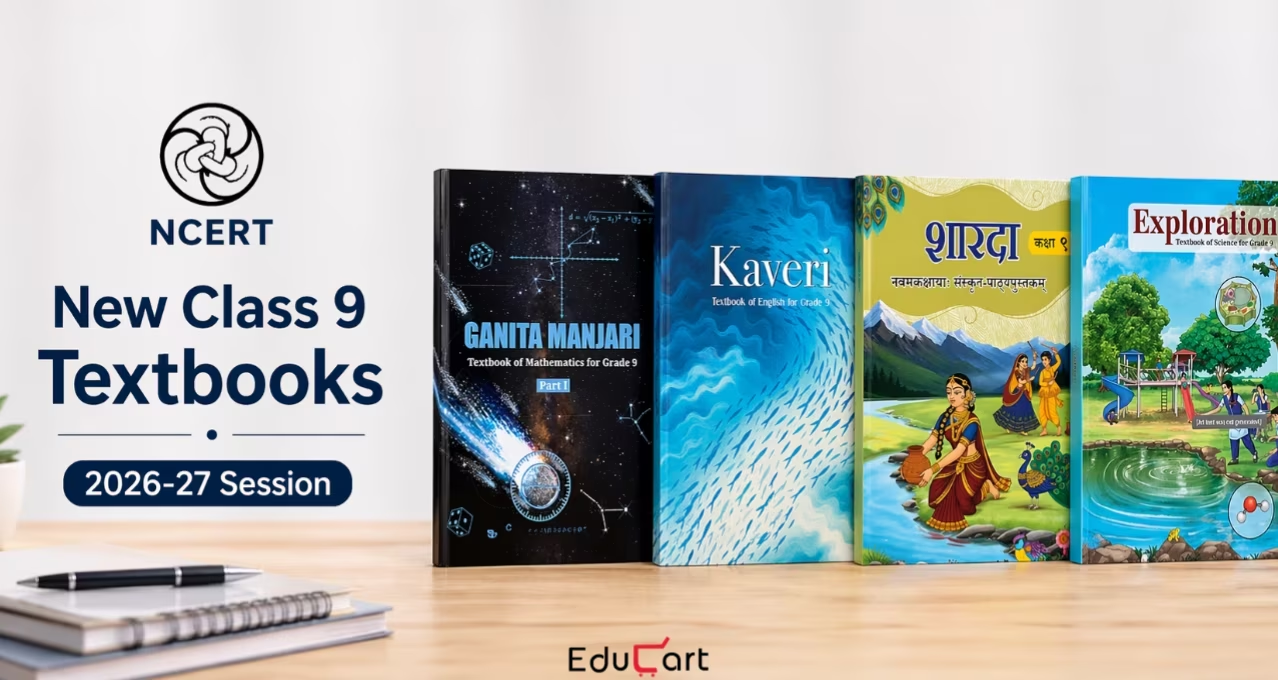
The National Council of Educational Research and Training (NCERT) has rolled out a fresh set of Class 9 NCERT textbooks for the academic session 2026-27, covering English, Sanskrit, Mathematics and Science.
The release marks the biggest curriculum change in more than 20 years. It is being introduced step by step under the National Education Policy (NEP) 2020 and the National Curriculum Framework for School Education (NCF-SE) 2023.

A Philosophy Shift: From Rote Learning to Competency
The new books move away from memorisation-based learning towards conceptual understanding, critical thinking and real-world application. Each subject now defines clear curricular goals, competencies and measurable learning outcomes, in line with the NCF-SE 2023 framework.
NCERT Director Dinesh Prasad Saklani shared that around 4,000 experts-including subject specialists, teachers, and academicians-helped create the new Class 9 textbooks. This is very different from earlier, when only small teams of authors worked on them.
Subject-wise NCERT New Textbooks Overview
Each of the four subjects has been updated - not in a way which only affects students' learning but also in how they are taught and tested. Here’s a simple look at what’s new in Class 9 English, Sanskrit, Mathematics, and Science.
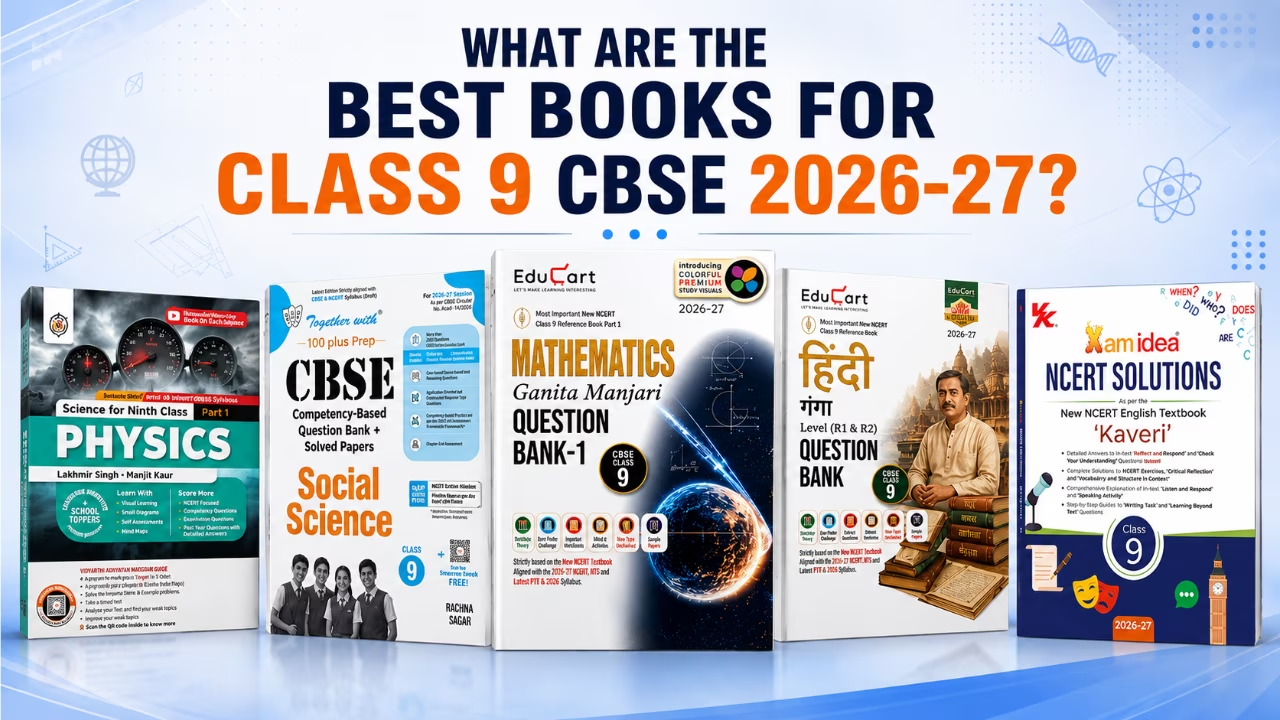
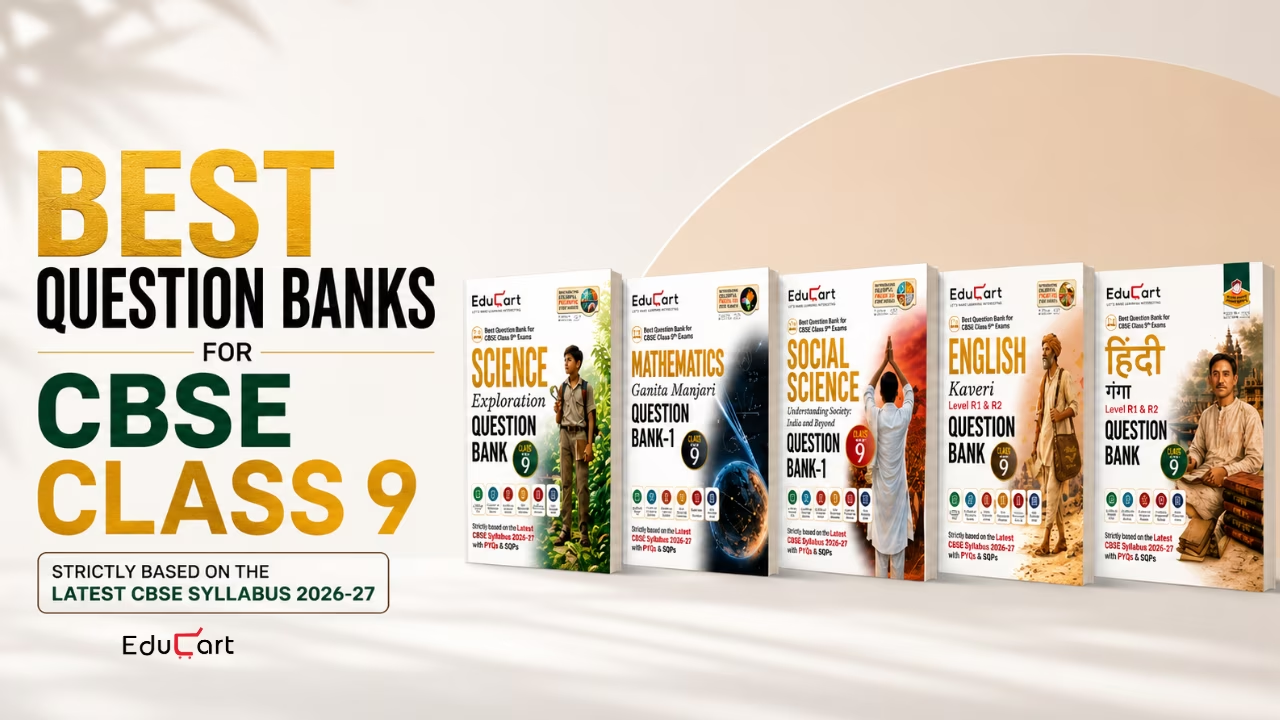
English - Kaveri
The Class 9 New NCERT English Book PDF 2026-27 is titled Kaveri, named after one of India's sacred rivers. It replaces the long-standing two-book system of Beehive (main reader) and Moments (supplementary reader) with a single integrated volume.
Key features of Kaveri include:
- 8 prose pieces and 8 poems, organised into 8 thematic units
- Integration of prose and poetry around common themes in each unit
- Content drawn from celebrated Indian writers, including Padma Shri and Sahitya Akademi awardees, alongside international authors
- Structured sections for Vocabulary and Structures in Context, Speaking Activity, Listen and Respond, Writing Task, and Learning Beyond the Text
- Emphasis on literary devices, persuasive writing, analytical paragraphs, and creative expression
Notable inclusions are How I Taught My Grandmother to Read by Sudha Murty, the documentary article Carrier of Words about a village postman in the desert, and The World of Limitless Possibilities, an interview with Paralympian Deepa Malik.
Sanskrit - Sharda (शारदा)
The Class 9 New NCERT Sanskrit Book PDF 2026 27 has been renamed Sharda (शारदा), replacing the earlier Shemushi. The book attempts to blend classical Sanskrit learning with contemporary themes such as artificial intelligence (AI) and financial literacy, reflecting the view that Sanskrit grammar offers one of the most logically structured foundations for computational thinking.
Alongside the new textbook, the CBSE syllabus for Class 9 Sanskrit has also been revised:
- Translation (अनुवाद) has been removed from the Writing section and replaced with Dialogue/Story Completion (संवादपूर्ति/कथापूर्ति)
- Tatpurusha Samas has been explicitly added to the Grammar section
- Ubhayapadi verbs and an expanded Avyaya list have been more clearly specified
- Grammar and Literature together continue to carry nearly 70 per cent of the theory paper weightage
Mathematics - Ganita Manjari Part 1
The Maths NCERT Class 9 New Book PDF has been completely redesigned and renamed Ganita Manjari Part 1. Under the CBSE Latest Maths syllabus, topics traditionally taught in Classes 10 and 11 - such as Arithmetic Progression, Pair of Linear Equations in Two Variables, Areas Related to Circles and Geometric Progression have been introduced at the Class 9 level.
Highlights of the new Mathematics curriculum include:
- A conceptual, activity-based approach that asks students to reason and explain rather than merely calculate
- Introduction of a two-level assessment system: a mandatory Proficiency Level for all students and an optional Advanced Level for those pursuing higher mathematics
- Chapter titles framed as inquiries rather than topic labels, encouraging exploration
- Strong emphasis on computational thinking, geometric visualisation of algebraic identities, and mathematical proofs
Science - Exploration
The Class 9 new NCERT Science Book PDF 2026, titled Exploration: Textbook of Science for Grade 9, is a completely new 13-chapter volume that integrates Physics, Chemistry, Biology and for the first time at this level - Earth Science. It was first published in April 2026. The key changes included are:
Key changes include:
- A move away from discipline-wise chapters to interdisciplinary, competency-based themes
- A new introductory chapter on how science works - covering models, predictions, scientific reasoning, and the link between science, mathematics and society
- The Gravitation chapter has been removed from Class 9 Physics
- The Work and Energy chapter has been expanded and renamed Work, Energy and Simple Machines, introducing levers, pulleys and inclined planes
- Greater emphasis on experiments, observation and real-world application
Hindi - Ganga
The Class 9 new NCERT Hindi Book PDF 2026-27 replaces the earlier four-book system (Kshitij, Kritika, Sparsh, Sanchayan) with one integrated book aligned with NEP 2020 and NCF-SE 2023. Some key changes are:
Key Points:
- 12 chapters (7 prose & 5 poems) & 2 supplementary readings
- Includes classics like दो बैलों की कथा (Premchand) along with modern writers
- Bhasha Sangam section promotes connection with other Indian languages
- Focus on communication skills, critical thinking, and creative expression
- Activity-based, discussion-driven learning approach
Syllabus Changes:
- 360° assessment system (formative, self & peer assessment)
- Some older chapters removed from previous books
- Writing section: 20 marks (creative and practical focus)
- Grammar simplified to core concepts
- Textbook (Ganga) carries 30 marks with focus on understanding, not rote learning
Why This Matters for Students and Teachers
With CBSE directing all affiliated schools to adopt the new class 9 ncert textbooks from the 2026-27 session itself, students will be assessed strictly on the revised content. Old editions of Beehive, Moments, Shemushi and the earlier Science and Mathematics books are no longer aligned with the prescribed curriculum. Students and parents refer to the CBSE Updated Syllabus Class 9 to understand the latest subject-wise changes and assessment expectations for the 2026-27 academic session.
Teachers, too, are being encouraged to shift classroom practice - from lesson delivery and question-answer routines to discussion, inquiry and application-based activities.
For students aspiring for competitive examinations such as JEE and NEET in 2028-29 and beyond, the National Testing Agency (NTA) is expected to align exam syllabi progressively with the new NCERT content.
The Bigger Picture
The 2026-27 rollout for Class 9 is the first phase of the Secondary Stage implementation of NCF-SE 2023. Similar curriculum and textbook changes are scheduled for Class 11 in the same session, while Classes 10 and 12 will transition in the 2027-28 academic year.
Overall, these changes are one of the biggest updates to India’s school education system in recent years. They not only change what students study, but also how they learn.
In Conclusion
The release of the new Class 9 textbooks - Kaveri, Sharda, Ganita Manjari Part 1 and Exploration - is an important step in improving school education in India.These books focus less on memorising answers and more on understanding concepts, asking questions, and applying knowledge in real life.
This means students will learn in a more practical and meaningful way.For parents, teachers, and students, the 2026–27 session is not just a new school year - it marks the start of a fresh approach to learning and education.
FAQs
Q1. Why has NCERT changed the Class 9 textbooks?
Ans. The textbooks have been updated to align with NEP 2020 and NCF-SE 2023, focusing more on understanding, critical thinking, and real-life application instead of rote learning.
Q2. What is the biggest change in the new curriculum?
Ans. The biggest change is the shift from memorisation to competency-based learning, where students are encouraged to think, analyse, and apply concepts.
Q3. Are old NCERT Class 9 books still valid?
Ans. No, old textbooks like Beehive, Moments, and earlier Science and Maths books are no longer aligned with the updated syllabus for 2026–27.
Q4. How will these changes affect exams?
Ans. Students will now be tested on understanding, application, and reasoning instead of just memorised answers.
Q5. Will these changes impact competitive exams like JEE and NEET?
Ans. Yes, exam patterns are expected to gradually align with the new NCERT content for future sessions.
Q6. Where can I download the updated NCERT books for Class 9 if I want them in digitalised form?
Ans. Students can download the updated NCERT books for Class 9 from the official website ncert.nic.in or from websites which provide trusted academic resources such as Educart.
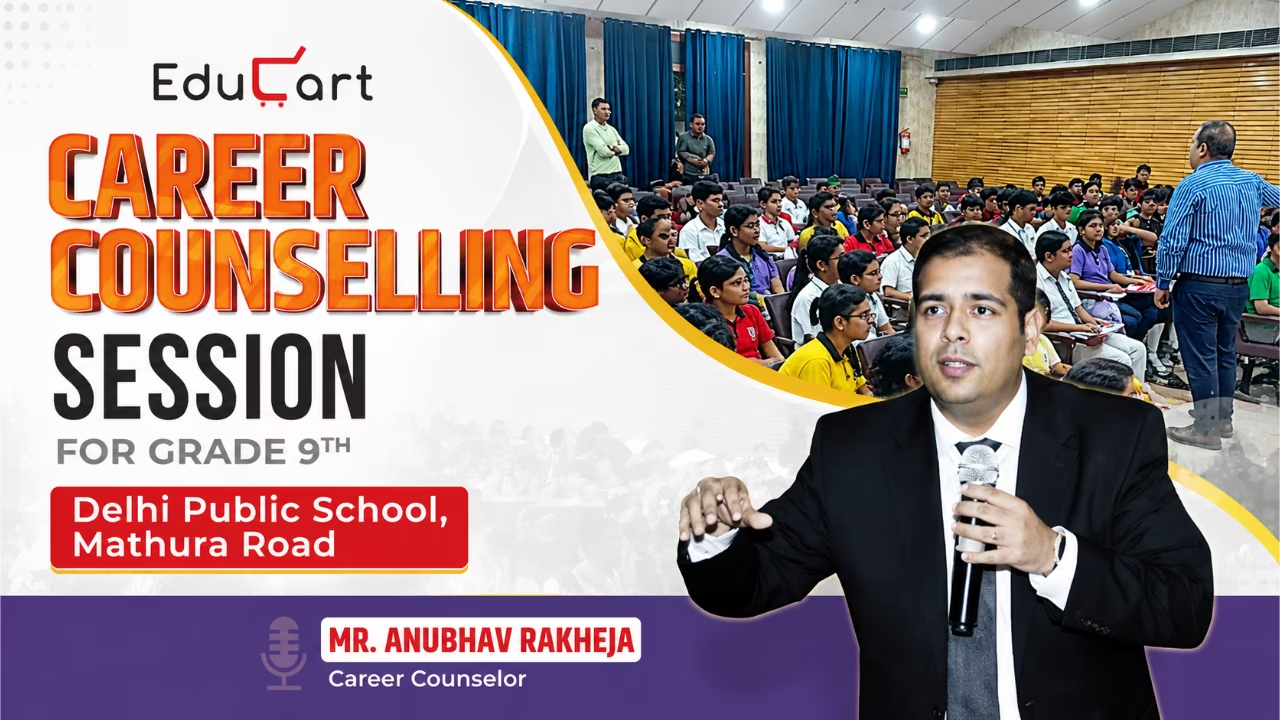
Glimpse of the Event

Share Article


.svg)




%2520(1).avif)
















.svg)

