
.svg)
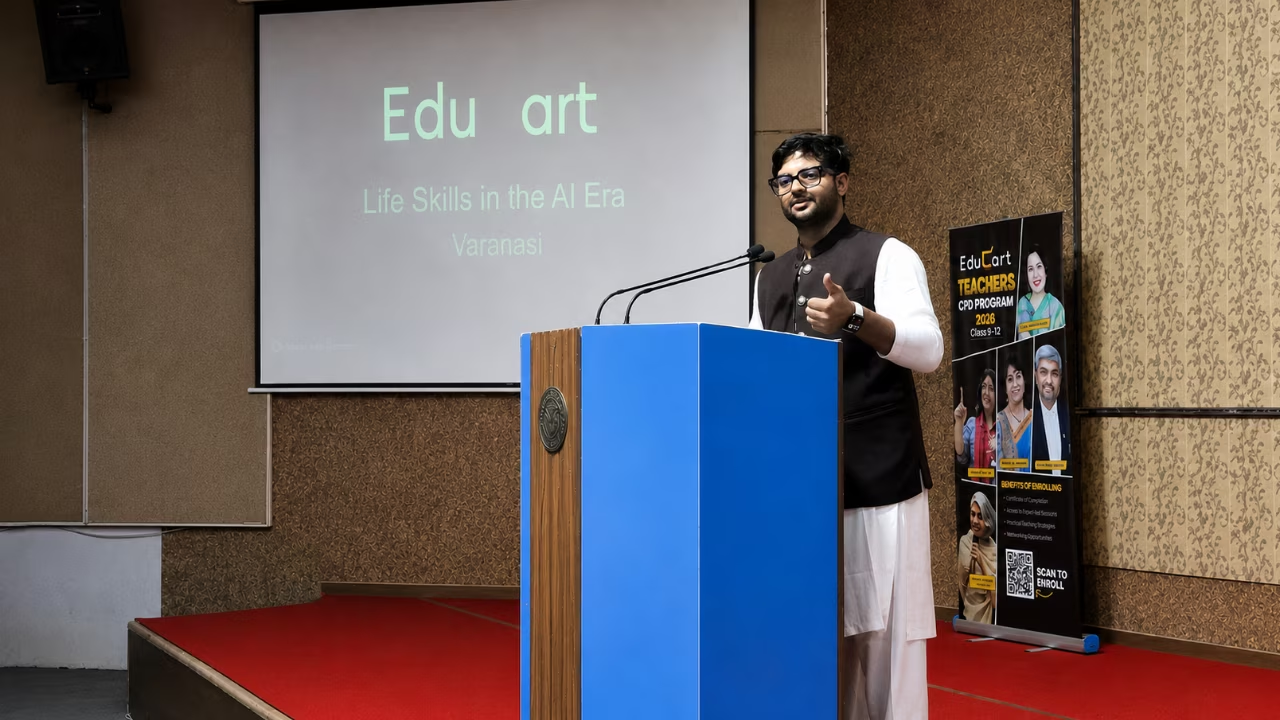
In the city of temples and ghats, Varanasi, Educart conducted a Teachers’ Training Workshop on 26th July, 2026. The workshop was meant to bring principal, and educators together for a discussion on the changing role of education in the age of AI.
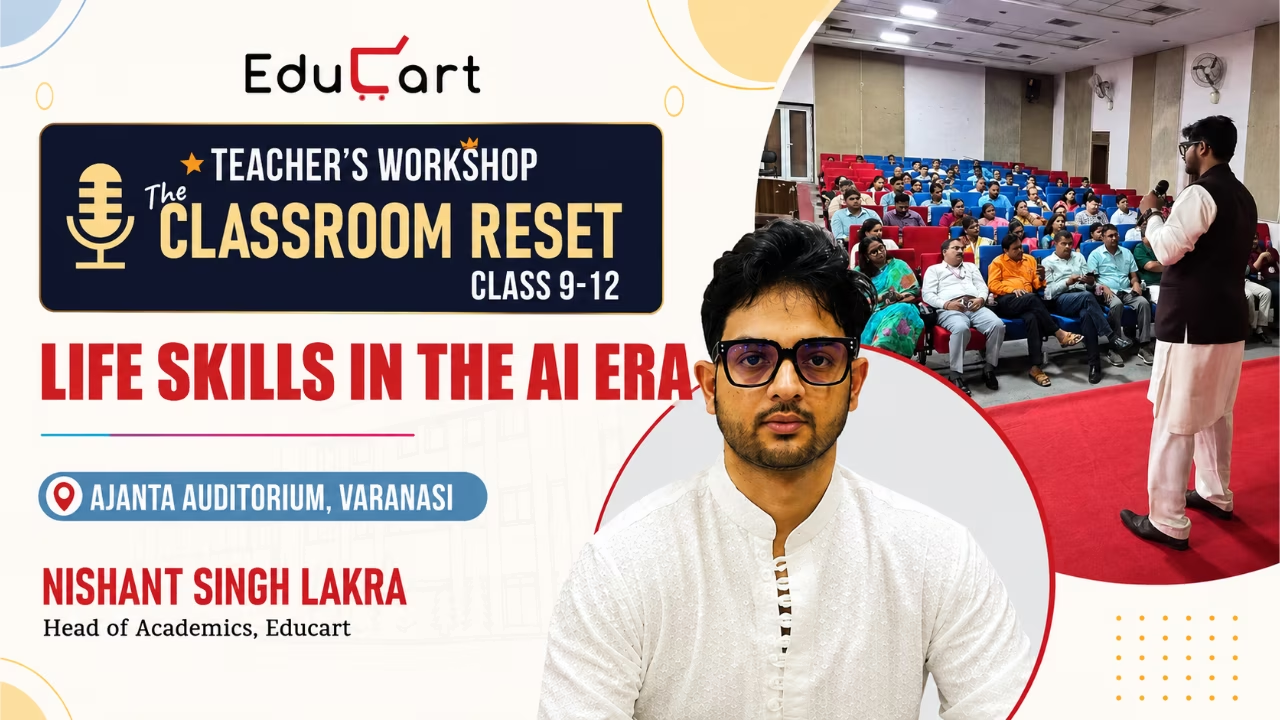
The workshop revolved around the theme ‘Life Skills in the Age of AI - How Future-ready Learning Resources Build Competency, Confidence & Character.
Session at a Glance
- Event Type: Teachers’ Training Workshop
- Duration: 3 Hours
- Participation: Free
- Topic: Life Skills in the Age of AI
- Speaker: Mr. Nishant Singh Lakra, Head of Academic, Educart
- Discussions Led By: Prashant Chauhan and Arbaaz Rayeen
Beginning with a Lamp-lighting Ceremony
The workshop started with a lamp-lighting ceremony, which formally began the session.

The ceremony was led by:
- Mr. Darminder Singh, Principal, Seth Anandram Jaipuria School
- Mr. Abha Singh, Principal, Vinita Public School
- Mr. Namvar Singh, Principal, Ambition Academy
- Mr. Anshuman, Vice President, School Association
- Mr. Nishant Singh Lakra, Head of Academics, Educart
The lamp-lighting set the tone of the workshop and made it centered around thoughtful teaching. Also, it depicts the collective responsibility of the educators in shaping students' futures.
Segment 1: Education in a Changing World
Following the lamp-lighting, the session moved into the conversation about how education is evolving.
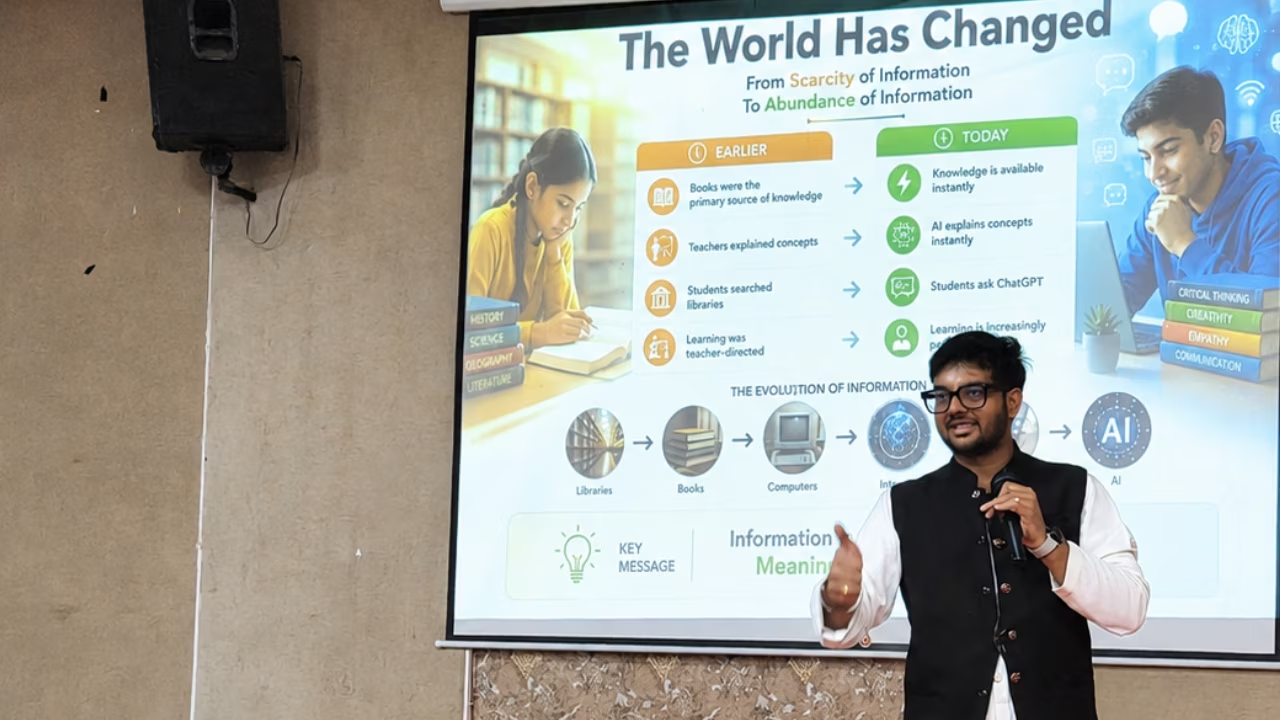
Artificial intelligence has significantly changed the way students access information. Today, tools can:
- Explain difficult concepts
- Summarise chapters
- Generate notes
- Solve questions
- Provide personalised explanations
- Assist students with research and revision
The session further focused on the fact that information alone cannot prepare the students for the future. AI can surely provide answers but it cannot replace qualities such as curiosity, character, empathy, perseverance, emotional understanding and meaningful human relationships.
This discussion led to a very important question which shaped the session ahead:
‘If AI can provide information and answers, what should schools focus on developing in students?’
The questions engaged the participants completely and made them look beyond content delivery and consider the broader purpose of education in an AI-enabled world.
Segment 2: From Knowledge to Competency
This segment focused on the need to shift from the system of education that primarily focuses on completion of the syllabus to one that develops competency, application and real-world understanding.
The traditional classroom learning works around the question:
‘What does the student know?’
Now, the evolving purpose of learning now should shift to:
‘What can the student do with what they know’?
The shift in classroom learning and overall education completely revolves around putting emphasis on competency-based education. Students must not only remember concepts but also learn how to:
- Apply knowledge in unfamiliar situations
- Analyse information
- Connect concepts with real life
- Evaluate different possibilities
- Communicate their understanding
- Make informed decisions
Connecting this transformation with the evolving expectations of classroom teaching and assessment.
Therefore, competency-based teaching is not limited to introducing new types of questions in the exam but goes far beyond that. It requires a broader change in how students learn, practice, think and respond.
Segment 3: How Educart Books Support Competency-based Education
This was the most important part of the segment. It demonstrated how learning resources are designed in a way to support schools in incorporating competency-based education into every day classroom.
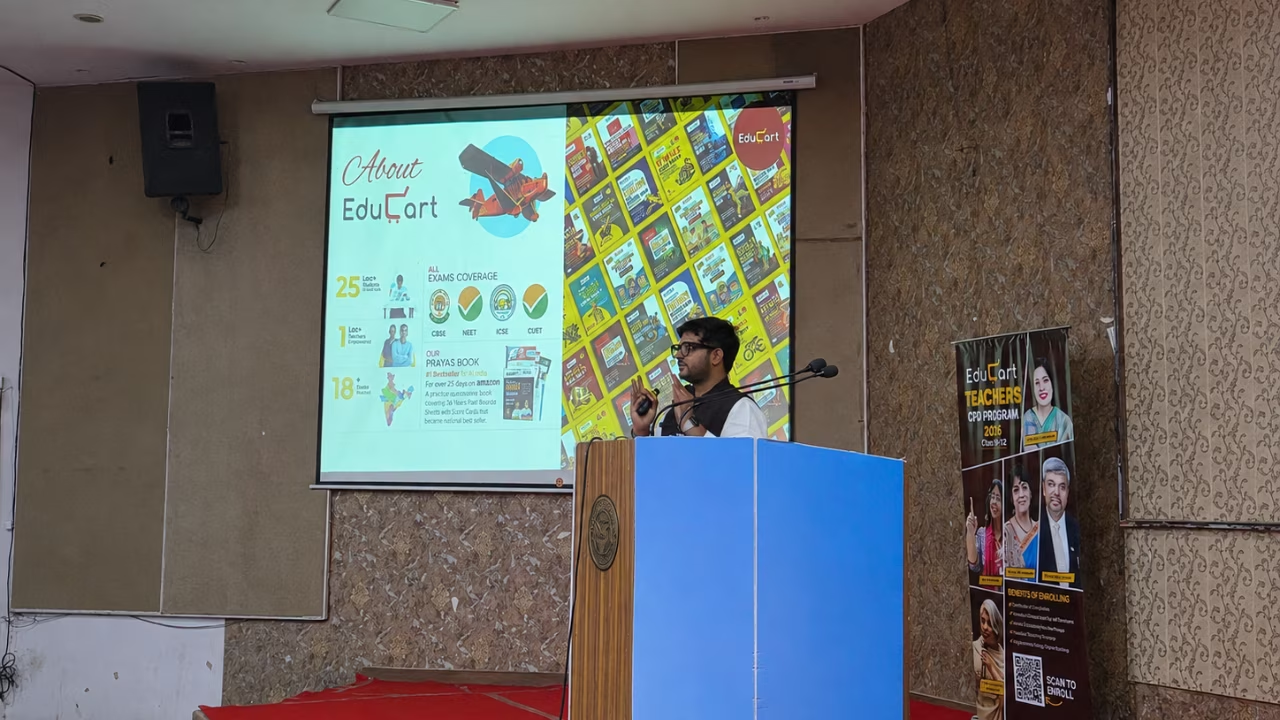
Educart books are designed to go beyond conventional question-answer practice by providing students to:
- Apply concepts
- Analyse situations
- Think critically
- Engage with real-life contexts
Educart resources incorporate:
- Competency-oriented questions
- Real-life applications
- Case-based and situation-based problems
- Innovative assessment formats
- Conceptual and analytical practice
- Structured exercises for regular preparation
- Questions that encourage application rather than memorisation
- Explanations that help students understand the thinking behind an answer
Teaching-learning resources with these features makes it comfortable for schools to transition to CBE. Competency-based education is not only about changing the curriculum, it also requires a change in what students practice and how they are assessed.
A change in curriculum alone is not enough. Students must also experience a change in:
- The questions they attempt
- The situations they analyse
- The way they explain their answers
- The feedback they receive
- The skills they develop through regular practice
Educart focused on aligning learning resources with these requirements with an aim to support teachers and schools in making CBE easily accessible and actionable.
Segment 4: Building Life Skills Through Everyday Learning
The next segment focused on explaining CBE on a deeper level. It emphasised on how everyday learning resources and classroom practices can build life skills. The session connected competency-based education with five essential life skills that students need in a technology-driven world.
- Critical Thinking: Critical thinking makes students evaluate information instead of directly accepting it. This is an important skill in the age of AI as it helps the students assess accuracy, relevance and logic in the information they have received. Through activities conducted in the classroom, students learn to:
- Analyse evidence
- Question assumption
- Justify their reasoning
- Creativity: Creativity is not just limited to art or imagination. For the students, creativity also includes finding new ways to:
- Approach a problem
- Making connection between ideas
- Developing original solution
Some question types like open-ended questions, projects, and application-based exercises give students the freedom to think beyond specific answers.
- Decision Making: Students are required to make decisions both in and out of the classroom everyday. Questions based on real-life and situation-based scenarios help students use their knowledge to assess situations, and make reasoned choices.
- Communication: Students must be able to express their ideas clearly, explain their reasons, listen to different perspectives and review their own understanding.
Communication can be developed through:
- Classroom discussions
- Presentations
- Written explanations
- Peer review
- Group discussions
- Reflection-based exercises
- Self-awareness: Self-awareness helps students understand their strengths, learning gaps, habits, and progress. When learners reflect on their performance, review their mistakes and identify areas for improvement, they gradually become more independent and responsible.
Segment 5: Rethinking the Role of Books in the AI Era
The workshop also addressed an important concern ‘If students can access information instantly through AI, do books still remain relevant?’ The discussion after this concern clarified that the role of learning resources is no longer limited to providing information.
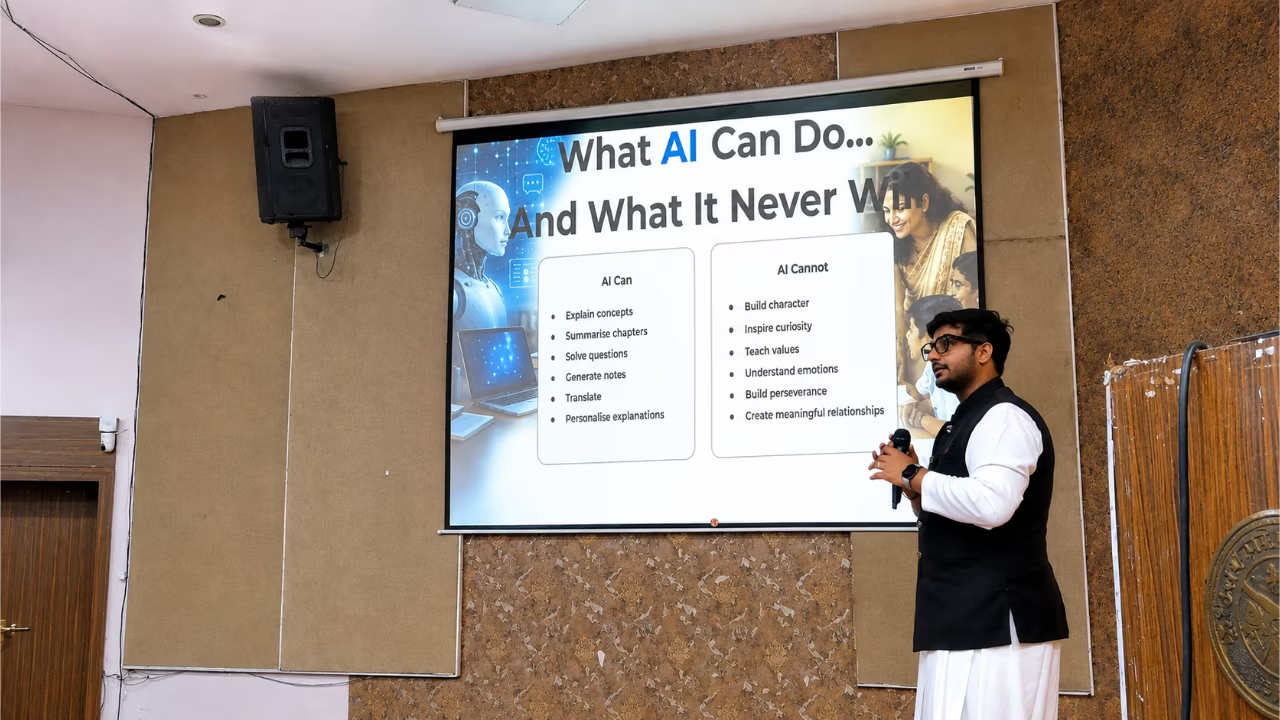
In an AI-driven world, a good book should help students:
- Question what they read
- Practise concepts systematically
- Apply knowledge
- Analyse situations
- Evaluate possible answers
- Reflect on mistakes
- Build learning discipline
- Develop deeper understanding
Books and AI are not competitors. AI can support students by offering information, explanation and quick assistance. Whereas, learning resources designed thoughtfully provides an understanding structure, focused practice, and opportunities for deeper thinking.
Technology can improve access, and teachers along with learning resources can guide students towards responsible thinking and long-term development. So, an education system can therefore use both to be strong.
Segment 6: Educators: The Centre of Transformation
The workshop revolved around how AI and learning resources together can be used in the favour of the students, it put great emphasis on the central role of teachers.

Technology can provide tools, but teachers can create context and understanding around it.
They help students:
- Ask better questions
- Interpret information
- Understand values and consequences
- Learn from mistakes
- Communicate respectfully
- Develop confidence
- Use technology responsibly
In the era of AI, the role of teachers is actually becoming more important than ever. Now the teachers are not just providers of information but are facilitators, and designers of meaningful learning experiences.
Segment 7: Turning Discussions into Practical Classroom Actions
Now the workshop moved to specific actions where everything which was discussed till now will be shown in a practical manner for classroom application.
During a reflection activity, educators were encouraged to complete the sentence:
“From Monday… Instead of ________, I will ________.”
Some of the classroom transformation ideas discussed included:
- Instead of giving answers, I will ask better questions
- Instead of only finishing chapters, I will ensure understanding
- Instead of focusing only on marks, I will also observe the student’s thinking process
- Instead of discouraging mistakes, I will use them as learning opportunities
- Instead of fearing AI, I will teach students to use it responsibly
- Instead of relying only on recall-based questions, I will include more application-based tasks
- Instead of explaining everything myself, I will allow students to explore and discuss
This activity helped educators to understand that educational reforms doesn’t always have to be big, they can begin with just one question, or one reflective activity. This activity translates workshop’s larger ideas into realistic and actionable classroom practices.
Interaction Over High Tea
Following the formal learning interaction setup, the event moved to an informal networking and interaction over high tea.
Principals, teachers and school leaders exchanged interesting perspectives on:
- Changing student needs
- The impact of AI on education
- Competency-based learning
- Classroom challenges
- Responsible use of technology
- The evolving role of teachers
- The importance of future-ready learning resources
- Changes in assessment practices
This interaction was important as it allowed participants to share their own experiences and understand how different schools respond to similar educational challenges.
The networking session also strengthened the relationship between Educart and participating school leaders. This created an opportunity for further dialogue about classroom learning assessment.
Educart Specimen Distribution and Felicitation
Towards the end of the workshop, the participants were provided with Educart Specimens Papers and learning resources.

Participating principals and school leaders were presented with certificates of appreciation and Educart specimen bags as a token of recognition for their contribution to education.
The specimen distribution gave an opportunity to the teachers to explore how Educart’s resource can support:
- Competency-based classroom learning
- Application-oriented practice
- Structured academic preparation
- Innovative assessment formats
- Critical-thinking development
- Real-life concept application
By examining the resources by themselves, educators could better understand how competency-based learning can be smoothly incorporated into everyday teaching and assessment.
Related Workshops
Explore more Educart teacher-training sessions:
Workshop on Adolescent Education at DLF Public School
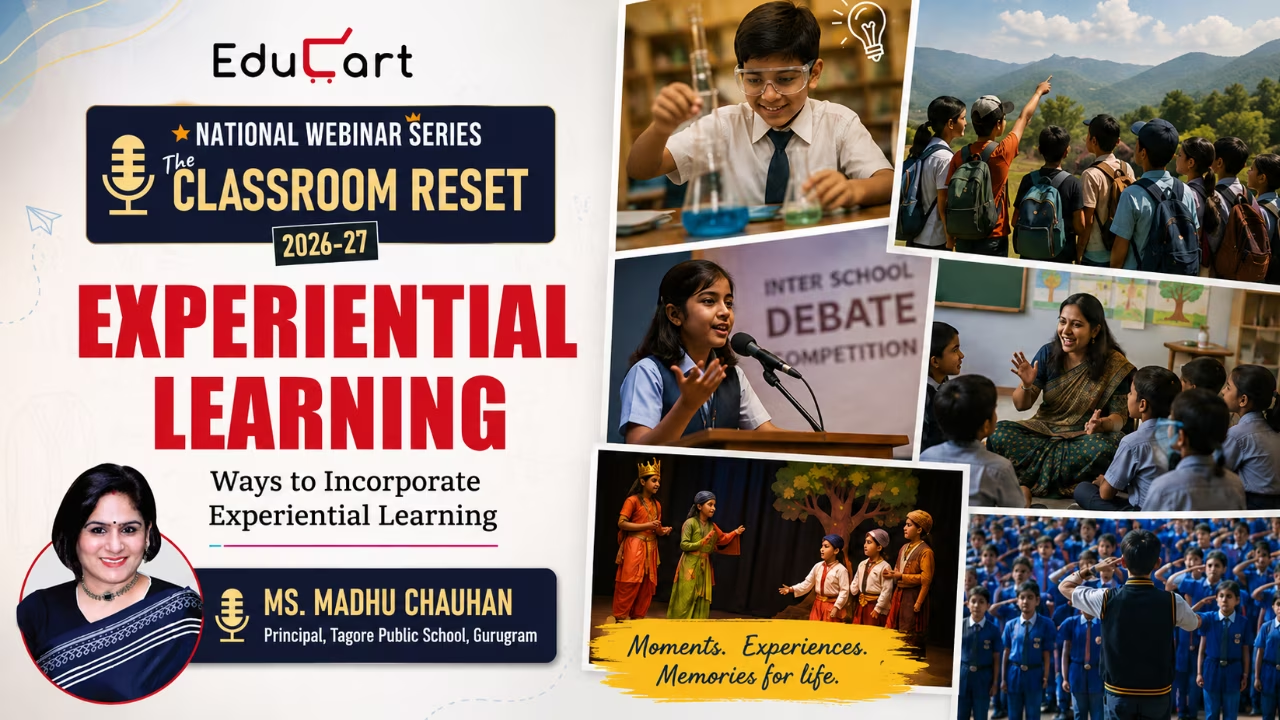
CPD Webinar on Experiential Learning
Building a Future-ready Learning Ecosystem
The Varanasi workshop showed that the future of education is not between choosing technology or traditional learning resources and style. It is about creating an ecosystem which blends both AI technology and traditional learning resources together. The ecosystem created should work towards making the students future-ready.
When these elements work together, education can help develop students who are able to:
- Think critically
- Apply knowledge
- Communicate clearly
- Make responsible decisions
- Adapt to changing situations
- Reflect on their progress
- Use technology thoughtfully
The teachers’ training workshop thus became more than a discussion about AI. It became a conversation about how schools can move towards competency-based learning with educators being at the centre of the transformation.
FAQs
Q1. Why does Educart organise Teachers' Training Workshops?
Ans. Educart conducts these workshops to help educators adopt future-ready teaching practices and strengthen competency-based learning in classrooms.
Q2. Why is competency-based education important in the AI era?
Ans. Competency-based education helps students apply knowledge, think critically and solve real-world problems-skills that are essential in an AI-enabled world.
Q3. How do Educart books support competency-based education?
Ans. Educart books include competency-based questions, real-life applications and structured practice to help students build conceptual understanding and critical-thinking skills.
Q4. What life skills were discussed during the workshop?
Ans. The workshop highlighted five essential life skills:
- Critical Thinking
- Creativity
- Decision-Making
- Communication
- Self-Awareness
Q5. Are books still relevant in the age of AI?
Ans. Yes. While AI provides information, books offer structured learning, guided practice and opportunities for critical thinking and reflection.
Glimpse of the Event

Share Article


.svg)





%2520(1).avif)
.avif)






















.svg)

