
.svg)
Experiential learning is becoming the biggest priority in today’s education system. Schools are now moving towards the vision of NEP 2020 and NCF-SE 2023, so teachers are seeking practical ways to make classroom learning interesting.
.avif)
This question made teachers realise that experiences are remembered far more than the lectures. Building on this idea, Ms Madhu Chauhan explained why CBSE is putting so much emphasis on experiential learning.
Webinar Highlights
- Topic: Experiential Learning
- Speaker: Ms Madhu Chauhan (Principal of Tagore Public School, Gurugram)
- Discussion Led By: Mr Nishant Singh
- Date: 11 July 2026
- Duration: 2 Hours
- Type of Event: National CPD Webinar (Online)
- Organized By: Educart
- Participation Fee: Paid
She drew experiences from her own journey, from serving in the Indian paramilitary to leading a school, she shared how real-life experiences hold utmost power in shaping learning more deeply than memorisation.
Key Discussion Points
- Education should prepare students for life, not only examinations.
- Experiential learning moves beyond rote learning by encouraging students to reflect on concepts and then apply.
- Curiosity should grow along with academic performance.
- Students need confidence, communication and problem-solving skills for the future.
- Learning should help children become responsible global citizens.
What Makes Learning Truly Experiential?
One of the biggest lessons from the webinar was that not every activity is experiential. Experiential activity is the one which provides students with an experience which eventually makes them think, discuss, reflect and connect it with real-life.
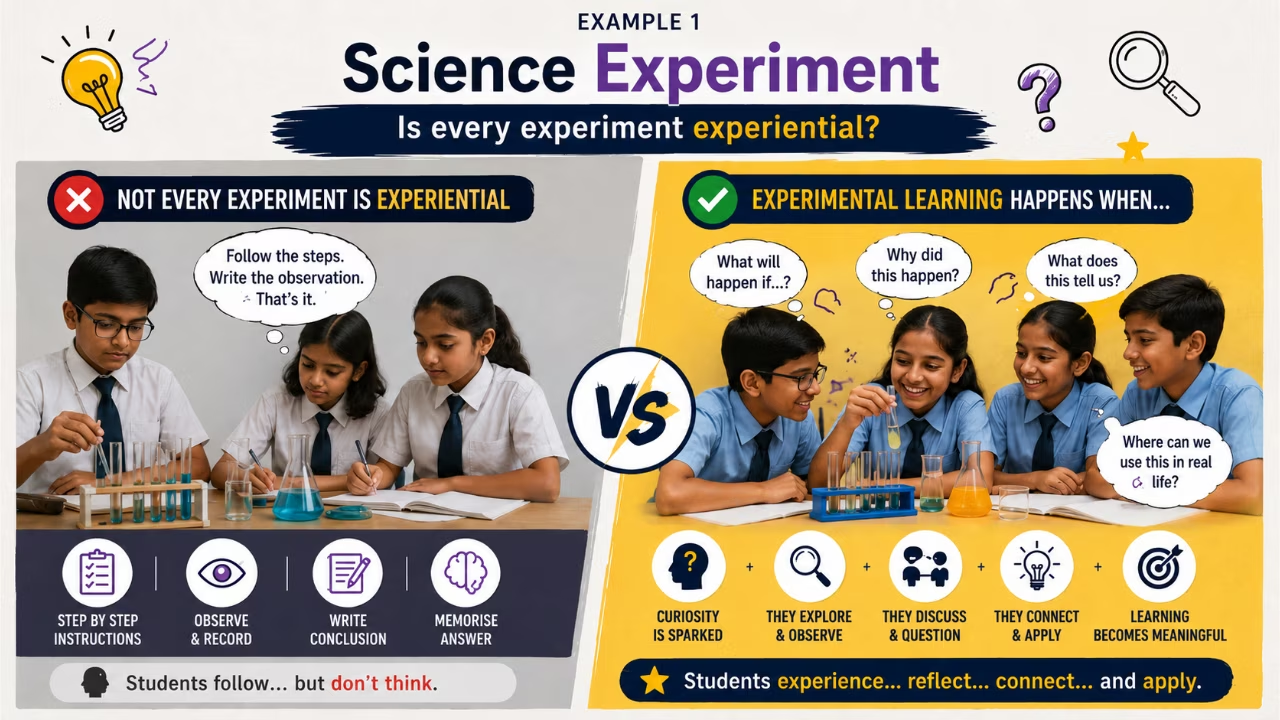
Some practical classroom activities included:
- Science experiments should promote observation and reflection
- Role plays should develop empathy and understanding
- Morning assemblies should encourage student participation
- Educational trips should include post-visit reflection and discussion
- Art should become a tool for expression and understanding
- Projects should be completed by students themselves
- Group discussions should have clear learning goals
- School exhibitions should value the entire learning journey, not just the final presentation
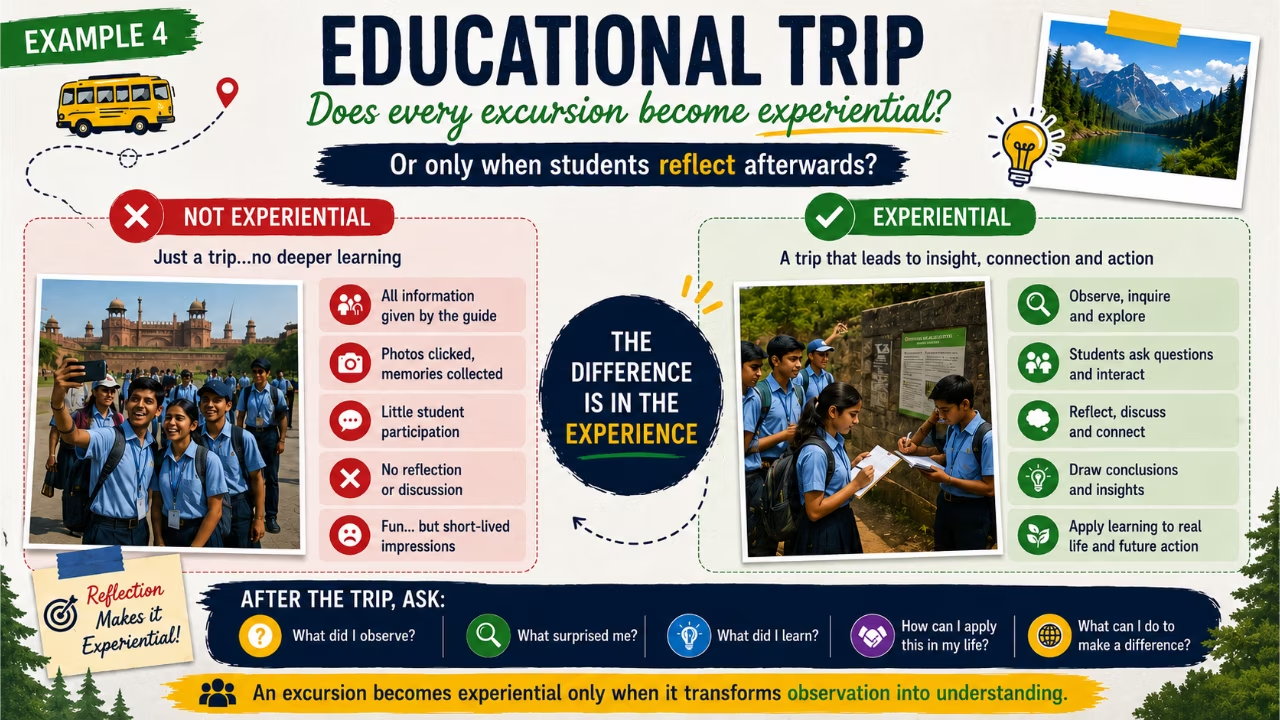
Reflection: The Unnoticed Step in Learning
According to Madhu ma'am, reflection is the key to transform any activity into meaningful learning.
Teachers were encouraged to:
- Ask reflection questions after every activity.
- Connect lessons with real-life situations.
- Encourage students to share observations.
- Introduce concepts using driving questions.
- Help students apply learning beyond the classroom.
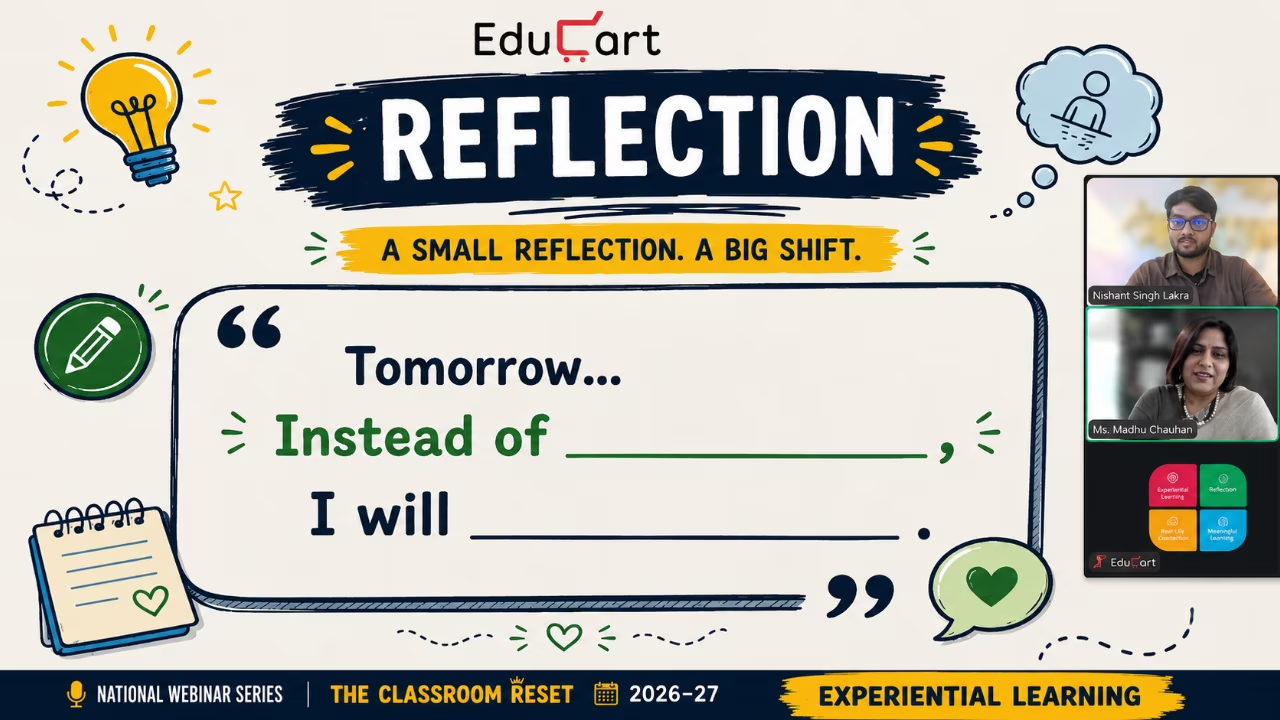
According to her, experiential learning goes through these four stages:
Experience - Reflect - Connect - Apply
Planning Better, Not Teaching More
Teachers were interested throughout the session and were excited to conduct experiential learning through new ways. But they collectively had a concern, not enough time to implement experiential learning. Madhu ma'am explained that the need is for thoughtful lesson planning and not extra teaching hours, and that's the solution.
Teachers were encouraged to include:
- Real-life questions to begin lessons
- Observation-based classroom activities
- Interactive discussions
- Reflection before ending the lesson
- Simple formative assessments
The session highlighted that meaningful learning and syllabus completion can go hand in hand.
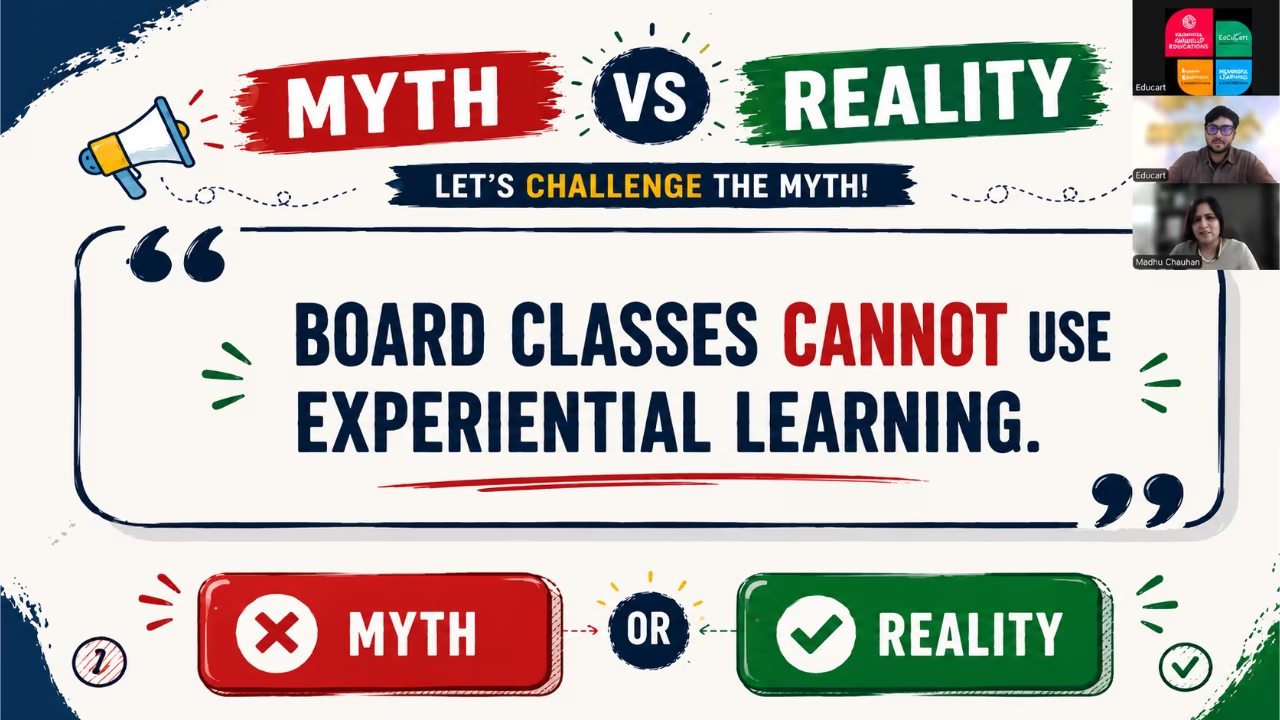
Common Myths About Experiential Learning
Experiential learning is a newly introduced thought which came with new approaches leading to some myths. Some of which were discussed in this segment with proper clarification.
Using AI as a Teacher’s Planning Assistant
Experiential learning is new and so is AI. Madhu ma'am suggested combining both. She made teachers explore how AI can simplify teacher’s planning work without replacing the real classroom interaction.
Teachers learnt that AI can support them by:
- Preparing lesson plans
- Creating worksheets and quizzes
- Designing classroom activities
- Generating reflection questions
- Saving planning time for better classroom engagement
The session focused on the fact that AI should support teachers in planning interactive lessons, while not replacing the meaningful classroom interaction conducted by the teachers.
The Final Takeaway
The webinar concluded on a powerful note, small classroom changes can create big learning outcomes.
Teachers were motivated to begin with small changes and slowly build more experiential classrooms.
Three key reminders from the session:
- Meaningful learning comes from meaningful experiences
- Reflection is the bridge between activity and understanding
- Every teacher can practise experiential learning using simple classroom strategies
The session gave teachers real ideas that can be implemented immediately. These will make classroom learning more engaging, purposeful and relevant for today’s students.
Glimpse of the Event

Share Article


.svg)





%2520(1).avif)





















.svg)

