Can a teacher make sure that every student feels comfortable, respected and confident in a classroom regardless of gender based expectations?
To learn more about the idea, Educart organised a teacher training workshop on Gender Sensitivity at Shring Sheffield School, Patna, on 16 October 2026. The two-hour long session was conducted by Mr Ajay Kumar, Principal of Leeds Asian School, Patna and Mr Sanjay, who led the discussion
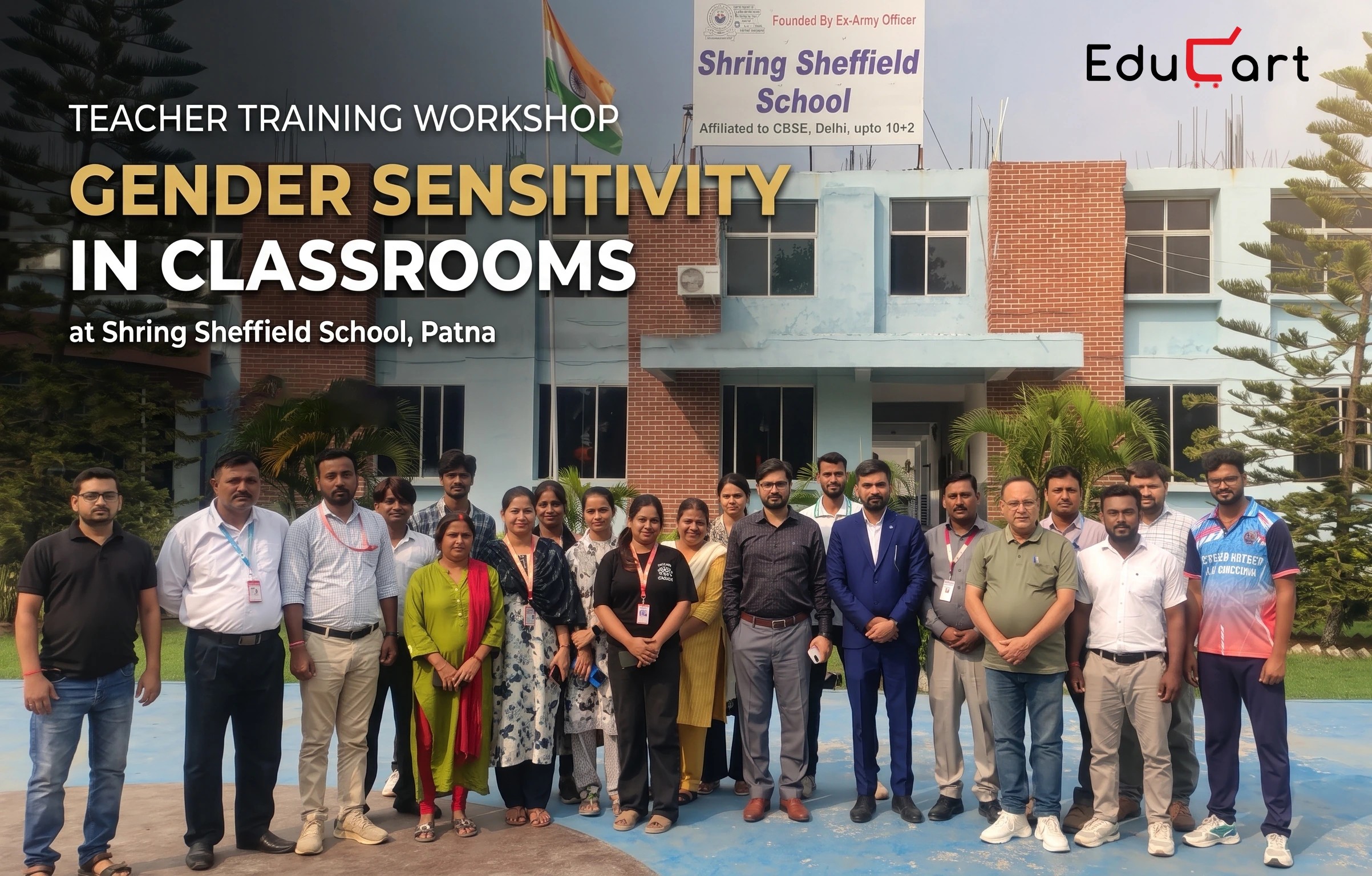
Educators can continue developing their classroom practices through Educart's CPD training programmes, which cover topics such as gender sensitivity, inclusivity, and competency-based teaching.

Workshop at a Glance
- Topic: Gender Sensitivity
- Event Type: Teacher Training Workshop
- Organised by: Educart
- Date: 16th October 2026
- Duration: 2 Hours
- School: Shring Sheffield School, Patna
- Speaker: Mr Ajay Kumar
- Speaker Designation: Principal, Leeds Asian School, Patna
- Discussion Led By: Mr Sanjay
- Teachers Attended: 18
- Participation Fee: Free
The Role of Gender Sensitivity in the Classroom
The workshop highlighted the importance of gender sensitivity in classrooms and how a teacher can make sure that gender-based assumptions do not affect the learning experiences.
The purpose of the workshop was to help teachers and educators identify such assumptions, understand the students’ needs and create a supportive environment.
This workshop also explains that Gender Sensitivity cannot just be learnt through textbooks or lessons. It requires the understanding of how students are addressed, encouraged, and treated throughout their day at school.
Teachers can also explore strategies for creating inclusive classrooms in Educart's workshop on inclusive education.
Understanding Gender Literacy: Sex vs Gender
One important part of the workshop was understanding Gender Literacy and the difference between sex and gender. Sex means the biological characteristics a person is born with; they are considered universal and unchanging. Gender is constructed by society and learned through cultural and everyday experience.

Read about another gender sensitivity workshop for teachers conducted by Educart at Vels Global School.
Key Components of Gender Literacy
Mr Ajay Kumar explained key concepts to help teachers understand gender literacy:
- Understanding Sex and Gender: Understanding the difference between biological characteristics and social roles across different cultures.
- Recognising Gender Stereotypes: Learning and identifying the assumptions based on gender, and how society expects girls and boys to behave.
- Promoting Gender Equality: How teachers can ensure that every student gets fair and equal opportunities, regardless of their gender.
- Gender Diversity: Accepting that people may express their gender in different ways and learning how to value and respect them without discrimination and gender bias.
- Building Critical Thinking: Developing the ability to question common assumptions about gender roles, and to first understand them rather than accepting and following them without a thought.
For further insights, explore Educart's CPD webinar on gender sensitivity, which discusses gender awareness and inclusive teaching practices.
Recognising Gender Stereotypes
The workshop explored common gender stereotypes and how they affect students in classrooms and schools. These assumptions influence what activities boys and girls can do, which roles they are assigned, and how they are expected to behave.
For example: it is generally seen that boys get assigned physically demanding tasks, whereas girls are assigned organising and creativity tasks. This may affect and limit students’ opportunity to develop different skills.
Recognising gender stereotypes helps teachers make classroom decisions based on students’ interests, needs, and abilities, and provide equal opportunities for participation.
Practical Approaches to Gender Sensitivity
The workshop also discussed practical ways to apply gender sensitivity in classrooms. The session covered gender-sensitive language, equal participation, encouraging Gender equality and avoiding steretypes. It also explained about the responsibilities of teachers and school management to contribute to gender sensitive educative enviroment.
The S and G Activity
To practically understand the difference between sex and gender, the workshop included an S and G activity. Teachers were asked to identify the statements using S and G, where S stands for Sex and G stands for Gender.
The goal of the activity is to explore critical thinking among participants. Rather than accepting the assumptions, participants were encouraged to first question and understand what a statement represents and how it may affect gender sensitivity. It acts as a starting point for teachers on how to deal with similar assumptions in classrooms.
Gender-Sensitive Interaction: Do’s and Don’ts
The workshop covered some of the do’s and don’ts of gender sensitive teaching practices and interaction between teachers and students:
Do:
- Encouraging students to participate in all classroom activities
- Providing duties to the students without relying on their gender.
- Respecting students’ interests and opinions.
- Using respectful and inclusive language with students.
- Encouraging gender sensitivity among students also.
Don't:
- Assume certain tasks or subjects are fit only for girls or boys.
- Make generalisations about students' interests and abilities based on gender.
- Use language or comments that may promote gender stereotypes.
- Discourage students from exploring new interests that do not match the stereotypes.
Teachers’ Role in Promoting Gender Equality
Participants also learned how teachers can promote gender equality in their classrooms by respecting students’ different opinions and interests. They discussed encouraging students to treat one another equally, challenge gender stereotypes, and respect each other’s choices and abilities.
School Management’s Role in Gender Equality
School management also plays an important role in implementing gender equality by providing teachers with training on the subject, promoting respectful behaviour and ensuring fair opportunities for everyone.
Primary Learnings from the Workshop
The workshop covered many important learning areas, from gender literacy to gender sensitivity, and how teachers can improve their practice for an inclusive classroom experience for students.
- Learning Key Concepts: Learning and understanding the differences between sex and gender and how and why it is important to promote gender literacy.
- Identifying stereotypes: Identifying common assumptions about boys' and girls' behaviour and their effect on the classroom experience.
- How to communicate: Learning why gender sensitivity matters for teachers and educators to create a respectful and supportive environment.
- Encouraging students: How to encourage students and provide them with fair opportunities.
- Understanding responsibilities: Understanding the responsibilities of teachers and schools in creating a gender-sensitive school environment.
These learnings help teachers to improve their own practice and teaching methods and become more aware of gender-related issues and problems and their solutions. The workshop also highlighted the responsibility of school management in creating such an environment where every student feels confident and valued.
Workshop Highlights and Summary
Educart’s teacher training workshop on Gender Sensitivity at Shring Sheffield School, Patna, focused on gender literacy, gender stereotypes, and gender sensitivity in education.
During the two-hour session, Mr Ajay Kumar and Mr Sanjay discussed sex and gender, gender-sensitive language, classroom interactions, and the roles of teachers and school management in promoting equality. The S and G activity helped teachers understand the difference between sex and gender.
The workshop encouraged teachers to question gender stereotypes, provide equal opportunities, and promote respectful interactions among students.
Frequently Asked Questions
Q1. What is the importance of gender sensitivity training for teachers?
Ans. Gender sensitivity training helps teachers recognise gender stereotypes, address unconscious bias, and promote equal opportunities for all students. It encourages respectful interactions and helps create a safe and inclusive classroom.
Q2. How can teachers promote gender equality in the classroom?
Ans. Teachers can promote gender equality by using inclusive language, providing equal participation opportunities, avoiding gender-based assumptions, and encouraging students to respect different perspectives and identities.
Q3. How does gender sensitivity help create an inclusive learning environment?
Ans. Gender sensitivity helps teachers understand how bias and stereotypes can affect students' experiences. It supports fair treatment, mutual respect, and a classroom environment where students feel valued and comfortable participating.
Glimpse of the Event

Share Article