.svg)
Can art make learning more meaningful? Can students understand concepts better when they are allowed to create, perform, observe, and experience instead of only reading from textbooks?
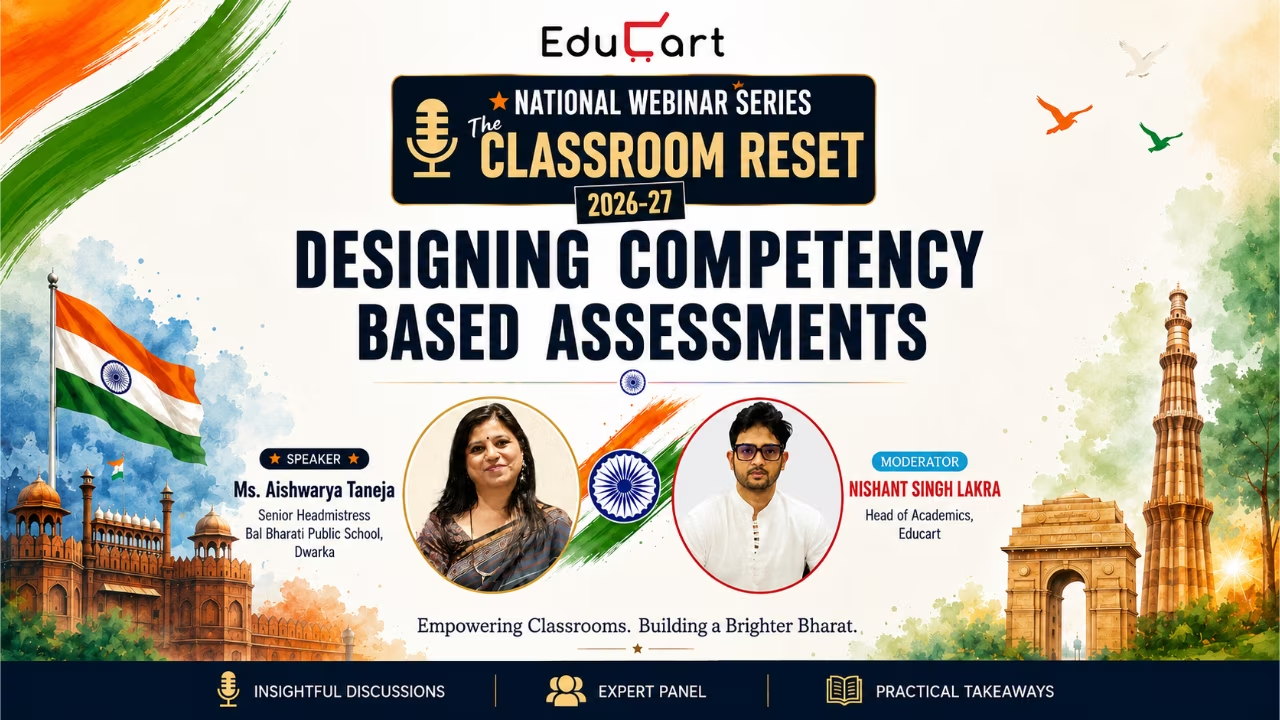
On 26th September, 2026, Educart conducted another session of its CPD Webinar Series, bringing educators together to explore an important classroom approach- Art-Integrated Learning.
Workshop at a Glance
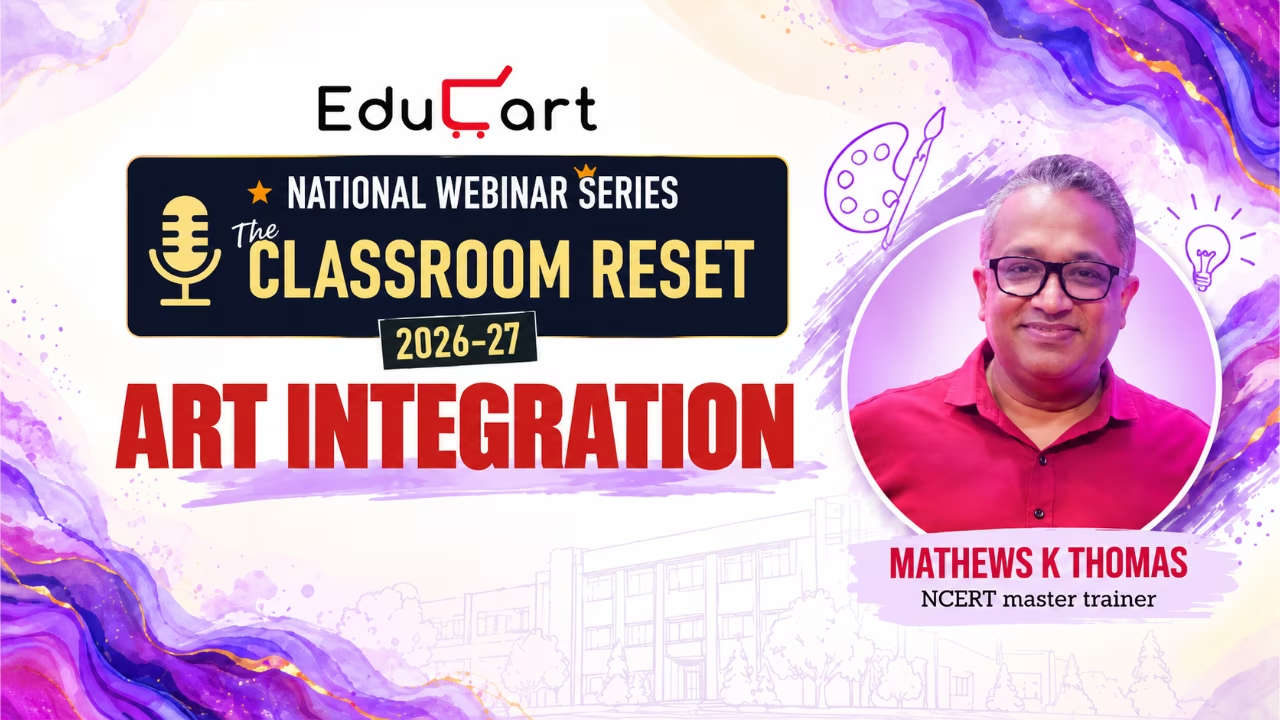
- Topic: Art Integration
- Organised by: Educart
- Date: 26th September 2026
- Duration: 2 Hours
- Speaker: Mr. Mathews k Thomas
- Speaker Designation: NCERT Master Trainer
- Discussion Led By: Ms. Sonali Khosla
- Type of Event: CPD Webinar
- Participation Fee: Paid
Art Integration Is More Than an Art Activity
One of the central ideas of the session was that Art Integration should not be confused with simply asking children to draw or make a craft project.
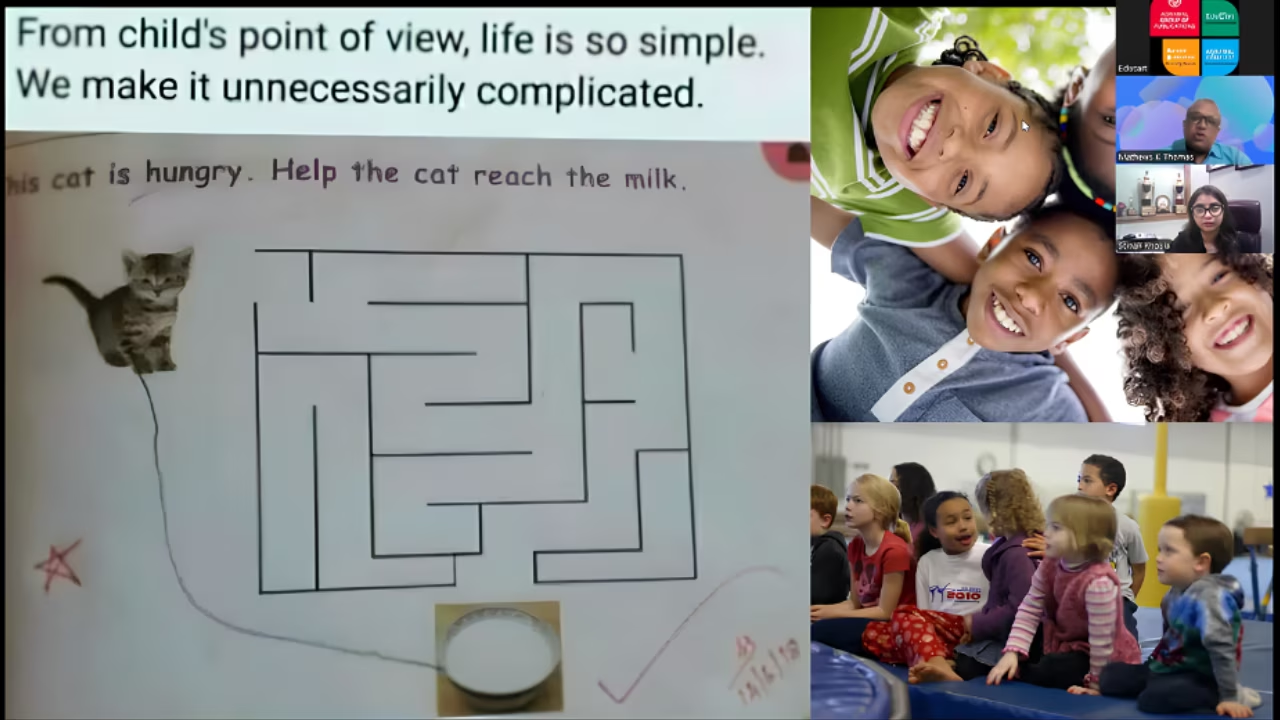
Mr. Mathews explained that the academic concept remains at the centre of the activity. Art becomes the medium through which students explore, understand, apply, or demonstrate that concept.
Depending on the learning objective, teachers can use different forms of expression such as:
- Painting and drawing
- Drama and mime
- Music and singing
- Dance
- Clay modelling
- Instrumental music
- Origami and craft
- Animation and other visual forms
The focus, however, remains on what the child learns through the experience.
Why Does Art-Integrated Learning Matter?
The webinar highlighted the need to move learning beyond textbook-based and rote approaches.
Art integration can help teachers connect academic knowledge with children's lives outside school. Instead of receiving information passively, students get opportunities to observe, experiment, communicate, collaborate, and create.
The session also highlighted broader objectives of Art-Integrated Learning, including developing:
- Social skills through teamwork and participation
- Emotional expression and stability
- Appreciation of cultural diversity
- Observation and experimentation
- Scientific temper
- Aesthetic sensitivity
- Opportunities for self-reflection
- Connections between different disciplines
An important message from the session was that every child is different. Therefore, learning does not always need to look the same for every learner.
Instead of trying to make heterogeneous groups learn and respond in exactly the same way, teachers can offer children multiple ways to participate and demonstrate understanding.
Taking the Curriculum Beyond the Textbook
A major reason for introducing Art Integration is to enrich the curriculum so that learning goes beyond textbooks. The webinar discussed how art can be integrated with subjects such as Mathematics, Science, Languages and Social Science.
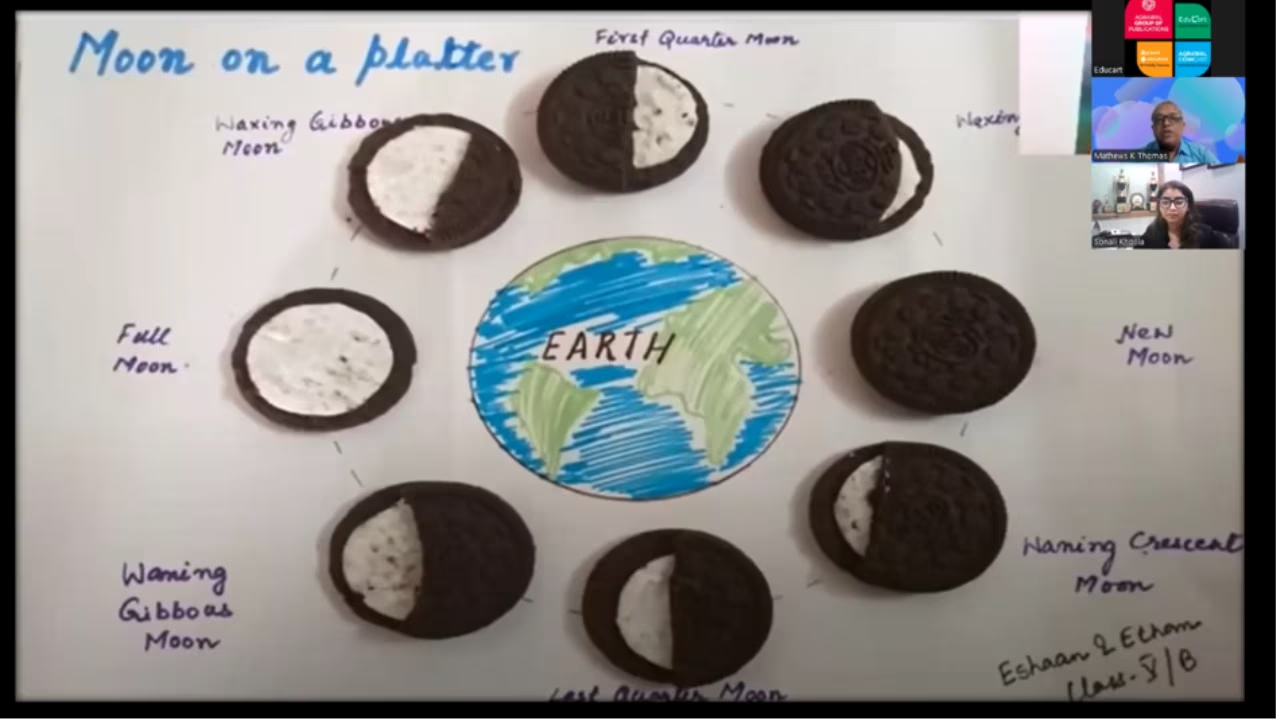
For example, a mathematical idea could be explored through patterns or origami, a Science concept through a model, a language lesson through drama, or a Social Science concept through visual representation.
Mr. Mathews emphasised a simple methodology for teachers:
Wherever possible, integrate the content being taught in class with suitable art forms.
This makes Art Integration part of regular teaching rather than an isolated activity conducted occasionally.
Different Approaches Across Classes
The session also discussed how Art Integration may take different forms across school stages.
- For younger and middle-school learners - teachers can use multidisciplinary approaches, allowing concepts from different areas to connect through common activities.
- For higher classes - activities can become more closely connected to subject-specific learning and curricular requirements.
From Art Integration to Experiential Learning
Another major part of the webinar focused on Experiential Learning. Mr. Mathews described it as ‘learning by doing’ - learning that emerges from direct experience instead of only listening to an explanation.
An experiential activity does not end when students complete a task. The learning process involves:
Experience → Reflection → Generalisation → Application
This means students first engage with an activity, think about what happened, identify what they learnt, and then connect that learning to another context. The webinar therefore mentioned Art Integration and Experiential Learning as closely connected approaches. When students create, perform, observe, experiment or solve something themselves, classroom learning becomes more active and meaningful.
Planning Experiential Activities in the Classroom
The presentation also gave teachers a more structured way of thinking about experiential activities.
Before conducting an activity, teachers should:
- Analyse students' needs and prior knowledge
- Connect the activity with the existing curriculum
- Identify primary and secondary learning objectives
- Plan suitable resources
- Explain expectations clearly
- Allow students to make mistakes
- Provide flexible working arrangements wherever needed
- Encourage reflection after the activity
- Assess the learning experience
This is important because an activity becomes educational not simply because students enjoyed it, but because teachers are able to connect the experience with a clearly identified learning objective.
Learning Can Be Simple, Creative and Powerful
One of the strongest messages of the webinar was that Art-Integrated Learning does not necessarily require expensive material or elaborate arrangements. Mr. Mathews shared several examples of simple activities that teachers can adapt to their classrooms, including number-lock activities based on word problems, crosswords, atlas work, art-based projects and visual learning experiences.
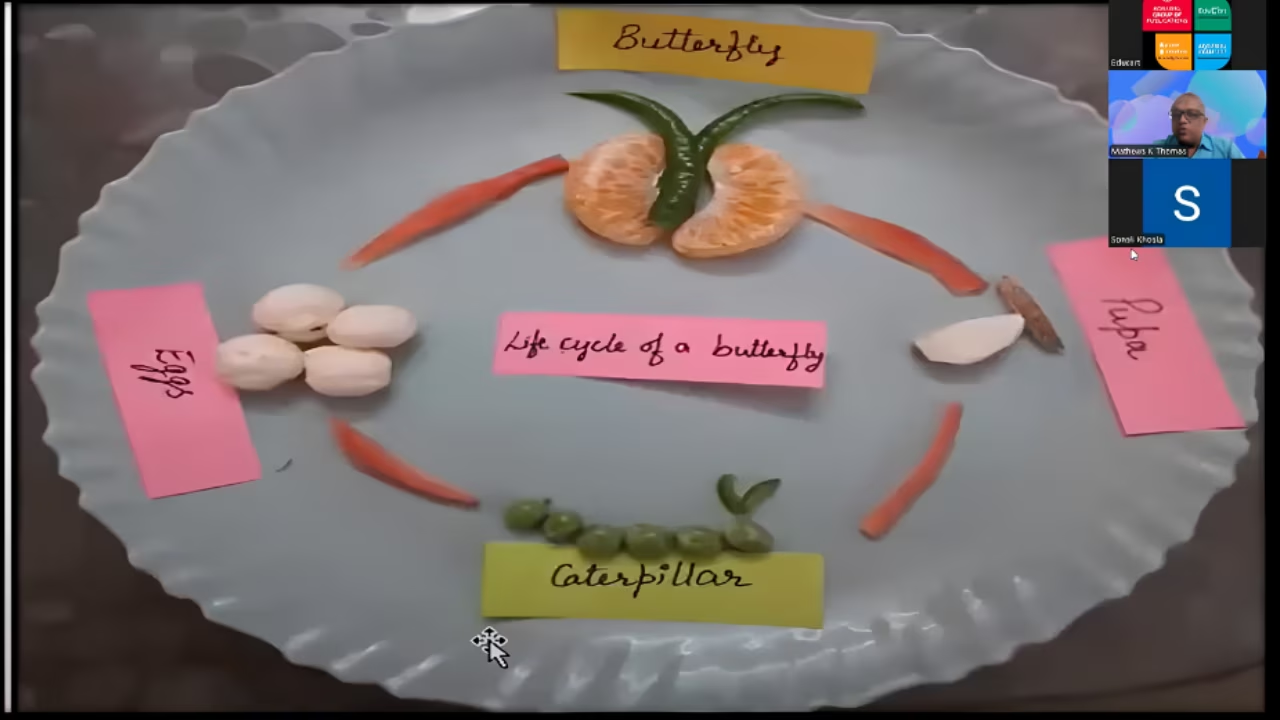
One example showed a representation of the life cycle of a butterfly created using vegetables and commonly available household materials. The example demonstrated that the value of the activity did not come from expensive resources. It came from how creatively the learner had represented the concept.
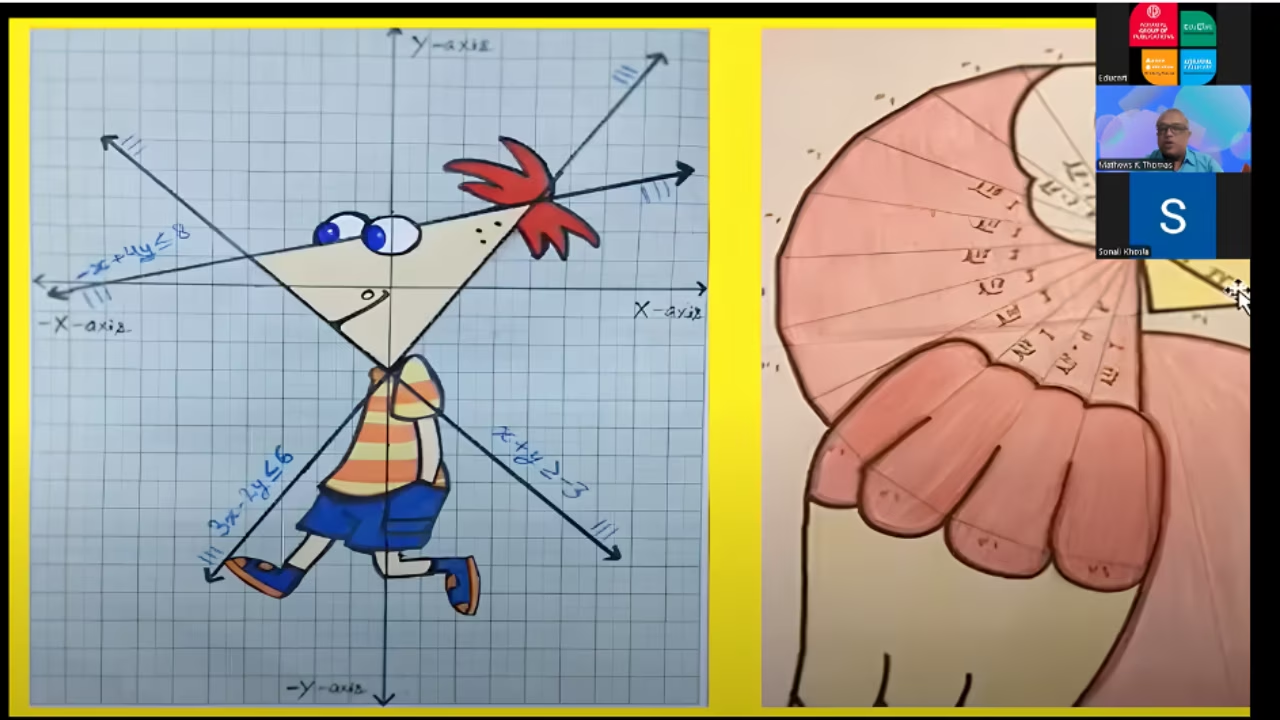
The webinar also showed examples of origami, optical-art activities and role play, highlighting how artistic experiences can be connected with classroom concepts in very different ways.
Using Simple Resources to Make Learning Joyful
The session showed that Art-Integrated Learning does not require expensive materials. Teachers can use affordable, reusable, eco-friendly, and locally available materials such as newspapers, fabric, buttons, leaves, bottles, and cartons.
These simple resources can help students:
- Observe their surroundings more closely
- Explore concepts through hands-on activities
- Express ideas in creative ways
- Collaborate with classmates
- Participate more confidently
- Develop sensitivity towards their environment
Through role play, creative exploration, and activity-based learning, Art Integration can make classroom experiences more natural, engaging, and child-centred.
Using Animation and Visual Media for Learning
The webinar also demonstrated how animation and videos can become effective teaching tools. Instead of depending only on verbal explanation, teachers can use visual representation to make abstract ideas easier to understand.
This reinforces the broader principle of the session: students should have multiple pathways to understand a concept. For some students it could be a drawing, for others a performance, model, animation, song, project or practical experience.
STEM Projects and Real-World Problem Solving
The discussion also connected creative classroom learning with STEM projects. Such projects can encourage students to combine concepts from different subjects and use them to address real-life situations or problems. This shifts learning from:
“What do I need to remember?”
To
“How can I use what I have learnt?”
It is this movement from knowledge to application that makes experiential and art-integrated approaches particularly relevant to competency-based learning.
How Can Teachers Design an AIL Activity?
The webinar did not stop at examples; it also discussed how teachers can systematically plan an Art-Integrated Learning activity.
A suggested AIL activity plan may include:
- Class: The class for which the activity is being planned
- Subject: The subject or subjects connected with it
- Theme/Chapter: The concept around which the activity is designed
- Art Form: The visual, performing or other art form being used
- Time Required: Duration of the activity
- Learning Objectives: What students should understand or be able to demonstrate
Activities can range from short 10-15 minute icebreakers to longer classroom projects, depending on the objective.
The session also emphasised the importance of follow-up exercises after an activity. These may include question-answer sessions, brainstorming, presentations or performances. This ensures that the creative experience leads back to academic understanding.
Assessment Is Also Part of Art-Integrated Learning
Another important point was that assessment should be built into the activity itself.
AIL provides opportunities for:
- Assessment as learning
- Assessment for learning
- Assessment of learning
Instead of assessing only the final product, teachers can observe how students participate, communicate, collaborate, think and apply concepts during the process. This makes assessment more closely connected with the learner's actual experience.
Kala Setu: Sharing Art Experiences
The webinar also introduced educators to Kala Setu, a platform for sharing art activities and Art-Integrated Learning practices.
Such sharing allows teachers to learn from classroom experiences beyond their own schools and discover new ways of connecting curriculum with different art forms.
Making Learning Meaningful Beyond the Textbook
The webinar reinforced that students learn, understand, and express themselves in different ways. While one child may explain a concept through writing, another may demonstrate the same understanding through a model, performance, visual, experiment, or activity.
Art-Integrated Learning gives students multiple ways to engage with a concept while keeping the learning outcome at the centre. It can help students:
- Understand concepts through experience and creativity
- Express learning in different forms
- Connect classroom knowledge with real-life situations
- Explore and apply ideas instead of only memorising them
- Participate more actively in the learning process
Through the CPD Webinar, EDUCART highlighted the value of connecting learning with art, experience, creativity, and real-life application. This approach can help students move beyond memorisation towards meaningful understanding and application.
Glimpse of the Event

Share Article


.svg)



%2520(1).avif)















.svg)

