.svg)
On 15th August, 2026, Educart conducted another session of its CPD Webinar Series, bringing educators together to explore an important question in today’s classrooms - Are our assessments simply checking what students remember, or are they actually measuring what students understand and can apply?
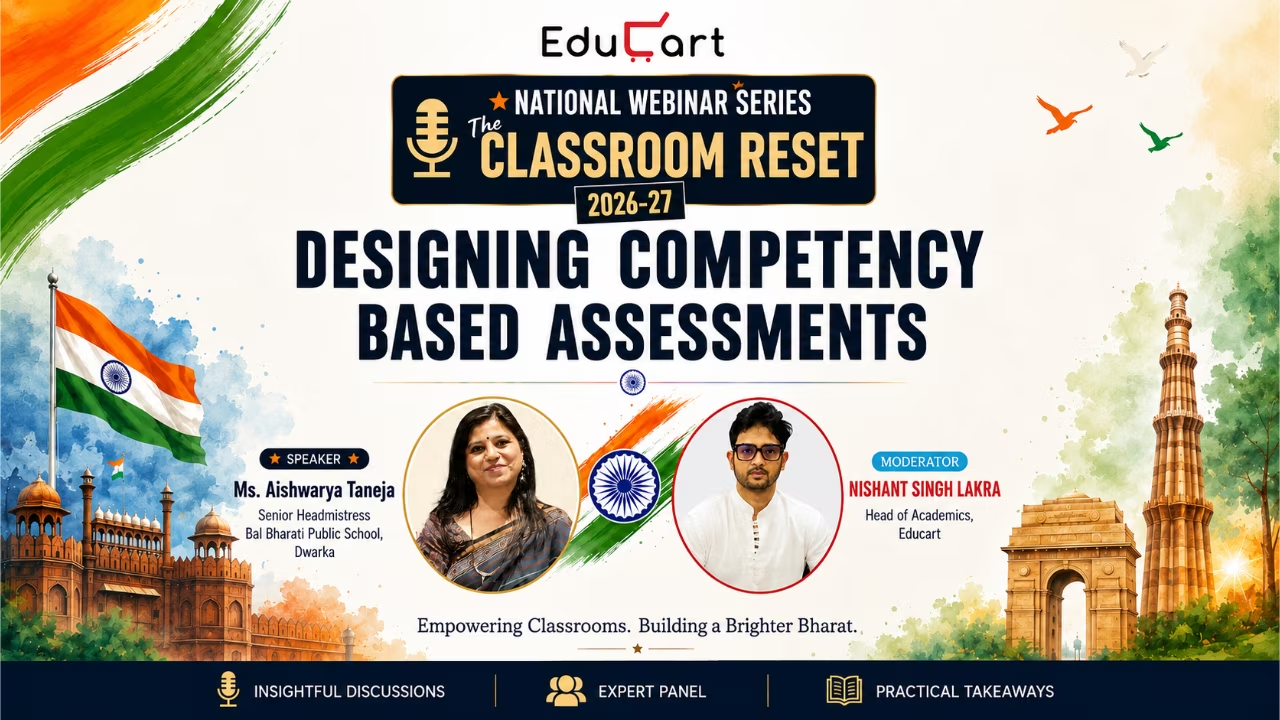
This question initially led to the thought of the webinar on the topic ‘Designing Competency-based Assessments’. The idea of the webinar was to focus on helping teachers rethink the way questions and assessments are prepared. The session showed how well-designed questions can move beyond content recall and check a learner’s understanding, application, reasoning and thinking process.
Workshop at a Glance
- Topic: Designed Competency-based Assessments
- Organised by: Educart
- Date: 15th August, 2026
- Duration: 2 hours
- Speaker: Ms. Aishwarya Taneja
- Speaker Designation: Senior, Headmistress, Bal Bharati Public School, Dwarka
- Discussion Led By: Mr. Nishant Lakra
- Type of Event: Continuous Professional Development (CPD) Webinar
- Participation Fee: Paid
What Makes a Good Assessment Question?
The webinar started with a key discussion which revolved around a simple yet important question, What actually makes a good question?
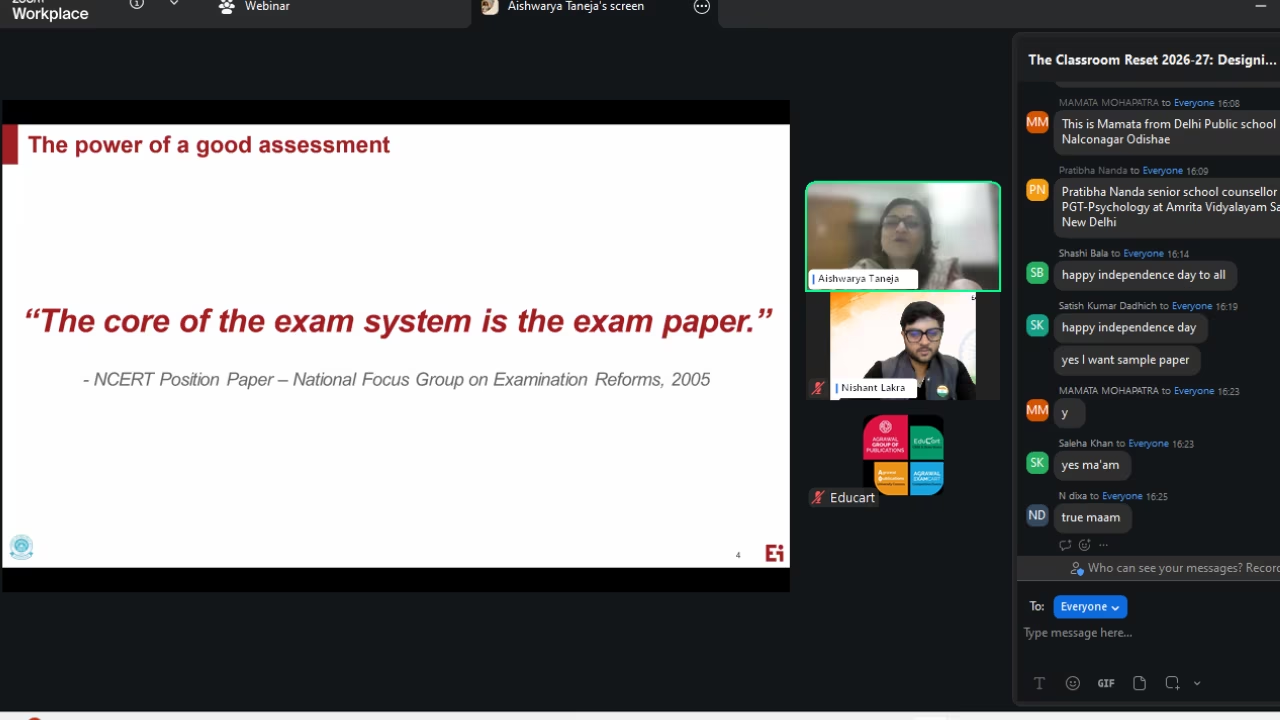
A discussion amongst the teachers talked about how assessment questions should not only test whether students remember a fact from the textbook. Instead, questions should help educators understand how well students have understood a concept and if they can apply that understanding in a new situation.
The session highlighted three important aspects while designing questions:
- Concept: What concept are we trying to assess?
- Content: What information does the learner need?
- Context: In what meaningful situation can the concept be applied?
When these three elements work together, assessment becomes more than a test of memory it becomes a way of understanding how students think.
Moving from Content Recall to Competency
After the first segment of the webinar, a major focus of the webinar shifted from traditional content-based assessment towards competency-based assessment.
Competency-based questions require learners to use their understanding instead of simply reproducing what they have learnt. Such questions can motivate students to analyse information, connect concepts, make decisions and apply knowledge to unfamiliar situations.
Teachers were encouraged to ask themselves while framing an assessment:
“What should a student be able to do with this knowledge?”
This shift can help teachers assess not just whether learning has happened, but also the depth of that learning.
Using Bloom’s Taxonomy to Design Better Questions
The webinar also highlighted Bloom’s Taxonomy as an important framework for designing effective assessments. It encourages teachers to move beyond simple recall-based questions and slowly guide students towards higher-order thinking skills such as understanding, application, analysis, evaluation, and creation.
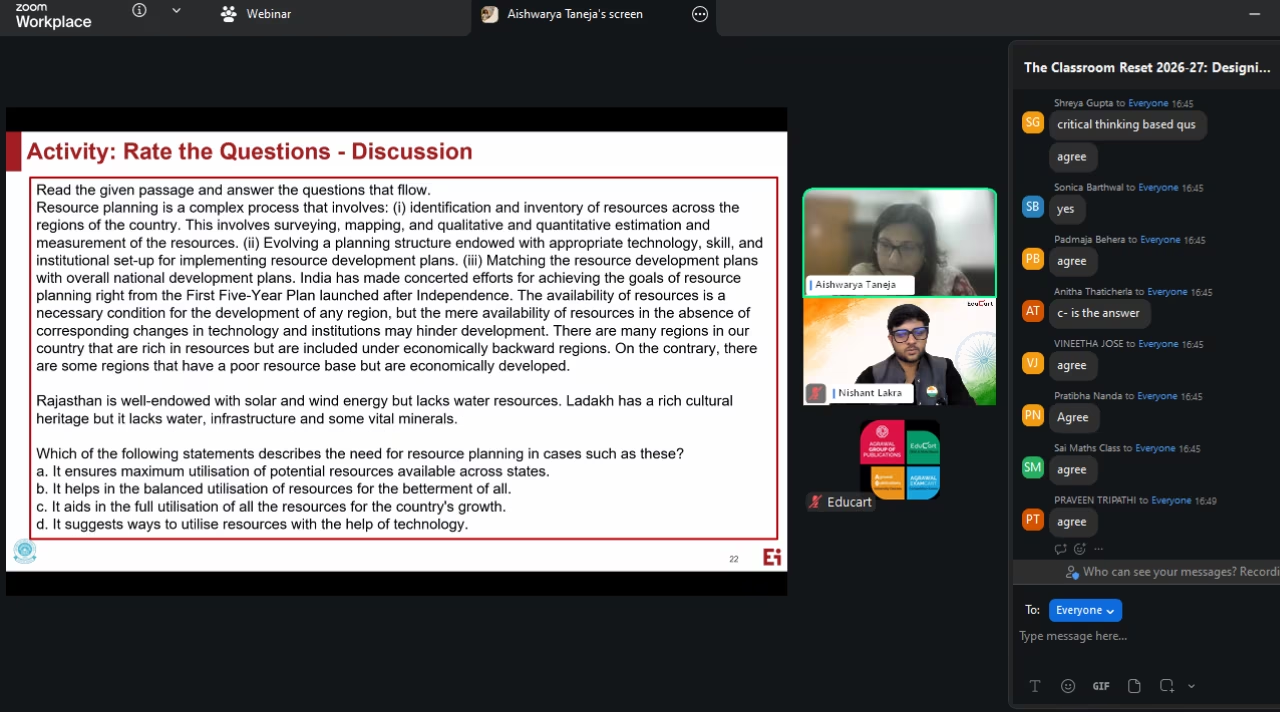
The discussion further emphasised that competency-based assessments should allow students to apply their learning in meaningful, real-life contexts. This approach helps teachers design balanced assessments that evaluate different levels of learning instead of focusing mainly on direct memory recall.
The discussion further focused that competency-based assessments should:
- Allow students to apply learning in real-life contexts
- Focus on meaningful, practical understanding
- Evaluate multiple levels of learning
- Move beyond simple memory-based recall
Understanding by Design: Begin with the Learning Outcome
The next important concept that was discussed during the webinar was Understanding by Design (UbD) or backward design. Instead of beginning with the question, teachers can begin by identifying the desired learning outcome.
The process can broadly be understood as:
Identify the desired result - Decide what evidence will demonstrate learning - Design the learning and assessment accordingly
Teachers were encouraged to first think about what students should eventually know or be able to demonstrate. Once the desired learning is clear, assessment questions can be designed to collect evidence of that understanding.
This approach shifted the focus from simply “What should I teach?” to “What evidence will show me that students have actually understood it?”
Using Real Data and Situations in Assessments
Competency-based questions become more meaningful when students come across situations similar to those they may experience outside textbooks. The webinar focused on the use of real data, surveys and everyday contexts while designing questions.
Different question formats can then be built around such stimuli, including:
- True/False questions
- Correct/Incorrect statements
- Fill in the blanks
- Chronological arrangement
- Free-response questions
- Subjective questions
- Stimulus-based MCQs
The idea is to give students information they need to understand, connect and think about, rather than asking them to reproduce memorised information.
Can a Question Make a Student Think for More Than a Minute?
This session moved to an interesting reflection. During the session it was discussed whether an MCQ can make a student think beyond immediate recall. A competency-based MCQ should not reveal its answer immediately; instead, it should make the students interpret the given clue, connect it with previous knowledge, and then choose the most appropriate option.
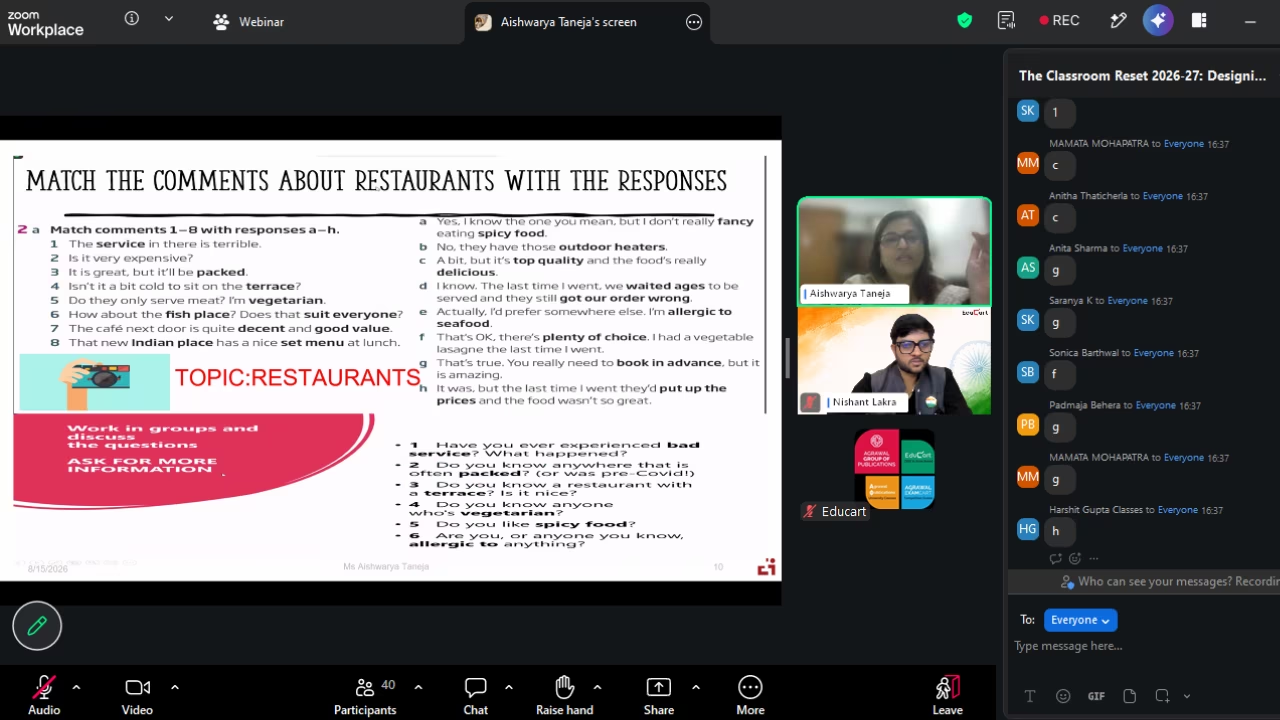
This approach makes the thinking process a key part of assessment. The discussion emphasised that the quality of a question is not defined by whether it is objective or subjective, but by the level and kind of thinking it demands from the learner.
Designing Effective Distractors in MCQs
The webinar also focused on a commonly overlooked element of MCQ design, distractors. A well-designed multiple-choice question should have one clearly correct answer, while the incorrect alternatives should still be believable enough to require careful thinking. Clearly obvious or unrelated distractors can make a question unnecessarily easy without actually testing understanding.
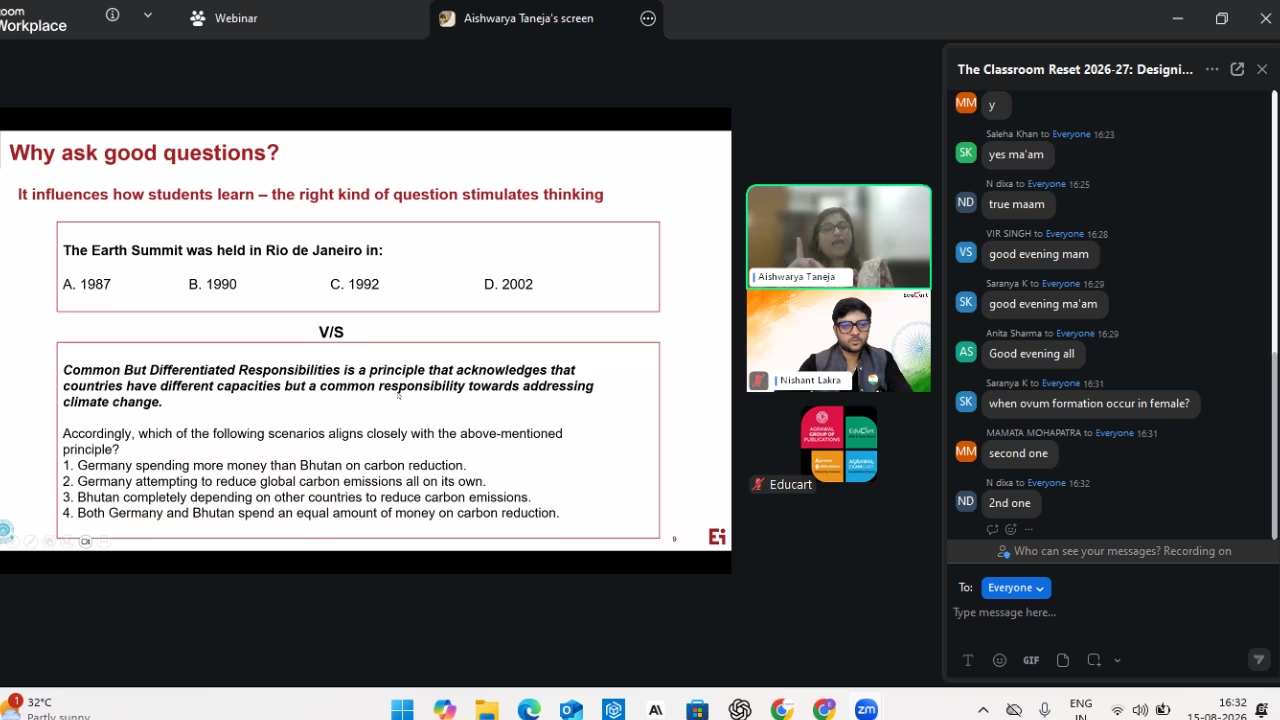
Effective distractors, therefore, can help teachers identify:
- Common misconceptions
- Partial understanding
- Conceptual confusion
- Learning gaps
In this way, an MCQ can become a useful diagnostic tool rather than simply a question with four options.
Assessments Should Diagnose Learning Gaps
Assessment should not end once marks have been given. One of the crucial takeaways from the webinar was that teachers can use students’ responses to understand where learning gaps exist and why they exist.
A wrong answer may indicate a lot of things like
- A misconception
- Incomplete understanding
- Difficulty applying a concept
Analysing such responses gives teachers useful information to change instruction and provide focused support.
Rubrics Can Make Question Design and Evaluation Easier
Further, the session also discussed the role of rubrics in competency-based assessment. Teachers explored both holistic and analytical rubrics as tools for defining expectations and evaluating student responses more systematically.
Rubrics help teachers clearly understand what they want students to show and make grading rules clearer and more consistent. They also help in designing questions because teachers already know in advance what signs of understanding they are looking for.
From Teaching Content to Teaching for Understanding
One of the broader ideas that came from the webinar was the need to move from simply teaching content towards teaching for understanding. When assessments are designed around clear learning outcomes, meaningful contexts and appropriate levels of thinking, they can influence the entire teaching-learning process.
Teachers are then able to identify what students already know, what they need to know and what evidence would show clear and genuine understanding. The session therefore motivated educators to see assessment not only as something conducted after teaching, but as an integral part of the learning process itself.
Related Resources
Explore more resources from Educart to learn about competency-based assessment, effective question-paper design, and professional development for teachers:
- Educart CPD Training Program 2026 – Explore upcoming CPD sessions designed to help teachers strengthen their classroom and assessment practices.
- Designing Effective Blueprints and Question Papers – Learn how to create balanced, purposeful, and competency-aligned question papers.
- Fostering Effective Assessment Practices – Discover practical strategies for making assessments more meaningful and focused on student learning.
- Educart Teachers’ Training Workshops – Explore Educart’s latest teacher training sessions, webinars, and educational workshops.
- Free Specimen Books for Teachers – Access useful specimen books and teaching resources for classroom preparation.
- Educart Lesson Plans for Teachers – Find structured lesson plans and resources to support effective classroom teaching.
The Next Step: Review the Questions We Ask
The webinar concluded with a practical message for educators to review their questions.
Teachers can simply start by looking at the assessments they already use and asking:
- Does this question assess recall or understanding?
- What competency is being tested?
- Is the context meaningful?
- Does the question require students to think?
- Are the distractors plausible?
- Can the response reveal a learning gap?
- Does the question align with the intended learning outcome?
Small changes in the way questions are designed can lead to meaningful changes in how students think and demonstrate their learning.
Through its CPD Webinar Series, Educart continues to create opportunities for educators to discuss practical classroom challenges, exchange ideas and develop teaching and assessment practices that support deeper and more meaningful learning.
FAQs
Q1. What makes a good competency-based question?
Ans. A good competency-based question combines the right concept, relevant content and meaningful context while requiring students to apply their understanding or reasoning.
Q2. How can Bloom’s Taxonomy help teachers design assessments?
Ans. Bloom’s Taxonomy helps teachers create questions across different cognitive levels—from remembering and understanding to applying, analysing, evaluating and creating.
Q3. What is Understanding by Design (UbD)?
Ans. Understanding by Design is a backward-design approach in which teachers first identify the desired learning outcomes, determine what evidence will demonstrate that learning, and then plan instruction and assessment accordingly.
Q4. What makes a good distractor in an MCQ?
Ans. A good distractor is an incorrect but plausible option. It should encourage students to think carefully and can often represent common misconceptions or errors learners are likely to make.
Q5. Why are rubrics useful in competency-based assessment?
Ans. Rubrics clearly define expected performance and help teachers evaluate responses consistently. Holistic and analytical rubrics can also make the assessment-design process more
Glimpse of the Event

Share Article


.svg)





%2520(1).avif)























.svg)

