Educart uses its strong connection with students, teachers and educational professionals to bring insights from classroom education and curriculum change.
Sonali Khosla, Director and Chief Managing Editorial Head at Educart, shares her view on changing the NCERT Class 10 Syllabus, its impact on students and learning outcomes.
Sonali Khosla, Director and Chief Managing Editorial Head at Educart, shares her views on changes in Class 10 NCERT syllabus. She explains what NCERT Class 10 syllabus changes mean for students, teachers, and educational professionals as per her understanding of curriculum development. She discussed whether less content means good learning or not.
The CBSE Class 10 board is strongly dependent on the NCERT Syllabus. Changing the NCERT Class 10 Syllabus directly affects students’ learning and preparation for further education. Sonali Khosla put up an interesting question: Is reducing or changing the syllabus really beneficial? Well, the answer depends on the outcomes of learning from these changes.

Why Was the NCERT Syllabus Changed?
Ms Sonali Khosla discussed that the possible purpose behind changing the NCERT Class 10 Syllabus is to shift from textbook-based learning to activity-oriented learning. It aims to reduce academic pressure by lowering theoretical memorisation and increasing real-world application.
The changes align with the National Education Policy (NEP) 2020, which focuses on skill-based and hands-on learning. For example: Science should include more experiments and observations, whereas Social Science should include projects, discussions and case studies.
According to the expert, these methods will definitely increase curiosity, critical thinking and reasoning among students.
What Has Actually Changed in the Class 10 Curriculum?
NCERT had earlier made changes by removing chapters and topics from Science, Mathematics and Social Science textbooks. However, this time, NCERT is reforming the way students will learn. The major focus will be on application-based learning, practical understanding and objective analysis.
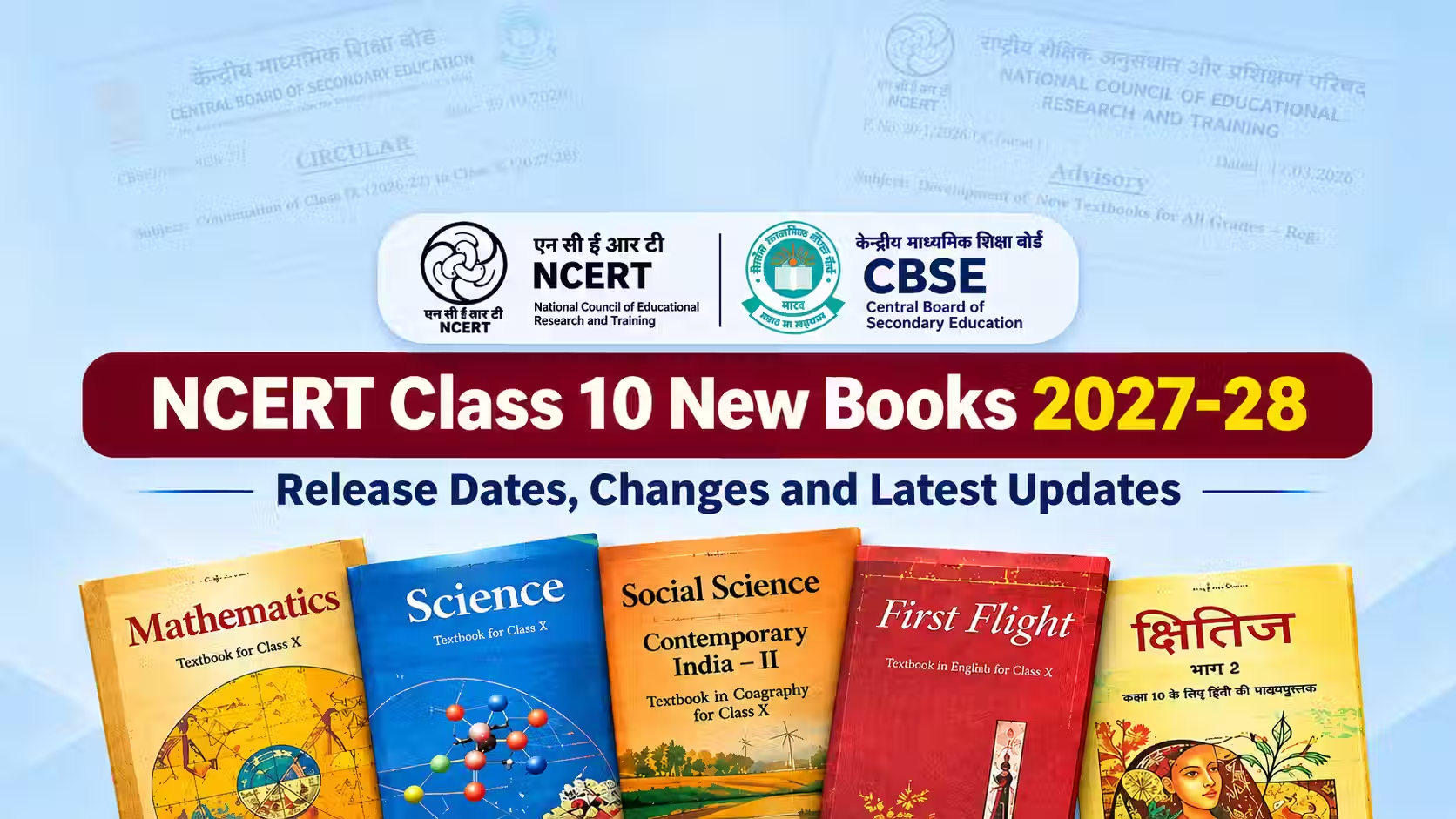
NCERT has confirmed that it will release Class 10 NCERT textbooks for the 2027–28 academic session. They refer to the National Curriculum Framework for School Education (NCF-SE) 2023. You can check NCERT Class 10 New Books 2027-28: Release Dates, Changes and Latest Updates for more details.
Is This Change Actually Beneficial for Students?
She also argues that reducing the syllabus can help students manage academic pressure and provide more time to understand the concepts. It will encourage students to learn through practical activities, experiments and application-based learning.
However, removing the foundational topics might be problematic, as they may create learning gaps. Reducing syllabus cannot guarantee better learning.
Key Takeaways:
- Lower academic pressure and a more engaging way to learn.
- Learning through experiments and classroom discussions.
- Students' development of critical thinking and problem-solving skills.
- Learning gaps may happen if foundational topics are removed.
- Teachers' role in implementing the revised syllabus and replacing rote learning.
What Should the Way Forward Be?
In the end, Sonali Khosla further believes that the revised syllabus must be a balance between conceptual learning and theoretical learning.
Everyday teaching must support experiments, projects, discussions and real-world problem-solving in schools. Teachers also have to take extra steps in creating opportunities to learn and explore beyond textbooks.
The Final Verdict: Less Content, Better Learning?
To summarise her expert opinions, we can conclude that making changes in the NCERT Class 10 Syllabus can be beneficial, only if it makes learning more practical and engaging.
Successful learning should not depend on how many chapters students complete but on whether they understand them effectively.
Is less content better for learning or not? As per her analysis, that will be decided only when a new syllabus can develop capable thinkers and not students with rote learning.
FAQs
Q1. Will the reduced NCERT syllabus make Class 10 easier?
Ans. Yes, it can reduce academic pressure, but better learning depends on how effectively concepts are taught.
Q2. Will practical learning replace textbook learning?
Ans. No. Experts suggest balancing theoretical knowledge with experiments, projects and real-world activities.
Q3. Can removing chapters affect students' basic understanding?
Ans. Yes, removing foundational topics may create learning gaps.
Q4. Will the new syllabus help students develop critical thinking?
Ans. Yes. Application-based learning can encourage reasoning, problem-solving and deeper understanding of concepts.
Q5. What matters more: completing chapters or understanding concepts?
Ans. According to experts, learning should focus on conceptual clarity rather than simply completing chapters.
Glimpse of the Event

Share Article