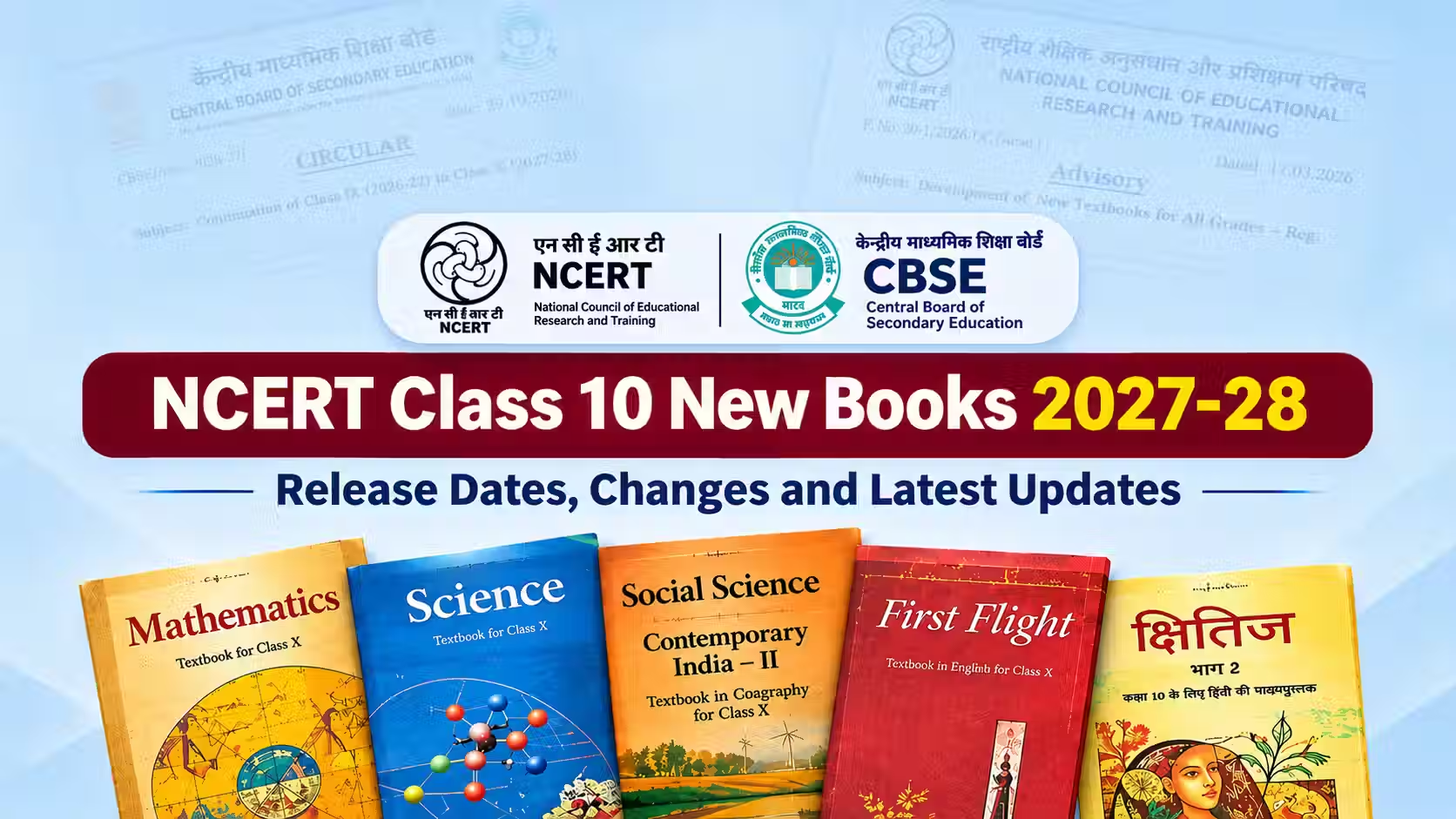
On 17th March 2026, NCERT announced the development of new Class 10 textbooks to align the curriculum with NEP 2020 and NCF-SE 2023. It has already introduced syllabus and textbook revisions for Classes 1–9. Also, similar changes are expected for Class 10 as well.
The NCERT syllabus for Class 10 may also change before the academic session of 2027-28. This article clarifies what changes they are bringing, why NCERT syllabus is changing and what benefits these changes will bring to the students.
What has NCERT Officially Announced?
NCERT has declared the release of NCERT textbook revisions for the 2027-28 session. The updated advisory informs that the language books will be available till end of November. Moreover, other books will be released by the end of December.
Read more about: NCERT Class 10 New Books 2027-28
NCERT has not provided any new updates on the syllabus change yet. Moreover, why NCERT syllabus is changing and its benefits are not clear due to a lack of official notices. Thus, the details below are anticipated through analysing other classes' syllabi and curricula.

Why Is NCERT Changing the Syllabus? Top 5 Reasons
There are various explanations for why the NCERT syllabus is changing. However, the answer to why NCERT syllabus is changing is to upgrade the whole learning approach for Class 10 students. The following points may help you to understand the reasons behind changing the syllabus:
- NEP 2020: Implementation of NEP 2020 to shift the learning style from rote-based education to conceptual understanding.
- NCF-SE 2023: Rollout of the curriculum framework according to the NCF-SE 2023. This includes revised textbooks, subject-wise learning objectives, classroom teaching and assessments.
- Analytical thinking: The syllabus change for Class 10 will focus on developing analytical thinking, communication, creativity, problem-solving and the ability to apply knowledge in different situations
- Cultural context: One prominent objective of the new NCERT syllabus is the inclusion of Indian knowledge systems and cultural context in the learning of students.
- Multidisciplinary Learning: NEP 2020 curriculum changes and the syllabus will also focus on Multidisciplinary Learning in students' learning process.
What Are the Changes in the New NCERT Syllabus for Class 10?
The NCERT curriculum changes for 2027-28 reflect the transition to the new session. The probable changes in the new syllabus have been described below:
- Aligning with the new textbooks of NCERT: The new syllabus will align its curriculum with the recently released NCERT textbooks.
- Changes in the contents: CBSE may include new relevant content in place of redundant content across all the subjects.
- Integration of practical learning: As seen in the other classes' syllabi, CBSE may integrate more practical learning into its syllabus. Also, it may encourage analytical and computational thinking instead of only memorisation.
- Changes in the assessment pattern: The board assessment process may also be changed with the new syllabus. But no question paper pattern change has been reported till the date.
How Are NEP 2020 and NCF-SE 2023 Linked?
The New Education Policy (NEP) 2020 provides an overall vision for transforming school education. On the other hand, the National Curriculum Framework for School Education (NCF-SE), 2023 convert this vision into curriculum objectives, teaching methods and guidelines for assessment.
The following details are going to help you understand the relationship between NEP 2020 and NCF-SE 2023. Moreover, it will describe how they are going to influence the new syllabus of Class 10. It will help you to understand why NCERT syllabus is changing for Class 10 students.
Benefits Of The Revised NCERT Syllabus
NCERT is working on implementing the new education policy to enhance practical learning across all subjects. This is why NCERT syllabus is changing as per the NEP, 2020. The expected benefits to the students have been mentioned below:
- Better conceptual learning: The New Education Policy and NCERT syllabus changes may promote better conceptual learning across all the subjects. This can be noticed in the behaviour of the other classes’ syllabi.
- Improved analytical skills: NEP 2020 curriculum changes will promote greater analytical skills to improve students' computational thinking.
- Improved subject understanding: NCERT curriculum changes 2027-28 hint at improved subject understanding. It’ll help students in further studies in their respective subjects.
- Balanced academic development: The syllabus may include physical education, arts and interdisciplinary subjects. It’ll encourage holistic development of students in different areas.
Recommended Articles for Students of Class 10
Get access to the various articles and study materials for free to prepare well for the Class 10 board exam.
FaQs
Q1. Why NCERT syllabus is changing for the Class 10 session 2027–28?
Ans. NCERT is revising the curriculum to align it with NEP 2020 and NCF-SE 2023, with greater emphasis on conceptual understanding, practical learning and critical thinking.
Q2. Has NCERT officially announced the new Class 10 syllabus for 2027–28?
Ans. NCERT has announced the development of new Class 10 textbooks. However, the revised syllabus details have not yet been officially released.
Q3. What changes are expected in the new NCERT Class 10 syllabus?
Ans. The syllabus may include updated content, practical activities, application-based learning, interdisciplinary connections and changes in assessment. CBSE has not confirmed changes to the question pattern.
Q4. How are NEP 2020 and NCF-SE 2023 connected to the Class 10 syllabus revision?
Ans. NEP 2020 provides the vision for educational reform, while NCF-SE 2023 translates it into curriculum objectives, teaching methods and assessment guidelines.
Q5. What benefits can students expect from the revised Class 10 syllabus?
Ans. Students may develop stronger conceptual understanding, analytical skills, problem-solving abilities and subject knowledge through practical, multidisciplinary and application-based learning.
Glimpse of the Event

Share Article