On November 1, 2026, Educart hosted an online Continuing Professional Development (CPD) webinar on the National Education Policy (NEP) 2020. The event discussed NEP 2020, its core features, implementation, and impact on teaching and learning practices.
The event featured a two-hour interactive session led by CBSE Resource Person Dr Sonika Chauhan, with Ms Sonali Khosla, Editorial Director at Educart, moderating the discussion.
The CPD teacher training session aimed to shed light on the vision behind NEP 2020. It helped teachers understand the paradigm shift in India's education system and explore ways to implement it in their classrooms.

Understand the Shift from NPE 1986 to NEP 2020
Dr Sonika Chauhan began the discussion by asking participants about their knowledge of NEP 2020 and their perceptions of the policy. The introductory interaction assessed teachers' existing knowledge and encouraged them to join the discussion.
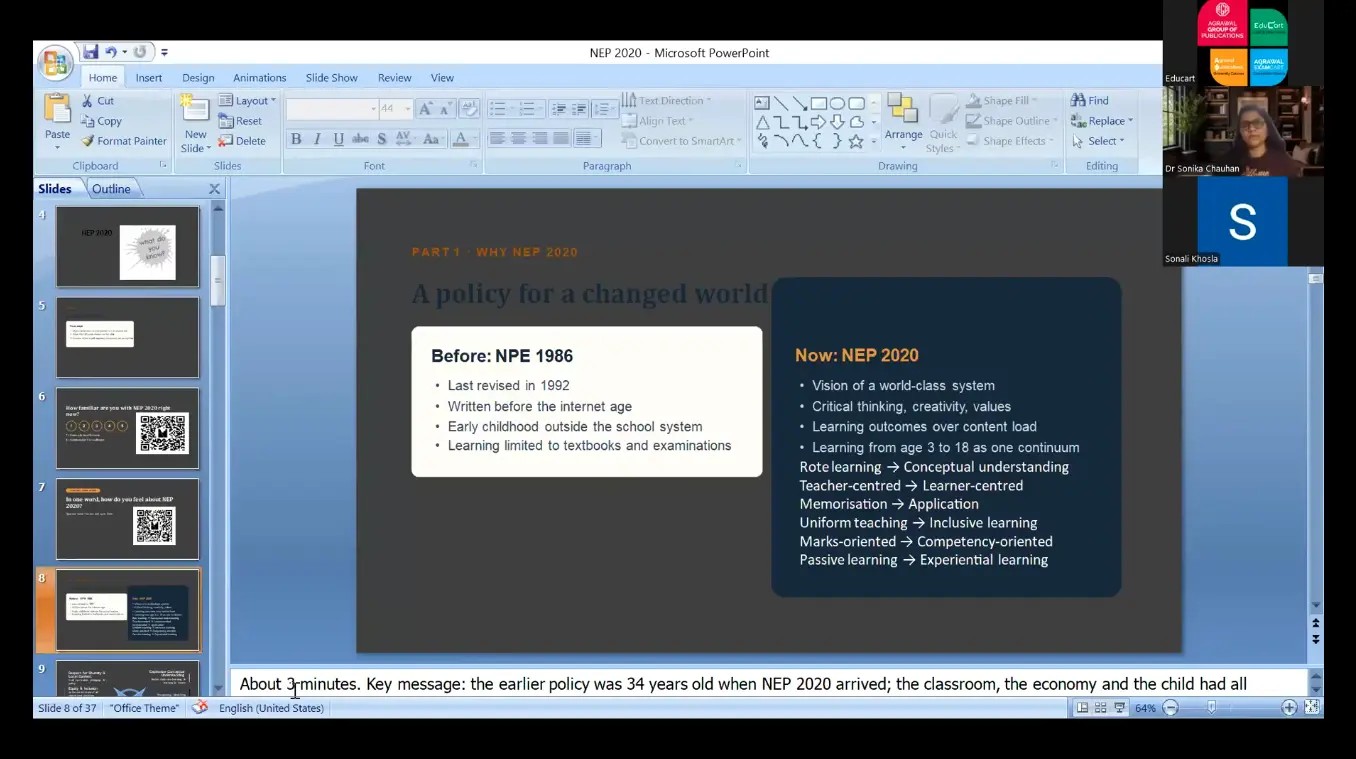
She then discussed the reasons why the education policy moved from NPE 1986 to NEP 2020. The event highlighted the differences between the two policies and how education under the earlier policy depended entirely on textbook-based learning. Meanwhile, NEP 2020 promotes a shift from rote memorisation to experiential learning.
Watch the Full CPD Webinar on NEP 2020
Comprehending the 5+3+3+4 Structure of NEP 2020
The discussion primarily focused on the new curricular and pedagogical structure introduced under NEP 2020. Dr Sonika explained why children aged 3 to 8 years are included in the foundational stage and how these years are crucial in shaping children's learning and brain development.
She then explained the 5+3+3+4 structure, which divides school education into four stages: Foundational, Preparatory, Middle, and Secondary.
- Foundational Stage (5 years): Includes children aged 3-8 years, covering three years of preschool or Anganwadi education and Classes 1 and 2. Play, activity and discovery-based learning is emphasised.
- Preparatory Stage (3 years): Classes 3-5 are in Stage 2, which introduces more formal classroom learning while retaining interactive, activity-based teaching practices.
- Middle Stage (3 years): Covers classes 6-8, with subject-oriented learning, practical activities, and opportunities to develop analytical and critical thinking skills.
- Secondary Stage (4 years): Includes classes 9-12, encouraging multidisciplinary learning, versatility in subject selection, and extensive conceptual understanding.
Dr Sonika also explained the pedagogical strategies prescribed for each stage, their diverse characteristics, and additional learning areas that remain common across stages. This helps teachers understand how teaching practices and learning expectations gradually change alongside student progress.
Classroom Implementation and the Changing Role of Teachers
The discussion then moved from the structural NEP 2020 framework to its practical implementation. It highlighted key changes introduced by the policy and their impact on students' learning experiences.
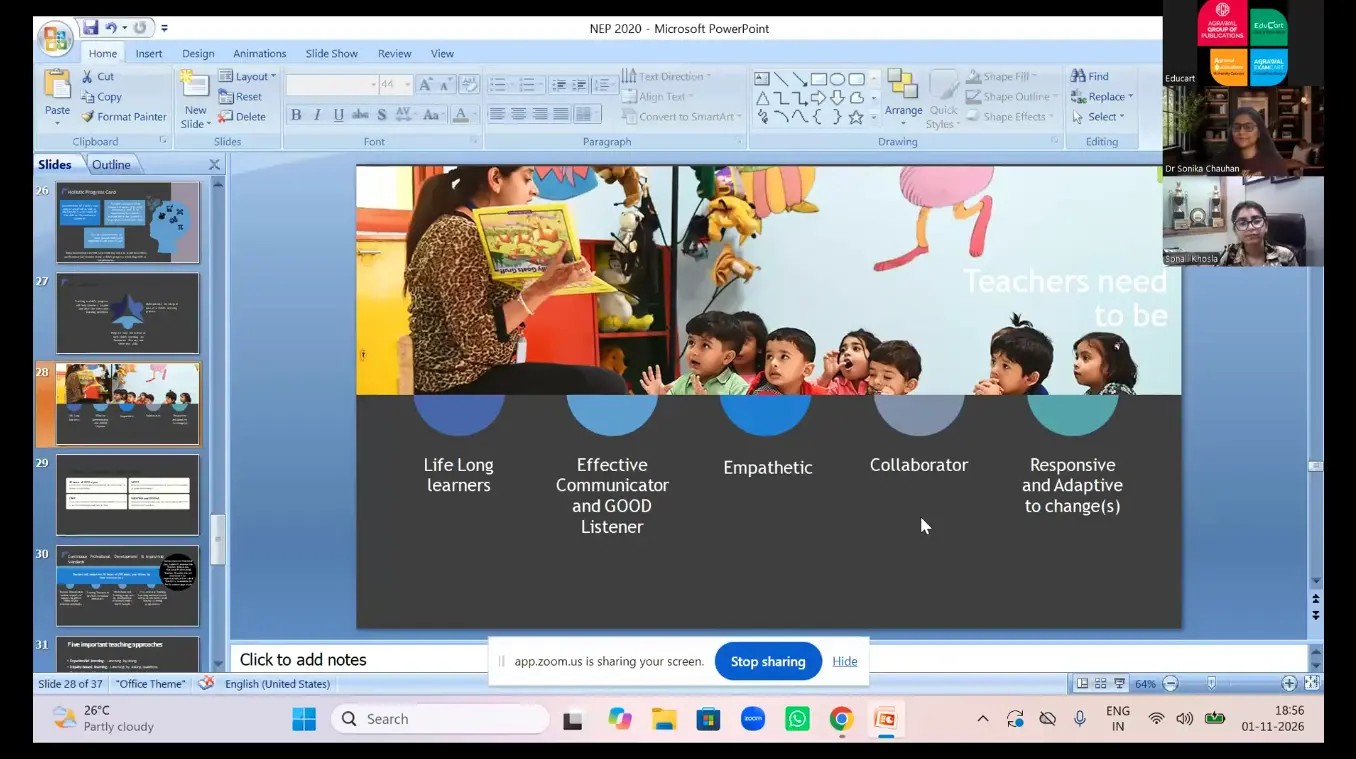
Dr Sonika emphasised the importance of shifting teaching practices to promote active participation, conceptual understanding, questioning, and the application of knowledge.
She made the session engaging by presenting a case study and inviting teachers to articulate their ideas. They were encouraged to understand the situation and present their perspective. Teachers were given interactive exercises to connect policy recommendations to challenges and decisions they may face in an actual classroom environment.
Assessment, Examination, and the Holistic Progress Card
The second aspect of the webinar focused on assessment and examination as per NEP 2020. Dr Sonika explained various assessment methods, including self-assessment and peer assessment. These methods help students reflect on their own progress, identify areas for improvement, and learn to assess their work constructively.
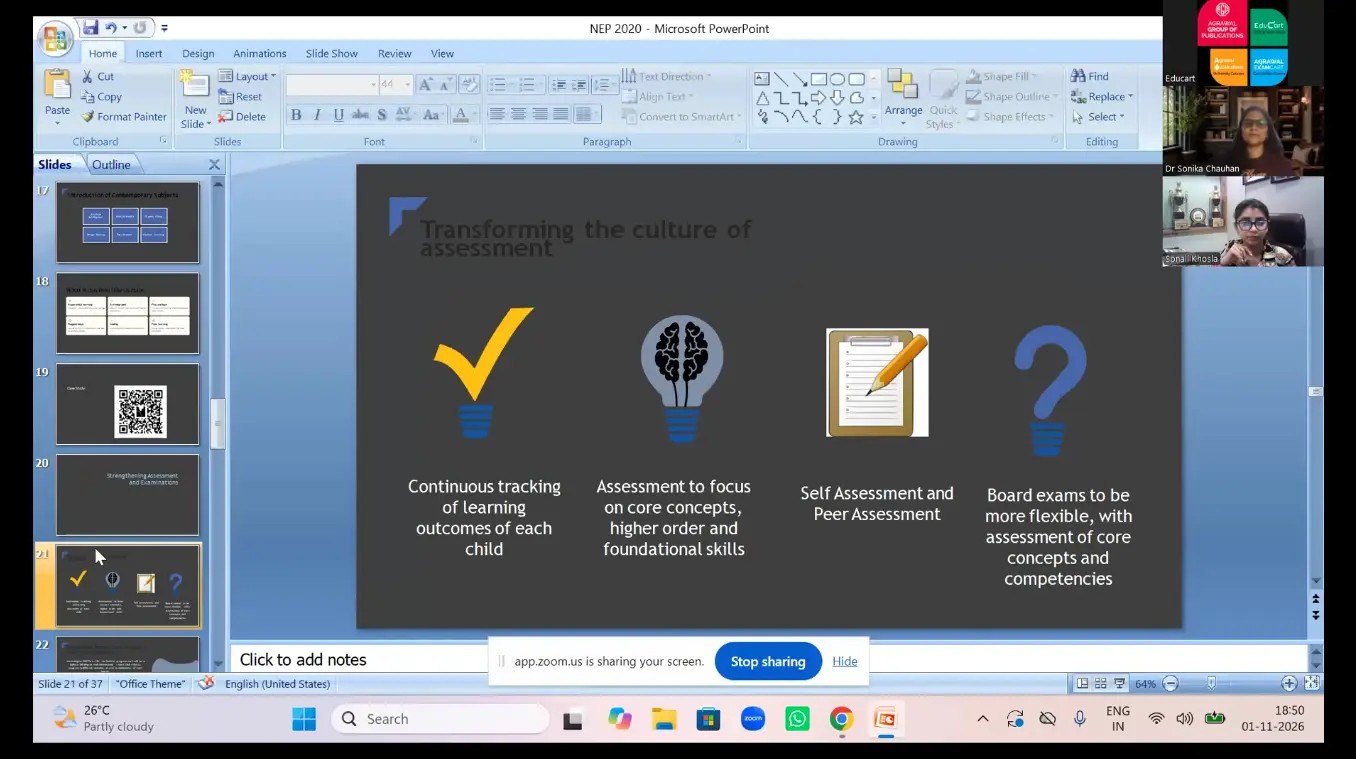
She also presented the various domains in the Holistic Progress Card (HPC) along with its advantages. The HPC offers a broader understanding of student development by considering different aspects of learning and growth rather than focusing exclusively on academic marks.
The discussion focused on the need to implement assessment practices that help teachers better understand students' learning processes and identify their individual learning needs.
NEP 2020 and the Professional Development of Teachers
NEP 2020 also focused on teachers’ professional growth alongside students’ development. The session highlighted a common question: Why do teachers require regular training? To answer this, Dr Sonika Chauhan explained the importance of regular training and how these sessions help teachers update their knowledge and teaching skills.
She also discussed the framework that supports teachers’ training and development:
- 50 Hours of CPD: NEP 2020 suggests that teachers complete at least 50 hours of professional development training each year. This will help them to update their knowledge and professional practice.
- National Professional Standards for Teachers (NPST): NEP 2020 uses NPST to define the professional standards and competencies expected from teachers.
- NISHTHA: It is an initiative by the Ministry of Education, India. It provides training to improve teachers’ competencies and classroom practices.
- DIKSHA: This is a digital platform that offers teachers updated educational resources, training materials and learning opportunities.
Conclusion
In the end, Dr Sonika Chauhan summarised the session with 20 key points that covered the major topics of the webinar. These points covered shifts in teaching approaches, the different stages of learning, assessment methods and the importance of holistic student development.
Educart's CPD teacher training session on NEP 2020 helped teachers understand the key points of NEP 2020 and its relevance in the classroom. The two-hour session had structured discussions, practical case studies and explanations by Dr Sonika.
The importance of teachers adapting their teaching practices and professional skills to support changing educational needs was one of the key discussions. The session also highlighted Educart’s role in supporting educators through knowledge-sharing and training opportunities that help them adapt NEP 2020 in schools.
Glimpse of the Event

Share Article