.svg)
The CBSE Exam pattern 2026-27 for both Class 10 and 12 continues to follow the same assessment approach introduced in the 2024-25 session, with an emphasis on competency-based questions.
Students can expect a mix of question typology that assess their conceptual understanding, application and analytical skills. Understanding the latest exam structure helps students know how marks are allotted and what type of questions they can expect in the 2027 exams.
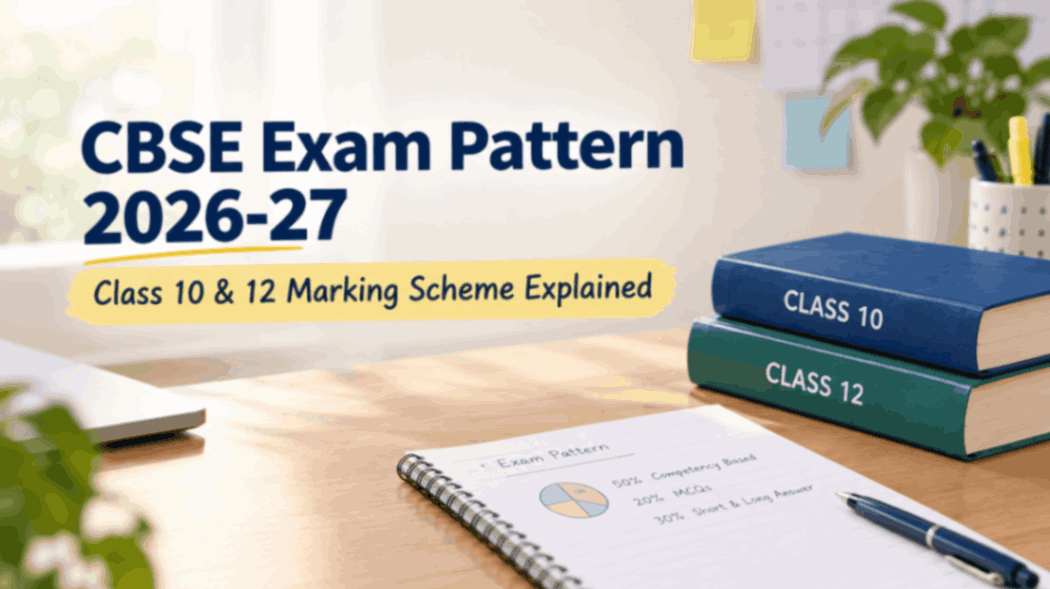
This article covers everything you need to know about the revised CBSE exam pattern 2026-27 for Class 10 and 12, including mark distribution, question types, and core assessment details.

Key Changes in the 2026-27 Exam Pattern
Here’s a quick overview of the latest 2026-27 exam pattern, including the key points students need to know.
Class 10: Key Changes and Highlights
Class 12: Key Changes and Highlights
What’s New in the CBSE 2026-27 Board Exam Pattern
If you’re wondering what has changed in the CBSE board exam pattern for 2026-27, no major changes to the overall exam pattern for Class 10 and Class 12.
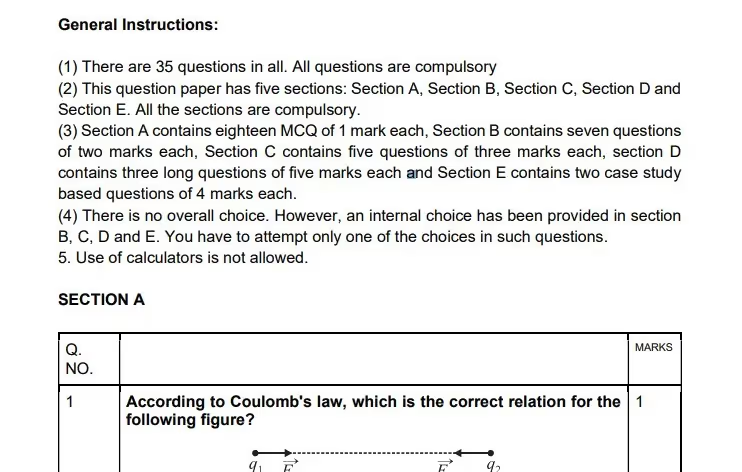
- The 2026-27 Sample Question Papers (SQPs) continue to follow the established assessment approach with a mix of question types.
- Question types, sections, marks, and internal choices can vary across subjects, so students should refer to official sources.
- Competency-based assessment continues to focus on application, analysis, understanding, and interpretation rather than direct recall.
- Class 10 now has two board examinations. The first exam is mandatory, while the second exam allows eligible students to improve their performance.
- Both board exams follow the latest Class 10 syllabus. Likewise, Class 12 students should prepare as per the latest Class 12 syllabus
- Students can refer to the latest CBSE SQPs and marking schemes for both Class 10 and 12 to understand the exact question types, marks distribution, and internal choices for each subject.
What is the Two-Exam System in Class 10?
CBSE introduced a two-exam system for Class 10 from the 2025-26 session, and this continues for the 2026-27 academic session. The first board exam is mandatory for all students, while the second exam helps students improve their marks in up to three subjects. The syllabus and question paper pattern remain the same for both examinations.
- Board Exam 1: Mandatory. All Class 10 students attempt it in February/March.
- Board Exam 2: Optional, up to 3 subjects. Conducted in May and is available to eligible students for improvement or compartment purposes.
- The higher of the two scores in each subject is used as the final score.
- Both attempts are on the same syllabus and have the same question format, and there is no easy or separate version of Board Exam 2.
- Practicals and internal assessments are conducted once only before the first exam and are not retaken.
- The Two-Board Exam system applies to Class 10, while Class 12 continues with its existing single Board Examination system.
Who Can Appear for Board Exam 2?
Students who missed or failed 3 or more subjects in Board Exam 1 are not eligible for Board Exam 2 and are placed in the Essential Repeat category for next year's main examination. The second board exam can be used as:
- Improvement category: Students who have passed the first exam can appear for improvement in up to three eligible subjects.
- Compartment: Students who failed one or two subjects in Board Exam 1.
- Minimum appearance requirement: A student must have appeared in at least three examinations in the first examination to be eligible for the second examination.
How Does the Second Exam Affect the Result?
The second exam will not be an alternate or simpler Board Exam. It follows the same syllabus and examination system as the first examination. In case students appear for improvement, they can use their marks in the second exam based on CBSE's result rules. So, it would be advisable to follow the official CBSE result guidelines instead of just stating that a 'higher score' is applied to all subjects.
What Remains Unchanged in Revised Exam Pattern 2026-27
The key components of the revised exam pattern are outlined below:
- Higher Emphasis on Competency-Based Questions: This remains 50% of the overall theory score and tests a student's competency in applying learning to real-life situations, such as case studies, source-based questions, data analysis, and problem-solving.
- Focusing on multiple-choice questions (MCQs): MCQs will remain 20% of the exam weight. These examinations measure how well students grasp fundamental ideas and how effectively they remember important details.
- Less Emphasis on Short/Long Questions: The short and long answer questions remain 30% of the exam, with lower relative weight than competency-based questions.
Books to Help You Prepare for the CBSE Board Exams 2027
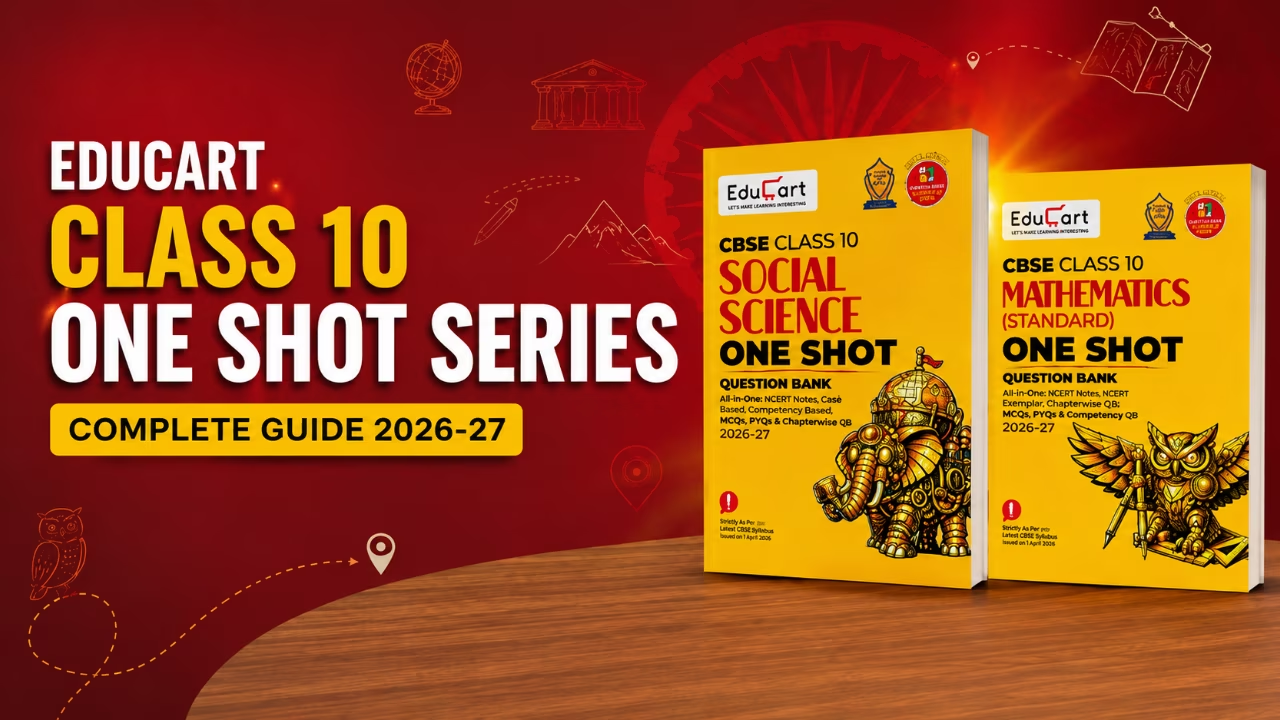
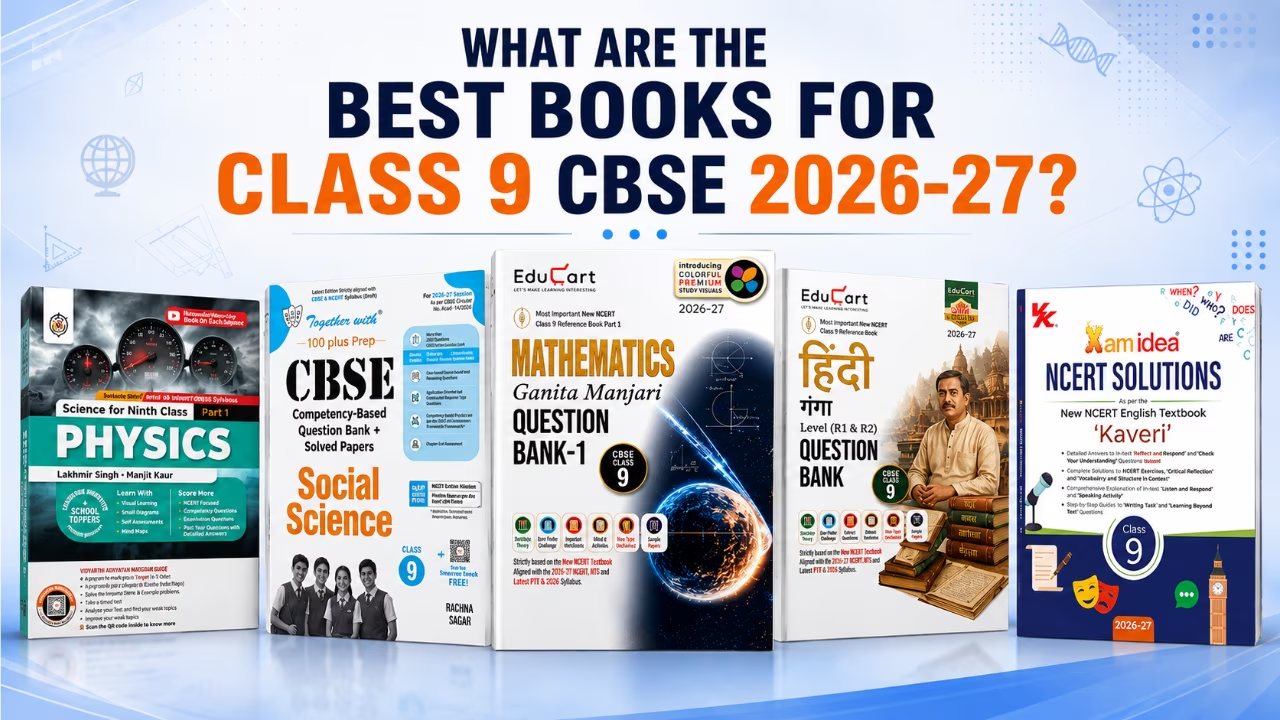
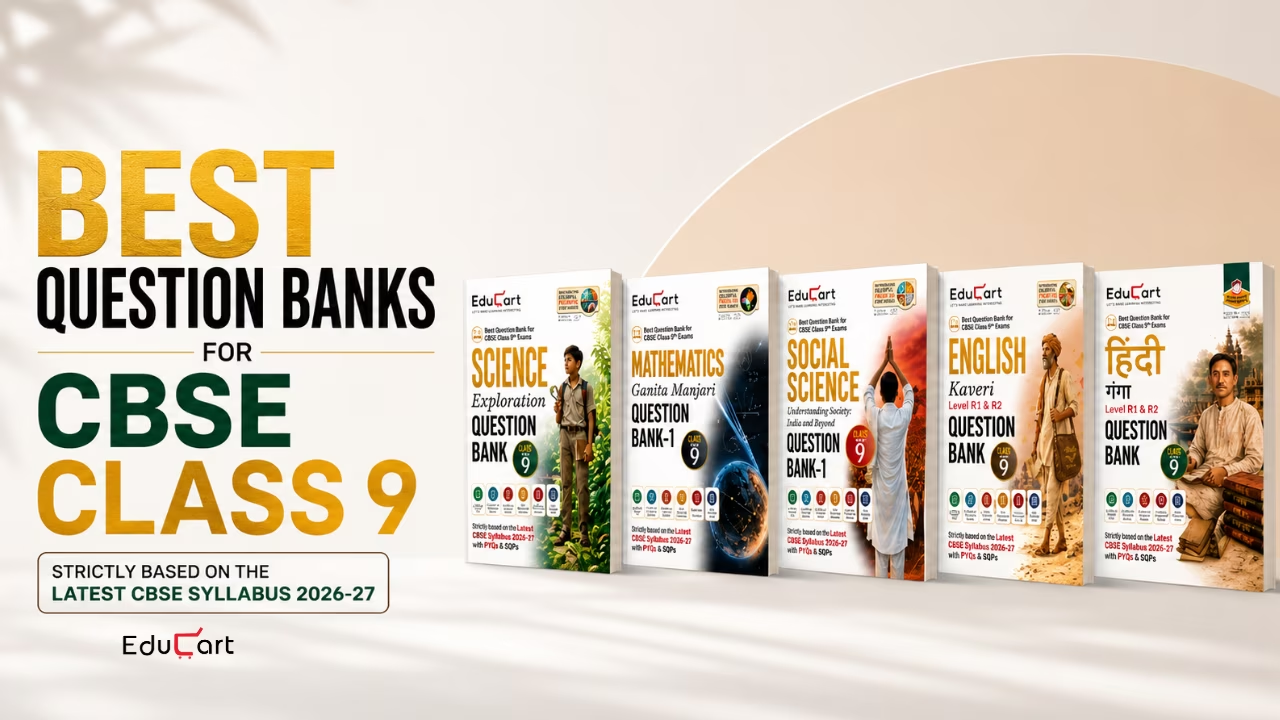
Understanding the exam pattern is only half the job. You also need to practise different types of questions to apply theory in practice. Along with the official CBSE sample question papers and marking schemes, these practice books can help you revise important concepts, solve exam-style questions, and test your knowledge for the 2027 board exams.
Recommended Books for Class 10
Recommended Books for Class 12
FAQs
Q1. Is it necessary to appear for CBSE Class 10 Board Exam II?
Ans. No. Only Board Exam 1 (typically held in Feb-March) is compulsory for all Class 10 students. Board Exam 2 (May) is optional – only appear for it if you want to improve marks or clear a compartment exam.
Q2. Will the internal assessment/practicals be repeated for the Class 10 second board exam?
Ans. No. Practical and internal assessment marks are recorded once, before the first exam, and the same marks apply for both attempts.
Q3. What happens if I fail in the second exam attempt for Class 10?
Ans. If a student fails to pass either of the two board examinations, he/she will be deemed to have failed in that session, with no third attempt available in the same session.
Q4. What is the change in CBSE Class 12 Exam Pattern 2026-27?
Ans. No. Official sample question papers show no major change in the assessment pattern and marking scheme for the Class 12 board exam 2026-27.
Q5. Will there be a second board exam for Class 12 in 2026-27?
Ans. No. Class 12 continues to have a single annual exam in an academic year. The two-exam system is only applicable for Class 10 students.
Q6. What is the exact percentage distribution of marks for each Class 12 subject?
Ans. Students can refer to the CBSE Class 12 sample papers 2026-27 and the official marking scheme, as sections, marks, and internal choices vary by subject.
Glimpse of the Event

Share Article


.svg)




%2520(1).avif)

















.svg)

