
.svg)
Choosing a stream in Class 11 is the first step towards making an informed career choice. The subject students choose not only shape their higher education but influence the careers they can pursue.

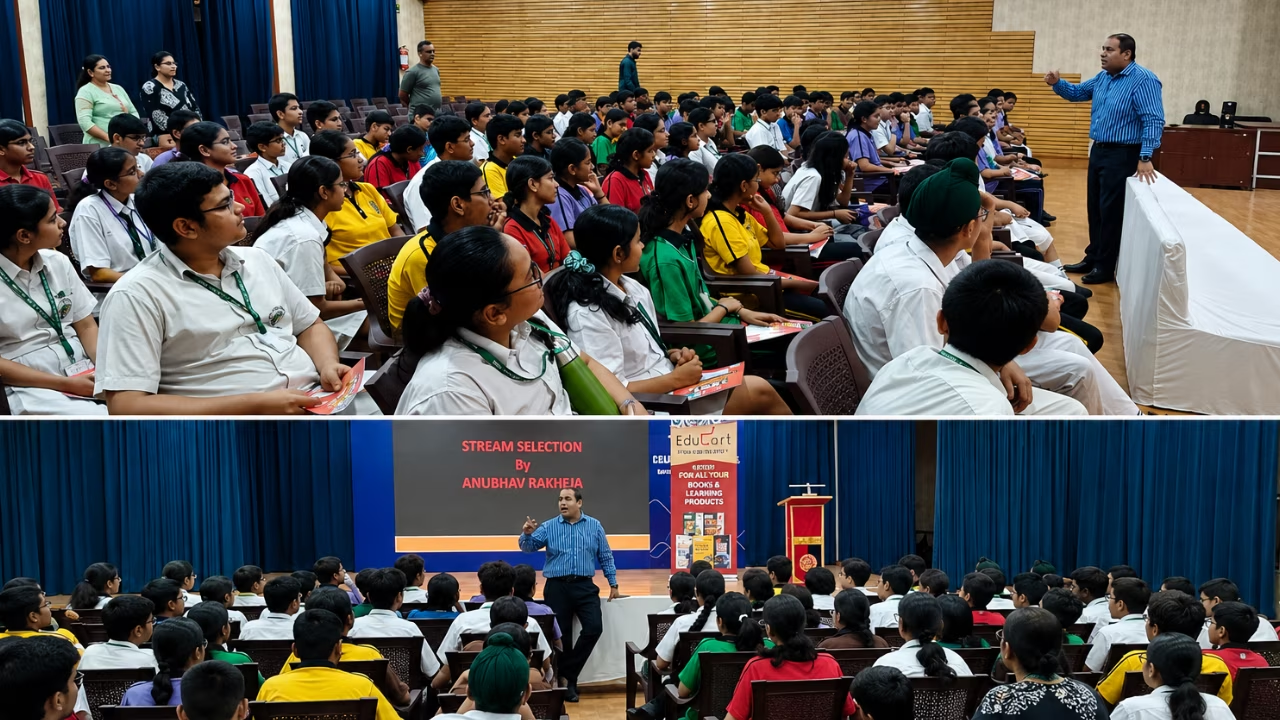
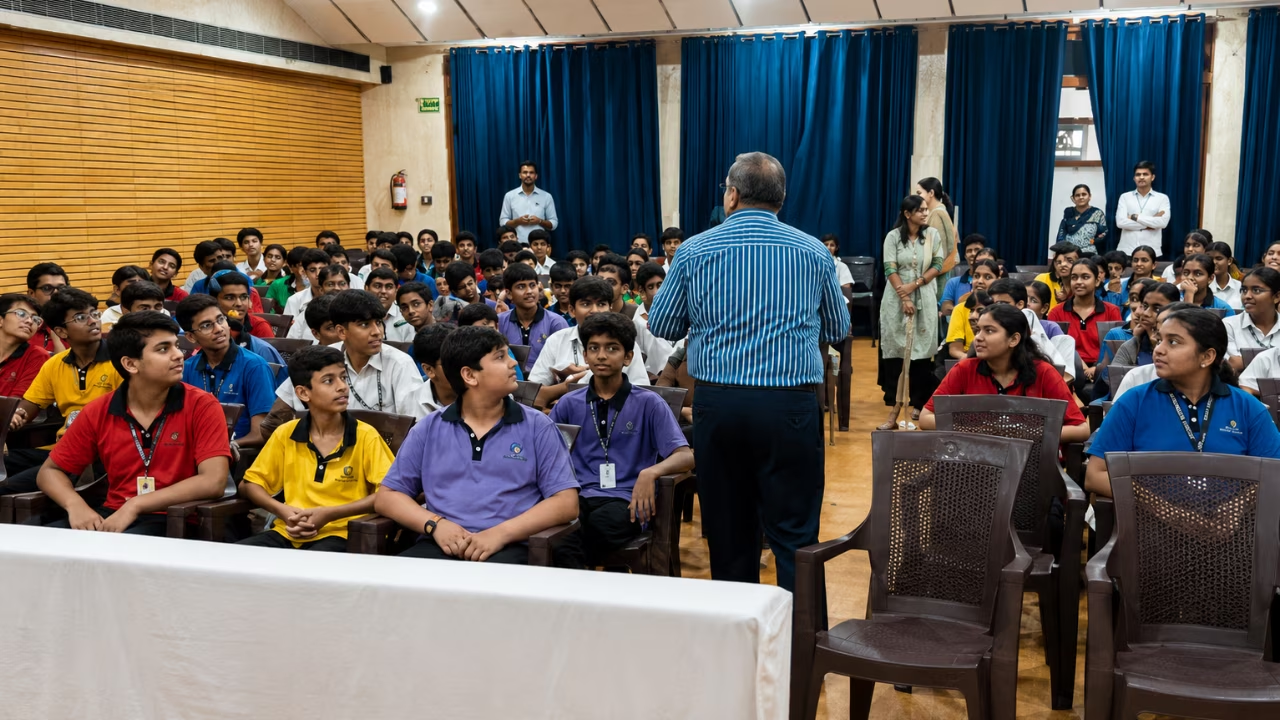
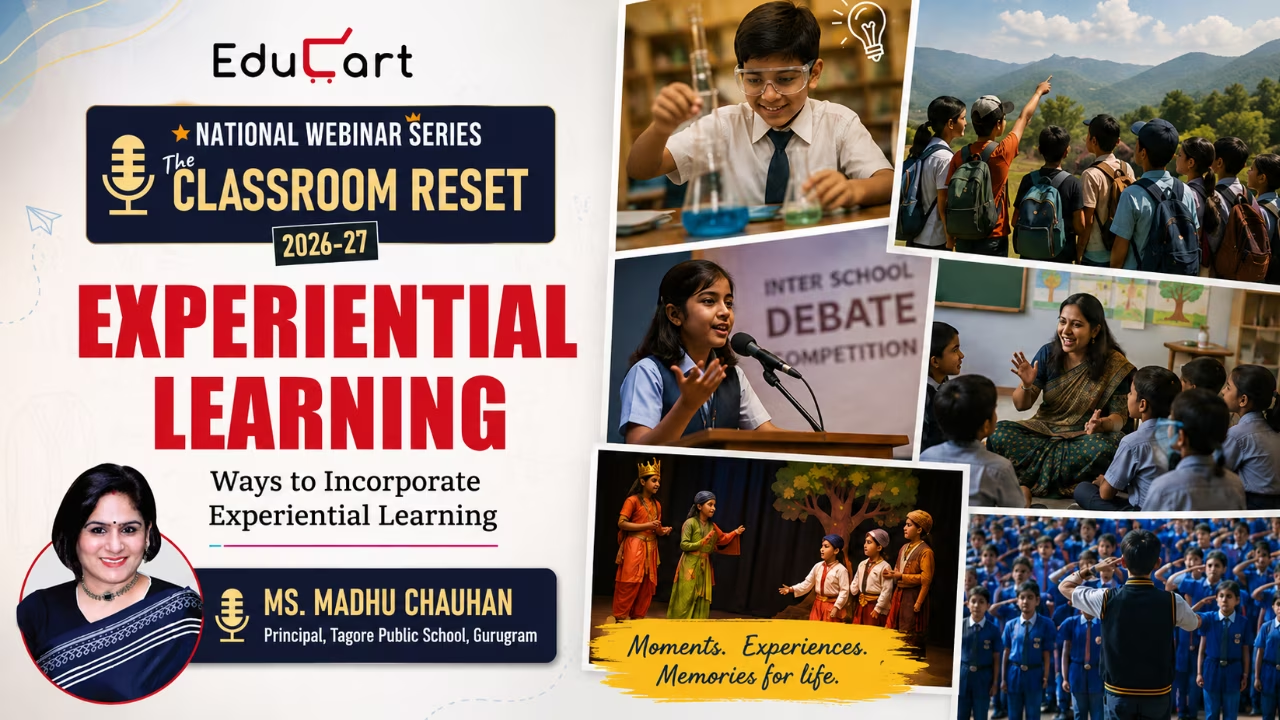
This is the first decision students make for themselves and it is the most important academic decision. To help students understand this early on before reaching Class 11, Educart organised a Student Career Counseling Workshop on 5th August, 2026.
Career Counselling Workshop for Class 9 - Event Highlights
- Event: Student Career Counselling Workshop
- Duration: 1 Hour
- Date: 5th August 2026
- Type: Free Workshop
- Topic: Stream Selection & Career Guidance
- Speaker: Mr. Anubhav Rakheja, Career Counselor
- Discussion Led By: Mr. Inderpreet Singh
The workshop aimed to empower the Grade 9 students with focused insights so that when time comes, they make the choice based on their aspirations rather than misconceptions.

Catering the Myths Around Stream Selection
The session started with catering the biggest challenge faced by the students - misconception surrounding stream selection. Based on what students have heard around them, they often believe:
- Science is the only path to success
- Commerce and humanities offer limited career opportunities
Through interactive discussion and examples from the real-world, Mr. Rakheja explained that success is not decided by the stream a student chooses but by their skills, interests, aptitude and dedication. Also, he explained how every stream offers rewarding careers which are inclined with an individual’s strength. On knowing that, students were motivated to move beyond any kind of myth, and stereotype around stream choice.
Knowing Yourself Before Knowing Your Career
Before knowing about the career choices, it is important for the students to know themselves and that will finally lead to understanding the interests. Mr. Anubhav highlighted that self-awareness is in fact the foundation of making the academic choices which are suitable.
Students learned the importance of evaluating:
- Personal strengths and areas for improvement
- Interests and long-term aspirations
- Aptitude and problem-solving abilities
- Personality traits
- Individual learning style
The session emphasised that career choices become more meaningful when they are aligned with a student's natural potential rather than external expectations.
Understanding Subject Combinations and Career Flexibility
This segment of the workshop provided a clear understanding to the students about various subject combinations which are available after Class 10 and students can choose from them. Students were further told how combinations which are available influence higher education and future career.
Mr. Anubhav comforted the students by telling them that today’s education system offers comparatively more flexibility than before. They learned that interdisciplinary learning and evolving university admission pathways allow students to explore diverse career options across multiple domains.
Exploring Future-ready Career Opportunities
From the previous segment, students were relieved to know the flexibility that today’s education system offers. Carrying with that understanding, the workshop introduces students to several strong in-demand and future-ready career options.
The discussion emphasised that many universities across the world value students having diverse academic interests and do not restrict success to few professions.
Students explored careers in:
- Artificial Intelligence (AI)
- Data Science
- Design
- Psychology
- Economics
- Law
- Liberal Arts
- Environmental Science
- Public Policy
- Business Management
- Entrepreneurship
The session overall explained how each academic stream can open doors to multiple industries and career trajectories, encouraging students to think beyond traditional career choices.
Creating Awareness About Scholarships
To help students prepare for future educational opportunities, the workshop introduced various scholarship programmes available in India and abroad.
Students gained insights into:
- Merit-based scholarships
- Need-based financial assistance
- Talent-based scholarships
- Government-funded scholarship schemes
- Private scholarship programmes
- University-funded scholarships
The speaker also highlighted how early awareness, careful planning, and consistent academic performance significantly improve scholarship prospects.
Global Exposure Beyond the Classroom
The goal of the workshop was surely to guide students with their choice of subject in Grade 11. In a broader perspective, the aim was to guide students towards making right decisions for their future. The part of the workshop focused on the academic experiences important for students.
Recognising the importance of international learning experiences, this part of the workshop focused on familiarising students with global opportunities and helping them build a strong global academic profile.
Students learned about:
- Summer schools at international universities
- Student exchange programmes
- Research opportunities
- Short-term academic courses
- International academic exposure that strengthens university applications
These opportunities not only enhance learning but also help students develop broader perspectives and stand out during admissions to leading institutions worldwide.
Building a Strong Student Academic Profile
The workshop came to an end with a very strong concluding message. The message focused on the idea that academic excellence alone is no longer enough for admissions into top universities. Now, institutions look for students who show inclination towards leadership, initiative and well-rounded development.
Students were encouraged to actively participate in:
- Leadership roles and students councils
- Community service and volunteering
- Internships and industry exposure
- Olympiads and academic competitions
- Extracurricular activities
- Skill development alongside academics
The speaker explained that such experiences help students develop essential life skills while improving their profiles for higher education.
In Conclusion
The Career Counselling Workshop empowered Grade 9 by helping them understand their strengths and explore diverse career opportunities. This will eventually help them in making informed career choices and explore diverse opportunities, and learn about global exposure.
Through this initiative, Educart showed its commitment to guiding students beyond academics and preparing them for future-ready careers.
FAQs
Q1. What scholarship opportunities should students explore?
Ans. Students can explore merit-based, need-based, and talent-based scholarships, along with government, private, university-funded, and international scholarship opportunities.
Q2. Why should Class 9 students start career planning early?
Ans. Starting in Class 9 gives students enough time to understand their interests and strengths, explore different subjects and careers, and make a more informed stream choice after Class 10.
Q3. Should I choose a stream based on my marks or my interests?
Ans. Marks can indicate your academic strengths, but they shouldn't be the only deciding factor. Your interests, aptitude, strengths, learning style, and future aspirations should all be considered before choosing a stream.
Q4. Can a Humanities or Commerce student pursue future-ready careers?
Ans. Absolutely. Fields such as Law, Economics, Psychology, Design, Business, Public Policy, Liberal Arts, Entrepreneurship, and many interdisciplinary careers offer opportunities to students from Commerce and Humanities backgrounds.
Q5. Can school students get international exposure before going to college?
Ans. Yes. Students can explore summer schools, exchange programmes, research opportunities, and short-term academic programmes offered by institutions in India and abroad.
Glimpse of the Event

Share Article


.svg)


%20(1).avif)
.avif)







.svg)

