
.svg)
Adolescence is the most important stage in a student’s life. With the academic expectations, teenagers experience many rapid emotional, social, physical and psychological changes. These changes directly impact their learning and behaviours.
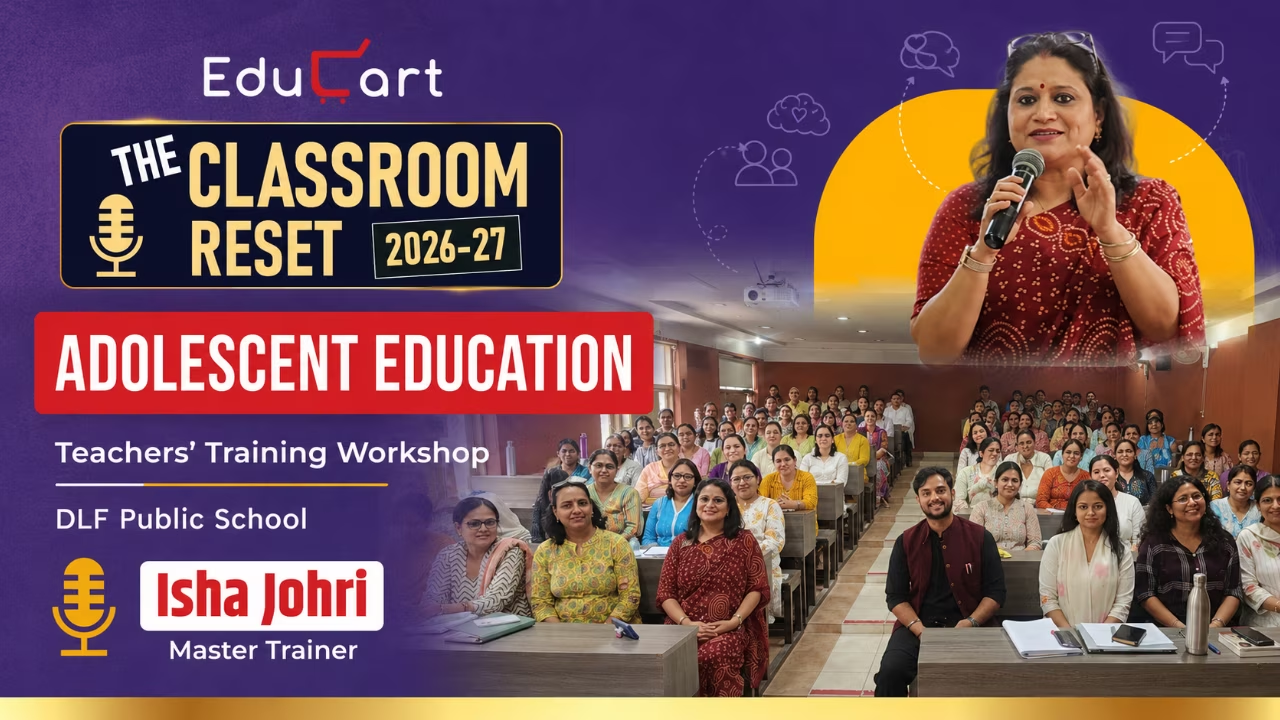
Catering to the growing need of understanding the adolescents within the classroom, Educart conducted a teachers’ training workshop on ‘Adolescent Education’ at DLF Public School, Sahibabad.
The workshop was led by Ms. Isha Johri, master trainer with the discussions led by Mr. Nishant Singh Lakra.
Workshop At a Glance
- Venue: DLF Public School, Sahibabad
- Date: 2nd July, 2026
- Topic: Adolescent Education
- Duration: 2 Hours
- Speaker: Ms. Isha Johri
- Discussions Led By: Mr. Nishant Singh Lakra
- Participants: 62 Teachers
- Fees: Free
A Beginning with Reflection: Revisiting Adolescence
The workshop began with an icebreaking session wherein participants were asked to revisit their adolescence, teenage years. Instead of starting with theory, teachers were asked:
- To share their adolescence experiences
- Reflect on how their experiences were as compared to the students these days
- What are the realities faced by the students today

The reflections started making everybody comfortable slowly and built a connection with the central theme of the workshop. It created a foundation for the coming up sessions.
Understanding Adolescence Beyond Textbooks
Now that icebreaking has been done and participants started understanding the topic better, Ms. Isha Johri started explaining adolescence beyond what the participants already know from the textbooks. She explained adolescence as a developmental phase which is marked by some significant changes.
Teachers explored how adolescents experience:
- Physical growth and hormonal changes
- Emotional fluctuations
- Cognitive development
- Social identity formation
- Changing relationships with peers and adults
The discussion focused how these developmental shifts often influence:
- Classroom participation
- Decision-making
- Behavioural responses
- Learning patterns
- Academic motivation
Towards the end of the segment, teachers were encouraged to see these changes in the students and understand the developmental reasons behind them and not view them as behavioral changes.
Adolescence: Then v/s Today
It was important for educators to know the reason behind why traditional approaches for understanding students behaviour may not be effective now, on today’s students.
Some of the factors clarifying this were:
Participants reflected on how social dynamics contributes in changing students’ behaviours. They focused on finding the answers now as to how to cater to the evolving emotional needs of the students effectively.
Identifying Emotional Distress Before it Increases
Now the session started moving towards solutions where the focus was on recognising early warning signs of emotional challenges among adolescents.

Teachers discussed behavioural indicators such as:
- Withdrawal from classroom participation
- Irritability
- Declining academic performance
- Anxiety
- Social isolation
- Excessive concern about grades or approval
Participants understood that rather than reacting straightaway on these behaviors, they have to explore the emotions behind them. This can lead to more meaningful interventions. The segment focused on the importance of observation, patience, and empathy in supporting the well-being of teenagers.
Empathetic Communication in the Classroom
One of the strongest takeaways of the workshop was the focus on teachers’ language. This segment showed the importance of language which is generally missed out.
Teachers explore how subtle changes in communication can impact:
- Student confidence
- Emotional safety
- Classroom engagement
- Trust
- Motivation
Through practical examples, participants examined how supportive language can replace stronger and authoritative responses without compromising on classroom discipline.
Key communication practices discussed were:
- Active listening
- Respectful conversations
- Non-judgmental responses
- Positive reinforcement
- Creating psychologically safe classrooms
The session highlighted that students often remember how a teacher made them feel as much as what they were taught.
Learning Through Real Classroom Scenarios
Everything is better understood when practiced, so now the workshop moved from theory to practice through interactive role-play activities.

Teachers participated in realistic classroom situations involving:
- Late arrivals
- Missed homework
- Classroom distractions
- Student stress
- Difficult conversations
Each activity showed how empathetic responses can improve teacher-student relationship and build students’ trust while encouraging responsible behaviour from both ends. This enabled teachers to come together and discuss strategies that can immediately be used in the classrooms.
Reflection and Commitment
The workshop concluded with a reflective exercise where participants identified one meaningful change which they would introduce in their classrooms. This final activity changed learning into commitment where teachers reinforced the shared responsibility in creating inclusive, and emotionally supportive classrooms.
The collective pledge focused on a common vision, nurturing adolescents through understanding, empathy and meaningful engagement.
Note: Read more about the wellness workshop at Apeejay School, Saket or how to teach life skills in the classroom.
Conclusion
Teaching adolescents today goes far beyond just completing the syllabus. By helping teachers better understand adolescents’ psychology, communication, and supportive classrooms, the workshop equipped 62 educators with practical strategies to meet the evolving needs of today's learners.
Glimpse of the Event

Share Article


.svg)





%2520(1).avif)
.avif)
.png)

























.svg)

