.svg)
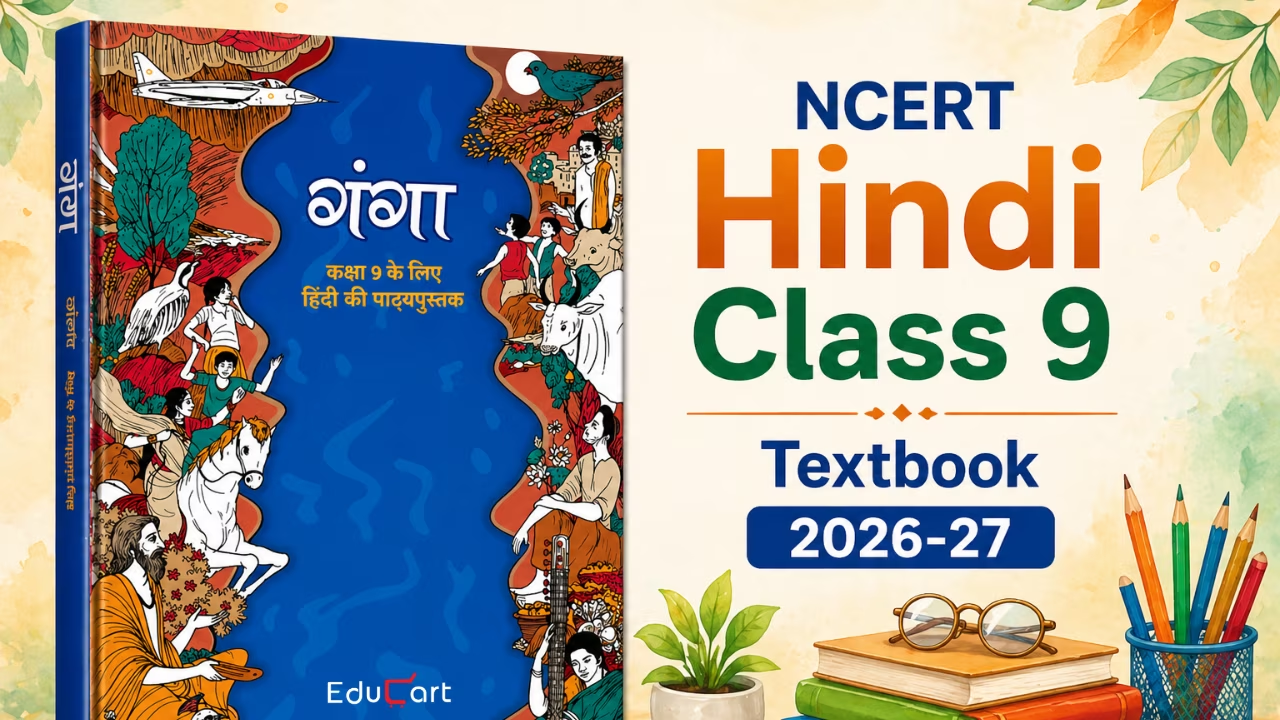
The Class 9 new NCERT Hindi book PDF 2026-27, officially titled Ganga, is now available for free download. This replaces the four older books - Kshitij, Kritika (Course A) and Sparsh, Sanchayan (Course B) - with a single integrated textbook. Students looking for the Class 9 Hindi new book 2026-27 PDF can find both the full book and chapter-wise prose and poetry PDFs below. Ganga is based on NCF-SE 2023 and NEP 2020.
Hindi is not just a communication tool but is also a means for social, cultural, and ideological identity. In the latest update, NCERT has released a draft syllabus on the basis of CBSE guidelines. Additionally, NCERT has released an updated textbook for Hindi Class 9 for the academic session 2026-27 based on the syllabus.
The updated textbook is aligned with NCF-SE 2023 and NEP 2020 latest reforms. Follow along to know in detail about the fresh updates.
Class 9 New NCERT Hindi Book Ganga PDF 2026-27 – Download Full Book & Chapter-wise
NCERT Class 9 Ganga Hindi (Prose) Ch-wise PDFs
NCERT Class 9 Ganga Hindi (Poetry) Ch-wise PDFs
Pair the Ganga textbook with the NCERT Solutions for Class 9 Hindi for chapter-wise answers to every question.
Key reasons for the major changes in the syllabus for Hindi Textbook Class 9 are listed below:
- Full rollout of NEP 2020 & NCF-SE 2023: Implements the new 5+3+3+4 structure, shifting to competency-based, experiential, and multidisciplinary education at the Secondary Stage.
- Focus on 21st-Century Skills: Hindi learning is redesigned to support multilingual communication, critical thinking, and cultural awareness relevant to the modern world.
- Respect for Home Languages: The syllabus encourages classrooms to value students’ home languages, creating an inclusive environment that supports better language acquisition and participation.
What is the Class 9 Hindi New Book Ganga 2026-27?
Ganga is the new NCERT Hindi book for Class 9 2026-27, released as part of NCERT's NEP 2020 curriculum overhaul. It replaces the four previously used textbooks - Kshitij and Kritika (Hindi Course A) and Sparsh and Sanchayan (Hindi Course B) - with a single competency-based volume. The Class 9 new NCERT Hindi book PDF 2026-27 (Ganga) includes 7 prose chapters and 5 poetry chapters, along with a unique Bhasha Sangam multilingual section connecting Hindi with other Indian languages. If you were using Kshitij or Sparsh, Ganga is your new Class 9 Hindi book for 2026-27.
Old vs New: Class 9 Hindi New Book 2026-27 (Ganga) vs Kshitij, Kritika, Sparsh & Sanchayan
Here’s a table of comparison between the previous and current year Class 9 NCERT Hindi Textbook for a better understanding.
Strengthen preparation using Class 9 Hindi previous year questions (PYQs with solutions).
Chapters Removed from Class 9 New NCERT Hindi Book 2026-27 (Ganga)
When comparing the old Kshitij and Kritika books with the new Ganga textbook, the following chapters have been removed:
From Kshitij - Prose Section (Removed)
- ल्हासा की ओर - Rahul Sankrityayan
- उपभोक्तावाद की संस्कृति - Shyamacharan Dubey
- सावले सपनों की याद - Jabir Husain
- प्रेमचंद के फटे जूते - Harishankar Parsai
- मेरे बचपन के दिन - Mahadevi Verma
From Kshitij - Poetry Section (Removed)
- साखियाँ एवं सबद - Kabir
- वाख - Lalad
- सवैये - Raskhan
- कैदी और कोकिला - Makhanlal Chaturvedi
- ग्राम श्री - Sumitranandan Pant
- मेघ आए - Sarveshwar Dayal Saxena
- बच्चे काम पर जा रहे हैं - Rajesh Joshi
From Kritika - Supplementary Reader (Removed)
- इस जल प्रलय में
- मेरे संग की औरतें
Chapter Retained from Kritika
Only रीढ़ की हड्डी has been retained and moved into the new Ganga textbook.

What Does This Mean for Class 9 Hindi Teachers?
Teachers need to first adapt to the new approach for students to benefit from it. The focus is shifting from lecture-based teaching to interactive, activity-based learning.
Beyond syllabus changes, this is a shift in mindset encouraging teachers to connect Hindi with other subjects and promote interdisciplinary, application-based learning.
The structural shift can be seen here:
What Does This Mean for Students?
Adapting to the new reforms in the textbook can be difficult for the students at first but once understood, it can help them experience more interactive and practical Hindi learning. Moreover, it will enhance the following skills of the students.
- Deeper conceptual understanding
- Better thinking and problem-solving skills
- Engaging, low-stress experience
Takeaway
The new NCERT Class 9 Hindi textbook (2026–27) reflects a clear shift from multiple, content-heavy books to a single, competency-based learning resource. It focuses on developing communication skills, critical thinking, and creative expression rather than just completing chapters.
Designed around real-life contexts and cultural connections, the textbook makes Hindi learning more meaningful and engaging. Overall, it is not just a change in the book format but a step towards making Hindi more practical, interactive, and skill-oriented for students.
FAQs
Q1. Where can I download the Class 9 new NCERT Hindi book PDF 2026-27?
Ans. The Class 9 new NCERT Hindi book PDF 2026-27, titled Ganga, is available for free download on this page. Use the chapter-wise links above for prose and poetry sections, or download the full book in one go.
Q2. Which authors are included in the latest Class 9 Hindi textbook?
Ans. The textbook includes works by authors like Premchand, Padumlal Pannalal Bakshi, Shekhar Joshi, and poets like Raidas and Tulsidas.
Q3. Is the content load reduced in the new textbook?
Ans. Yes, the focus is on quality learning through skills and concepts rather than covering multiple heavy textbooks.
Q4. What skills does the new Hindi textbook aim to develop?
Ans. It focuses on communication skills, critical thinking, creative expression, and cultural understanding.
Q5. How is the new Hindi textbook different from older books like Kshitij and Kritika?
Ans. Earlier, learning was divided across multiple books, while the new approach focuses on integrated, skill-based and thematic learning
Q6. What is the name of the new Class 9 Hindi NCERT book for 2026-27?
Ans. The Class 9 Hindi new book for 2026-27 is called Ganga. It is a single integrated textbook that replaces the older Kshitij, Kritika, Sparsh, and Sanchayan books under the NEP 2020 curriculum.













.svg)

