
.svg)
Business Studies becomes easier when concepts are explained in a structured and practical way. Financial Management is one of the most important chapters because it teaches how organizations manage money, take decisions that affect profits, and work toward long-term growth.
This chapter explains how finance is planned, raised, invested, and controlled within a business. Every lesson you learn here connects directly with how real companies run their operations, manage risks, and make strategies.
These notes provide a clear understanding of every topic, helping you revise effectively without feeling overwhelmed. Whether you are preparing for board exams or quick classroom revision, this guide helps you understand the concepts instead of memorizing them blindly.
Introduction to Financial Management
Finance is the backbone of any business. Without funds, a business cannot start its operations or grow. Financial Management deals with planning, acquiring, controlling, and monitoring financial resources in a way that ensures stability, growth, and maximum returns.
This chapter explains how businesses make decisions about investments, how much debt to use, how profits should be distributed, and how to maintain liquidity. Good financial management helps a business survive economic challenges, make better decisions, and increase shareholder wealth.
Meaning of Financial Management
Financial Management refers to the process of planning, organizing, directing, and controlling the financial activities of an organization. It involves decisions related to investment, financing, and dividend so that the company can achieve its objective of wealth maximization.
In simple words, it answers three main questions:
- Where should the money be invested?
- From where should the money be raised?
- How much profit should be distributed?
Objectives of Financial Management
The primary objective is wealth maximization, meaning increasing the market value of the company's shares and ensuring long-term financial health.
Specific objectives include:
• Ensuring regular and adequate supply of funds
• Using financial resources efficiently to maximize returns
• Ensuring safety of investment by choosing secure avenues
• Maintaining liquidity to meet obligations on time
• Planning a balanced capital structure that avoids excessive risk
These objectives help in improving operational efficiency, financial stability, and shareholder confidence.
Nature of Financial Management
Financial Management is both a strategic and operational function:
• It involves analyzing financial needs and developing financial strategies.
• It includes short-term and long-term decision making.
• It focuses on balancing risk and return.
• It ensures coordination among departments by aligning all financial activities with business goals.
This nature makes financial management essential for smooth functioning and future planning.
Financial Decisions
Financial management revolves around three major decisions that shape a company’s financial health.
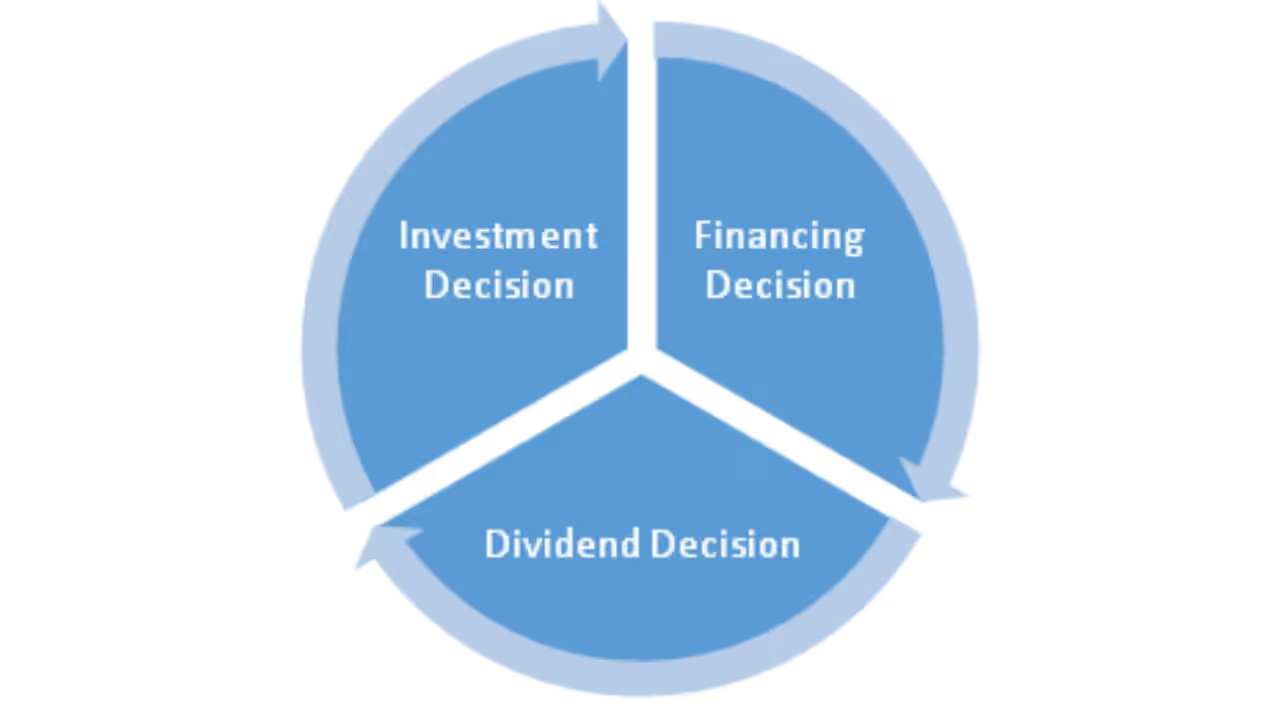
Investment Decision
Investment decisions determine where funds should be invested so that maximum returns can be achieved. These decisions involve huge funds and affect the company for many years.
Long-term investment decisions (Capital budgeting): Investments in long-term assets like factories, machinery, and infrastructure.
Short-term investment decisions (Working capital decisions): Investments made for daily operations such as stock purchases, debtors, and cash needs.
Importance
• Determines future profitability
• Helps in expansion and modernization
• Affects business risk and competitive position
Factors affecting investment decisions
• Expected cash flows
• Required rate of return
• Risk of the project
• Investment criteria like NPV, IRR, Payback Period
Techniques used:
- Payback Period – Time taken to recover initial investment
- Accounting Rate of Return (ARR) – Average return on investment
- Net Present Value (NPV) – Present value of future cash flows
- Internal Rate of Return (IRR) – Rate at which NPV becomes zero
A wrong investment decision can lock the company’s funds in unprofitable projects.
Financing Decision
This decision deals with selecting the right mix of sources from which funds will be raised.
Sources of finance
• Owner’s funds such as equity shares and retained earnings
• Borrowed funds such as bank loans, debentures, and public deposits
The main responsibility is designing a capital structure, meaning deciding what proportion of debt and equity the business should use.
Factors affecting financing decisions
• Cost of capital
• Financial risk associated with debt
• Cash flow position of the business
• Control considerations
• Flexibility in raising funds
• Conditions of the stock market
A well-planned financing decision ensures the business enjoys benefits of leverage while minimizing financial risk.
Financial Leverage and Trading on Equity
Financial leverage refers to the use of borrowed funds to increase the return on shareholders’ investment. When a company earns more on its investment than the interest it pays on debt, the extra profit increases Earnings Per Share (EPS). This is known as Trading on Equity. However, excessive use of debt increases financial risk. Therefore, leverage should be used carefully.
Interest Coverage Ratio
Interest Coverage Ratio measures the company’s ability to pay interest on borrowed funds.
Formula: Interest Coverage Ratio = EBIT ÷ Interest
A higher ratio means the company is financially safe and can easily meet its interest obligations.
Dividend Decision
Dividend decisions focus on how much profit should be distributed to shareholders and how much should be kept aside for expansion.
Forms of dividends
• Cash dividends
• Bonus shares
Factors affecting dividend decisions
• Earnings of the company
• Stability of earnings
• Future growth opportunities
• Cash flow position
• Shareholder preferences
• Legal rules and tax policies
• Access to capital markets
These elements help the company maintain a balance between rewarding shareholders and reinvesting for future growth.
Financial Planning
Financial planning estimates how much finance a business needs and determines where it will come from.
Objectives of financial planning
• Ensuring availability of funds whenever required
• Avoiding shortage or surplus of funds
• Maintaining a stable financial position
Importance of financial planning
• Reduces risk and uncertainty
• Helps coordinate various business activities
• Supports long-term strategic goals
• Improves operational and financial efficiency
Financial planning ensures the business runs smoothly without financial interruptions.
Capital Structure
Capital structure refers to the combination of debt and equity a company uses for long-term financing.
Features of an ideal capital structure
• Balances risk and return
• Ensures stable growth
• Maintains financial flexibility
Factors affecting capital structure
• Cash flow position
• Interest coverage ratio
• Level of control desired
• Cost of borrowing
• Market conditions
• Taxation policies
• Business risk and industry norms
Additional factors affecting capital structure
- Floatation Costs – Cost involved in issuing securities
- Stability of Earnings – Stable earnings allow higher debt
- Interest Coverage Ratio – Ability to pay interest comfortably
- Tax Rate – Higher tax rate encourages use of debt (due to tax benefit)
- Cost of Equity vs Cost of Debt – Compare both before deciding
A well-designed capital structure helps a business grow without increasing financial stress.
Fixed Capital and Working Capital
Fixed Capital
Fixed capital refers to funds invested in long-term assets that are used repeatedly for production.
Examples of fixed capital
• Buildings
• Land
• Machinery
• Vehicles
• Furniture
Factors affecting fixed capital requirements
• Type of business
• Scale of operations
• Technology used
• Growth and expansion plans
• Diversification
Businesses with large-scale or technology-heavy operations require more fixed capital.

Working Capital
Working capital refers to funds used for daily operations of the business.
Types
• Gross working capital: Total current assets
• Net working capital: Current assets minus current liabilities
Importance of working capital
• Maintains liquidity
• Helps in smooth operations
• Ensures timely payment to suppliers and employees
• Increases operational efficiency
Factors affecting working capital
• Nature and size of business
• Production cycle
• Business cycle conditions
• Credit policy
• Market demand
• Operating efficiency
Difference Between Fixed Capital and Working Capital
Conclusion
That’s a complete breakdown of Financial Management for Class 12 Business Studies. If you understand investment, financing, dividend decisions, and capital structure clearly, this chapter becomes scoring and logical.
Revise the key formulas and factors once more before the exam. Financial Management is not about memorizing - it’s about understanding how businesses make smart money decisions. You’re fully prepared now.
FAQs
Q1. What is financial management in simple words?
Ans. It is the process of planning and controlling a company’s funds to achieve long-term growth.
Q2. What is wealth maximization in Financial Management?
Ans. It means increasing the market value of shares by making smart financial decisions.
Q3. What are the three main financial decisions?
Ans. Three main financial decisions include investment decision, financing decision and dividend decision.
Q4. What is capital structure?
Ans. It is the mix of debt and equity used to finance business operations
Q5. Why is working capital important?
Ans. It ensures smooth day-to-day functioning of the business.












.svg)

