
.svg)
Have you ever wondered how many different kinds of living beings exist on Earth and why they matter? From the tiniest microbes to massive blue whales, from lush rainforests to dry deserts, the variety of life that surrounds us is incredible.
This amazing variety, known as biodiversity, is about the complex web of life that supports ecosystems and keeps the planet healthy.
In this CBSE Class 12 Biodiversity and Conservation notes from class 12 biology syllabus, you’ll understand what biodiversity really means, why it is unevenly distributed on Earth, how human activities are causing its loss, and what steps are taken to conserve it.

What is Biodiversity?
The term biodiversity, short for biological diversity, refers to the variety and variability of life on Earth. It includes all living organisms, from the tiniest microbes to the largest mammals, as well as the ecosystems they form and the ecological processes they drive.
Biodiversity is a vital aspect of life on Earth, playing a key role in maintaining ecological balance and supporting life-sustaining systems such as oxygen production, soil fertility, pollination, and climate regulation.
Levels of Biodiversity
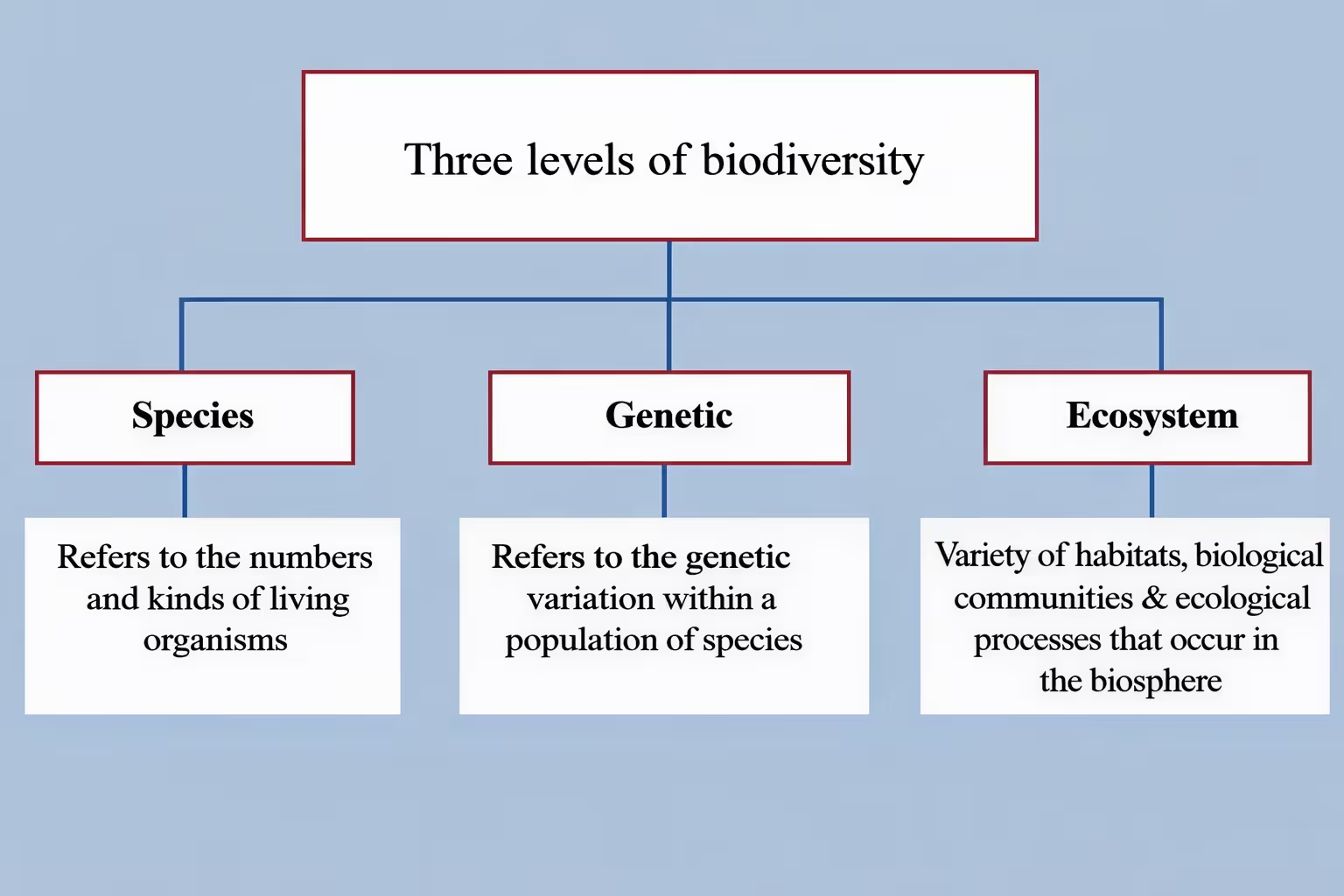
Biodiversity exists at various levels, and it is important to understand these layers to appreciate the complexity of life forms.
- Genetic Diversity
This refers to the variation of genes within a species. For example, two humans may differ in their eye color, height, or resistance to diseases due to genetic differences.
Similarly, wild rice varieties in India show genetic variation in traits like drought resistance and yield. Genetic diversity ensures that species can adapt to changing environments and evolve over time.
- Species Diversity
This is the diversity found among different species in a region. It includes the number of species and the balance of their populations. Tropical rainforests, for instance, are rich in species diversity. The Western Ghats of India are known for high species diversity in plants, amphibians, and insects.
- Ecological/ Ecosystem Diversity
This refers to the variety of ecosystems found in a geographical area. An ecosystem includes both biotic (living) and abiotic (non-living) components. For example, India has a wide range of ecosystems, from deserts and forests to wetlands, grasslands, and coral reefs.
Biodiversity in India
India is one of the 12 mega diversity countries in the world. It possesses around 8.1% of the world’s biodiversity and is home to over 45,000 species of plants and over 91,000 species of animals. India's biodiversity hotspots include:
- The Himalayas
- The Indo-Burma region
- The Western Ghats and Sri Lanka
- The Sundaland (including the Nicobar Islands)
Each of these regions is rich in endemic species, those found nowhere else in the world.
Global Biodiversity
While scientists estimate that there are more than 7 million species globally, only about 1.7 million have been described so far. The vast majority of undiscovered species are believed to be small invertebrates, fungi, and microbes found in tropical forests and oceanic ecosystems.
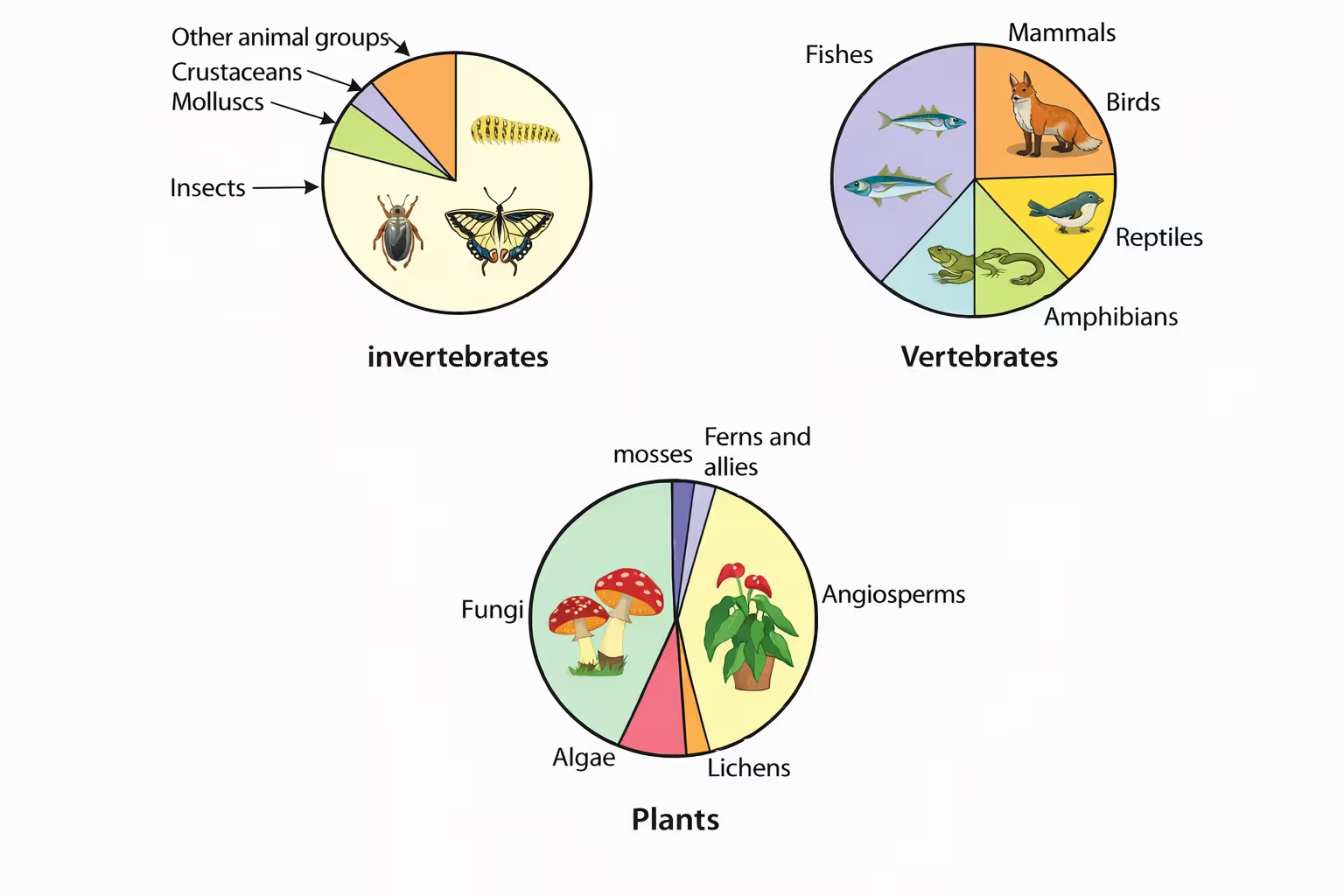
Two important patterns emerge when studying biodiversity:
- Latitudinal Gradient in Species Diversity: Species diversity decreases as one moves from the equator toward the poles. This means tropical regions, like the Amazon rainforest, have much higher species richness than temperate or polar areas.
- Species-Area Relationship (by Alexander von Humboldt): Larger areas tend to have more species. The relationship can be expressed as:
S = CAz, where:
- S is the number of species,
- A is the area,
- C is a constant,
- z is the slope of the line (typically 0.1-0.2 for smaller areas and up to 0.6 for larger regions like continents).
Importance of Biodiversity
Biodiversity is important not just for the survival of species, but also for the well-being of human beings. Its value can be classified into several categories:
1. Narrowly Utilitarian Value
Humans directly depend on biodiversity for:
- Food (cereals, fruits, pulses)
- Medicines (over 25% modern drugs come from plants)
- Industrial products (fibres, resins, timber)
2. Broadly Utilitarian Value
Biodiversity provides ecosystem services, such as:
- Oxygen production through photosynthesis
- Pollination by insects and birds
- Climate regulation and flood control
These services cannot be replaced artificially.
3. Ethical Value
Every species has an intrinsic right to exist, even if it has no economic value to humans. We have a moral responsibility to protect biodiversity for future generations.
Loss of Biodiversity
The rapid loss of biodiversity is mainly due to human activities. NCERT groups the causes under the “Evil Quartet”:
- Habitat Loss and Fragmentation
The destruction of forests, wetlands, coral reefs, and other natural habitats due to agriculture, urbanization, and infrastructure projects is the most significant cause of species extinction.
- Over-exploitation
Unsustainable use of resources such as overfishing, overgrazing, and excessive logging leads to population decline and extinction.
- Alien (Invasive) Species
Non-native species introduced into a new habitat can outcompete, prey on, or bring diseases to native species. For example, the Nile perch introduced in Lake Victoria caused the extinction of native cichlid fish species.
- Pollution
Pesticides, heavy metals, plastics, and oil spills pollute air, water, and soil, making them unsuitable for many life forms.
- Climate Change
Global warming, ocean acidification, and extreme weather events threaten species that cannot adapt quickly to changing conditions.
Biodiversity Conservation
To address the crisis of biodiversity loss, conservation efforts are essential. There are two main strategies:
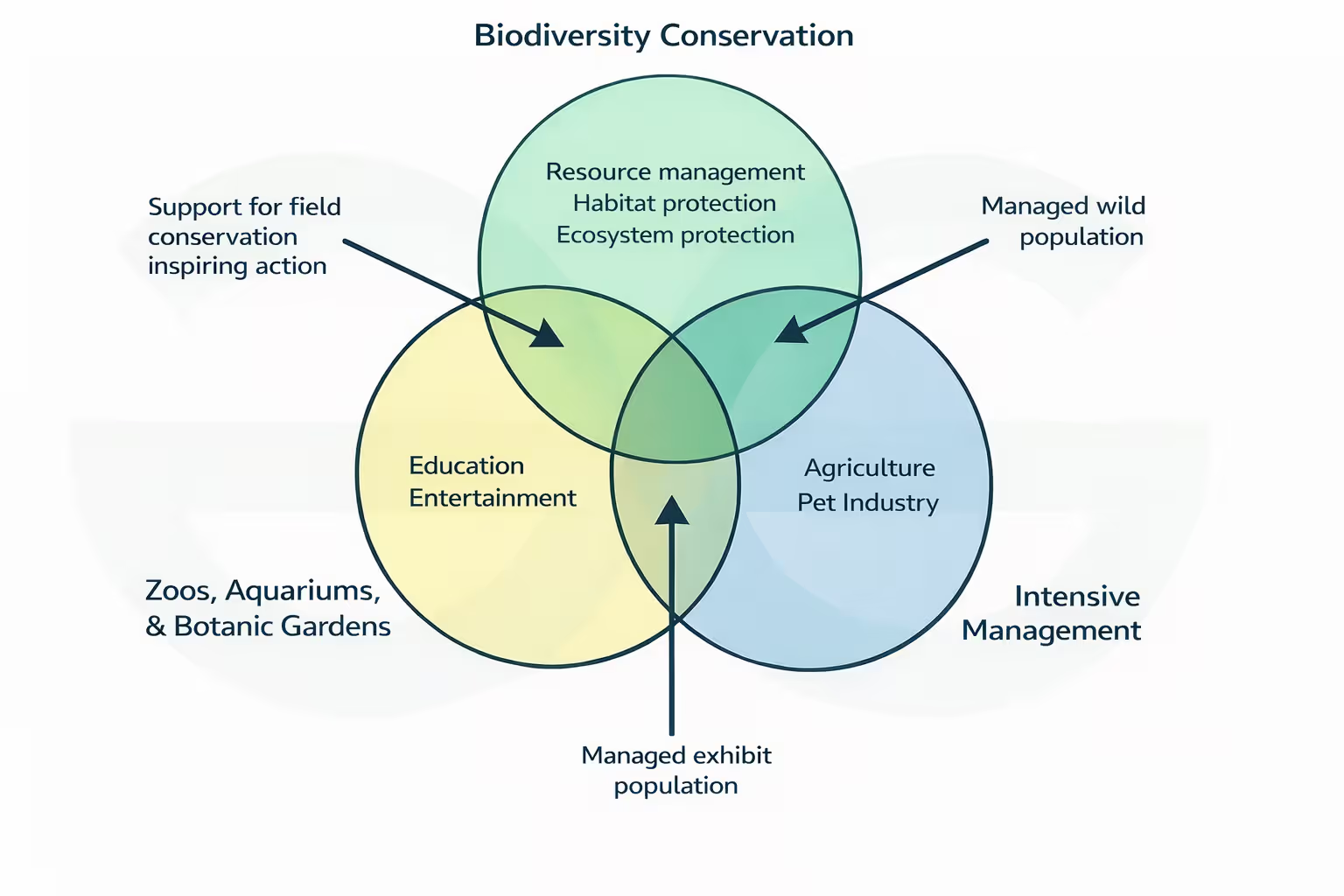
- In-situ Conservation (On-site)
This involves conserving species in their natural habitats. Major in-situ methods include:
- Biosphere Reserves
- National Parks
- Wildlife Sanctuaries
- Sacred Groves (e.g., protected forest patches in Meghalaya)
In-situ conservation maintains not just species, but also ecological processes and community interactions.
- Ex-situ Conservation (Off-site)
This involves conserving components of biodiversity outside their natural habitat. It includes:
- Botanical gardens
- Zoological parks
- Gene banks (e.g., seed banks, tissue culture repositories)
- Cryopreservation
Ex-situ methods serve as backups in case species are lost in the wild.
India's Contribution to Conservation
India has made significant efforts in biodiversity conservation. As part of international agreements such as the Convention on Biological Diversity (CBD), India has enacted laws and policies including:
- The Wildlife Protection Act, 1972
- Project Tiger (1973) to protect Bengal tigers
- Project Elephant
- Establishment of Biosphere Reserves and National Parks
India currently has over 100 national parks and over 500 wildlife sanctuaries, playing a critical role in protecting species and ecosystems.
Hotspots and Endemism
Biodiversity hotspots are regions with high species richness and high levels of endemism. A region must fulfill two criteria to qualify as a hotspot:
- It must have at least 1,500 species of vascular plants as endemics.
- It must have lost at least 70% of its original natural vegetation.
India’s major hotspots, the Himalayas, Western Ghats, Indo-Burma region, and Sundaland, are global priorities for conservation.
Important Pointers of Revision
- India is one of the 12 mega diversity countries
- Tropical regions show highest species diversity
- Evil Quartet causes biodiversity loss
- Conservation can be in-situ or ex-situ
Conclusion
That’s a quick and clear wrap on Biodiversity and Conservation. This chapter helps you understand why the variety of life on Earth is so important, how human activities are causing its loss, and what steps are taken to protect it.
If you remember the key ideas - levels of biodiversity, causes of loss, and conservation methods - you’re already exam-ready. Read it once more, revise the points, and you’re good to go.
FAQs
Q1. What are the major threats to biodiversity?
Ans. Major threats include habitat destruction, pollution, overexploitation of resources, invasive species and climate change.
Q2. What is the difference between in-situ and ex-situ conservation?
Ans. In-situ conservation protects species in their natural habitats (like national parks and biosphere reserves), while ex-situ conservation involves protecting species outside their natural habitats (like zoos, botanical gardens, and seed banks).
Q3. What is a biosphere reserve?
Ans. A biosphere reserve is an area recognized to conserve genetic resources, species, and ecosystems while promoting sustainable development. It often has core, buffer and transition zones.
Q4. What are endangered and endemic species?
Ans. Endangered species are at risk of extinction, while endemic species are found only in a particular geographic area and nowhere else.
Q5. What are sacred groves?
Ans. Sacred groves are forest patches protected by local communities due to religious or cultural beliefs. They help in conserving biodiversity locally.












.svg)

