.svg)
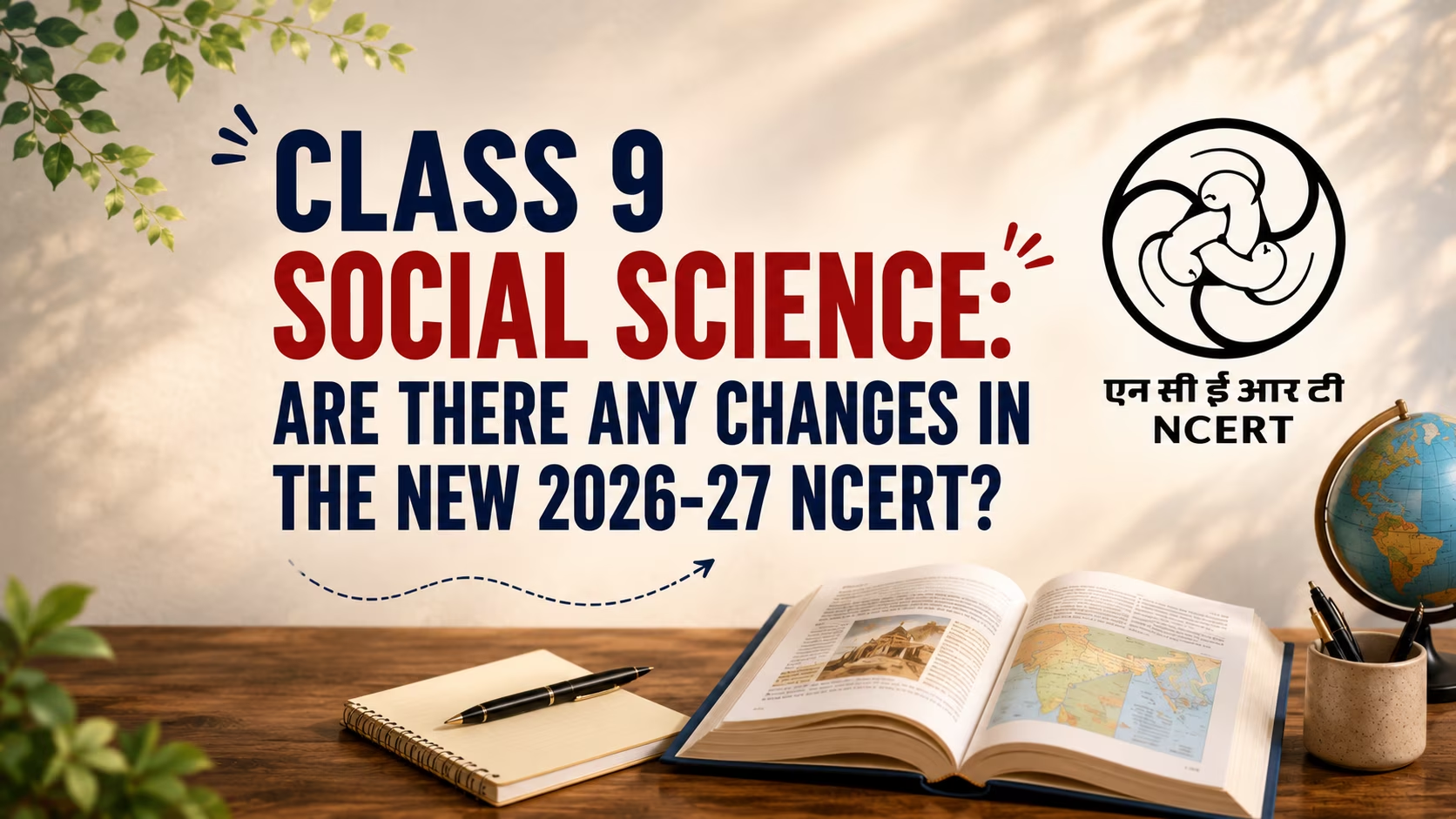
NCERT released Class 8 Social Science textbook titled Exploring Society: India and Beyond, Vol II on 24 February 2026 (source: NCERT website). The controversy began after the release surrounding Chapter 4 “The Role of the Judiciary in Our Society” specifically.
The chapter included references to challenges faced by the judiciary, such as corruption at various levels, massive case backlogs due to judge shortages, complicated procedures, and poor infrastructure.
While the chapter discussed the judiciary’s positive points such as hierarchy, access to justice and efforts for reform, the section criticising corruption and backlogs sparked backlash for being one-sided and inappropriate for young students (aged 13-14).
Timeline of Key Events
The timeline below outlines the sequence of events:
What Triggered the Controversy?
The chapter covered entire role of judiciary in the Indian society including the key challenges:
- Corruption at various levels of the judiciary
- Massive backlog of cases
- Shortage of judges
- Complicated legal procedures
- Poor judicial infrastructure
It also cited statistics on pending cases:
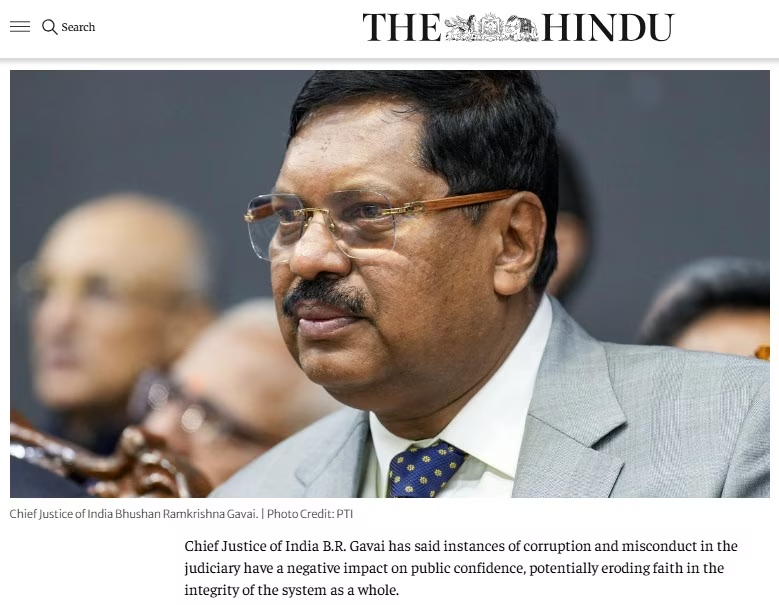
The chapter referenced a July 2025 statement by former CJI B.R. Gavai on addressing corruption to rebuild public trust.
Senior advocates, including Kapil Sibal flagged the issue publicly on 24 February 2026 criticising the specific focus of the body on judicial issues while ignoring corruption in other important institutions such as politics and bureaucracy.
The apex court highlighted the error stating it as a calculated move to undermine the reputation of the judiciary of India and demean it. Additionally, it described the content as disturbing and unsuitable for young minds.
NCERT’s Official Statement
In a press release dated 25 February 2026, the National Council of Educational Research and Training clarified that there was no intent to demean the authority of any constitutional body and that it holds judiciary in highest esteem.
Furthermore, it described the inclusion as an “unintentional error of judgement” and said that “inappropriate textual material” had “inadvertently crept” into the chapter.
NCERT further clarified the following points:
- Expressed deep regret
- Confirmed the distribution had been placed on strict hold
- Announced the chapter would be rewritten in consultation with appropriate authorities
- Stated the revised version would be available before the 2026–27 academic session
Moreover, in a press release on 10 March, 2026, NCERT publicly apologized for the error in chapter 4.
Government’s Role
The Department of School Education and Literacy, under the Ministry of Education, promptly directed NCERT to halt distribution pending resolution.
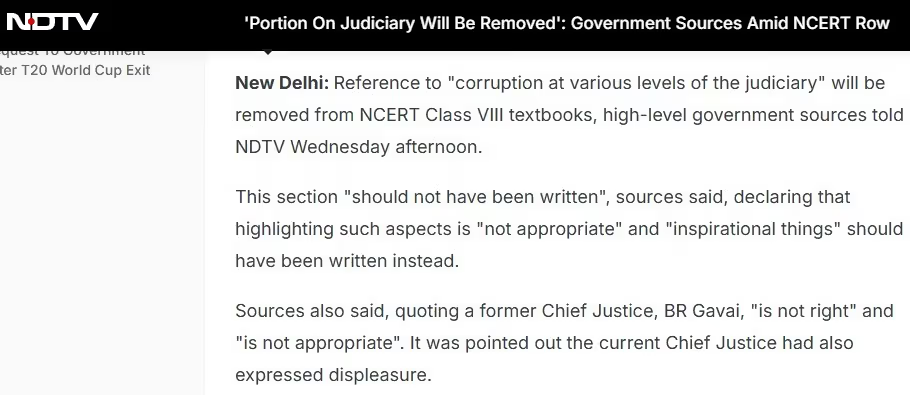
Moreover, government sources told NDTV that:
- The portions on judicial corruption “should not have been written”
- Quoting former CJI Gavai was “not right”
- The tone should have been more inspirational
Supreme Court Action
The Supreme Court of India on 26th February 2026 took suo motu cognisance of the issue and imposed a complete blanket ban on the book.
The court ordered:
- Immediate seizure of all physical copies (from schools, bookstores, warehouses)
- Removal of all digital versions nationwide
- Submission of names of committee members and textbook developers
- Compliance affidavits from state education secretaries within two weeks
- Personal responsibility of school principals for ensuring compliance
Show-cause notices under the Contempt of Courts Act were issued to:
- NCERT Director Dr. Dinesh Prasad Saklani
- Secretary, Department of School Education & Literacy
The following actions were ordered by the Supreme Court and their current status is as follows:
The rewritten chapter will be prepared in proper consultation with the appropriate authorities. However, the complete book still remains banned from any further publication, printing, dissemination, distribution, or use until the matter is resolved.
Broader Significance
The entire scenario depicts how sensitive it is to write about crucial constitutional institutions like the judiciary in school textbooks. It is important to understand that textbooks shape the mindset and as the students are still young, content needs to be accurate and balanced accordingly.
The controversy also brings into focus issues related to reviewing of the textbooks and approval of the content within. Overall, the issue highlights the need to carefully balance honest civic education with maintaining respect for key pillars of democracy like the judiciary.
FAQs
Q1. Which textbook is at the centre of the controversy?
Ans. The controversy involves the Class 8 Social Science textbook titled Exploring Society: India and Beyond, Vol II, released by NCERT on 24 February 2026.
Q2. Is the entire book banned or only the judiciary chapter?
Ans. As per the order of the Supreme Court of India, the entire book has been placed under a blanket ban until the issue is resolved, not just the specific chapter.
Q3. What changes are expected in the revised chapter?
Ans. The revised chapter is expected to present a more balanced and age-appropriate explanation of the judiciary’s role, while maintaining respect for constitutional institutions.
Q4. Will the revised textbook be available for the 2026–27 academic session?
Ans. According to NCERT’s official statement, the revised chapter is planned to be released before the 2026–27 academic session, subject to necessary approvals.
Q5. What does “suo motu cognisance” mean in this context?
Ans. “Suo motu” is a Latin term meaning “on its own motion.” It refers to the power of the Supreme Court of India to initiate proceedings without a formal petition being filed. In this case, the Court acted independently after media reports and public discussions highlighted the issue.
Glimpse of the Event

Share Article


.svg)



%2520(1).avif)













.svg)

