
.svg)
The Central Board of Secondary Education (CBSE) has been continuously improving its exam pattern to assess students’ conceptual understanding. It has become more practical and comprehensive. The competency-based questions are a key component of this change. This shifts the emphasis from rote learning to knowledge application and understanding. These questions are designed to test students' ability to apply the knowledge they've acquired to solve real-life problems.
Going into the 2026-27 session, this change in approach is not new, but it's the settled norm. This shift introduces how the exam itself is structured around it, including the two-board exam system for Class 10. Stay tuned with this guide to know everything about competency-based questions, from what exactly they are to why they matter so much for students today.
What has Changed in Session 2026-27?
Before jumping to a detailed question breakdown, dive deep into a quick summary of what has changed and what has remained unchanged.
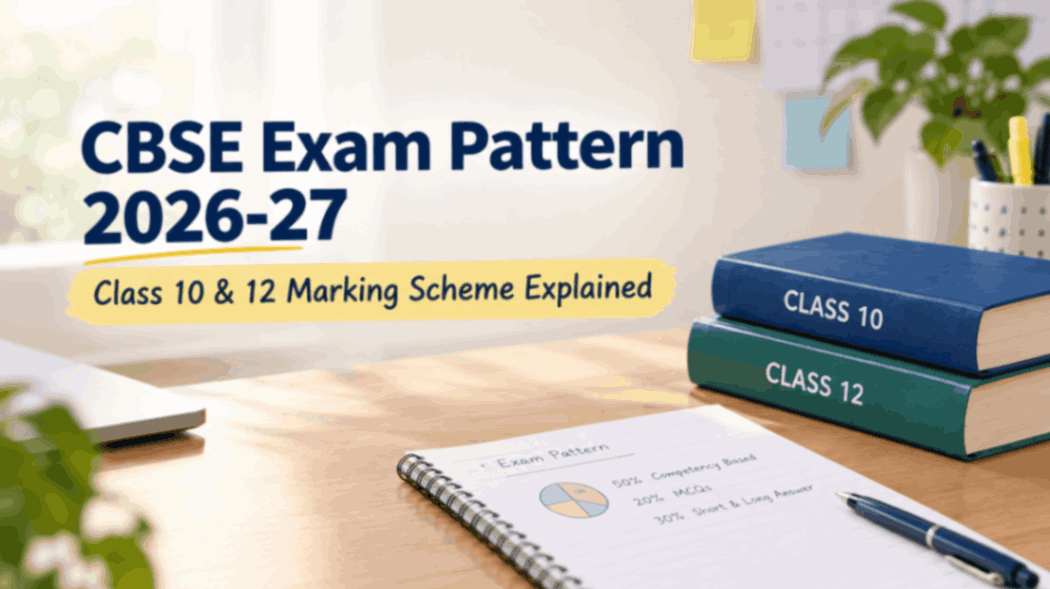
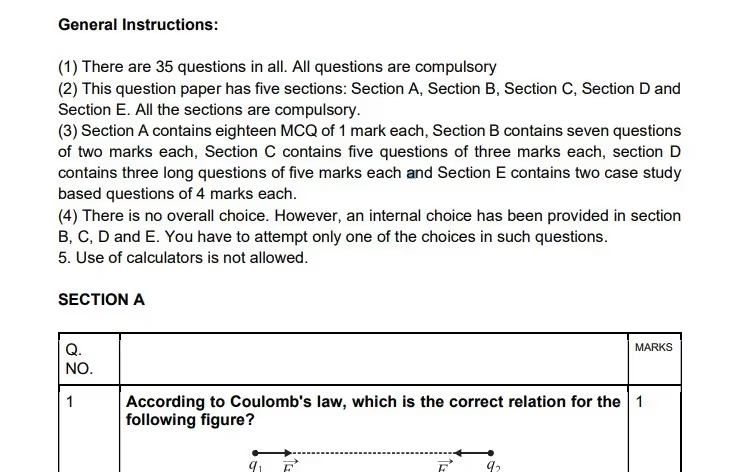
1. The weightage of the competency question is still the same for the 2026-27 academic year. Overall, the structure of questions in the circular (40% MCQs, 50% competency-based, and 30% short/long answer) has remained unchanged from 2024-25 to 2026-27.
2. The only thing that has changed is the exam structure for Class 10. CBSE has introduced two board exams for Class 10 in the same academic year, starting from 2025-26 and continuing in 2026-27.
- Board Exam I: Compulsory for all students; held in February - March.
- Board Exam II: Optional; students can appear as a contemporary exam for up to three subjects, held in May. Only those who clear Board Exam 1 are eligible to attempt Board Exam 2.
- The highest score from both attempts is what will be added to the final mark sheet for each subject.
3. The earlier 8-point grading system has been replaced with a 9-point grading scale.
4. Class 12 still has a single annual board exam - it’s unaffected by the two-exam system.
5. Competency-based questions are the same in both attempts; there's no "easier" or "harder" version available for Board Exam 2.
Note: Official date sheets for CBSE Board exams 2026-27 have yet to be released (Please check later for updates)
What are Competency-Based Questions?
Competency-based questions are designed to test a student’s ability to apply knowledge and skills in practical or unfamiliar situations, rather than simply recalling facts or definitions. Instead of focusing on rote learning, competency-based questions encourage students to think critically, analyse information, and make connections between different subjects.
For example, competency-based questions won’t ask students to define a term - they might present a situation where students need to explain how that concept works in a real-life situation. Similarly, students might be given a practical situation instead of solving a routine problem, such as calculating the area of an irregular plot of land.
Competency-based questions can appear in various formats, including case studies, data interpretation, problem-solving tasks, and real-life applications. This approach helps make sure that students are not just memorising content but are actively learning with it, which is a way to achieve a deeper, more meaningful learning experience.
Updated Pattern of Competency-Based Questions
The Central Board of Secondary Education (CBSE) has increased the focus on competency-based questions in their exam patterns.
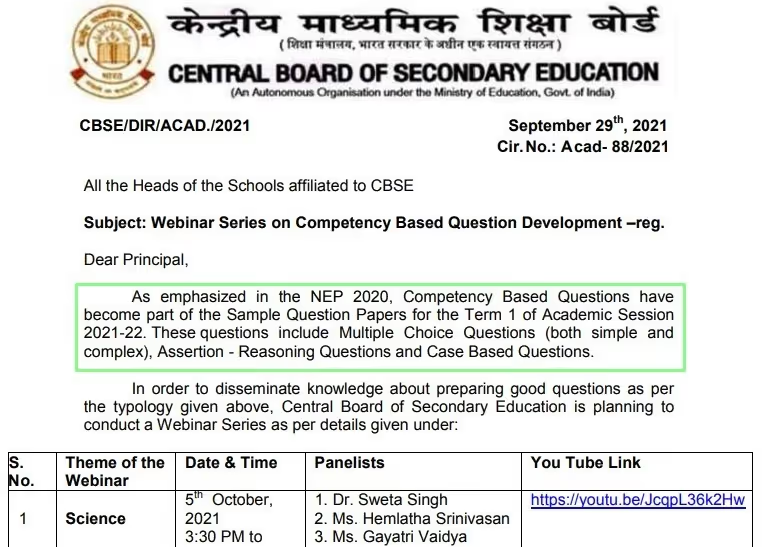
CBSE is consistently working towards creating a more balanced assessment system that better prepares students for real-world challenges.
Why Shift Toward Competency-Based Questions
The shift towards competency-based questions in both CBSE exams is part of a larger effort to reform education in line with the needs of modern times. Traditional methods of assessment, which often had more rote memorisation, did not fully prepare students for real-world challenges. Several factors drive this shift:
Preparing Students for Real-World Applications
One of the main reasons for the shift is to prepare students for real-life situations where they will need to apply what they’ve learnt rather than simply recalling information. In the modern world, success is not just about knowing facts but being able to use knowledge to solve problems, make decisions, and innovate. Competency-based questions bridge the gap between theoretical knowledge and practical application, making students more adaptable to face real-world challenges.
Aligning with the National Education Policy (NEP)
In India, the shift is closely aligned with the National Education Policy (NEP), which highlights a more skill-based education system. The NEP aims to move away from a content-heavy curriculum and focus more on conceptual understanding and skill development.
Reducing Rote Learning
The traditional system of learning, where students memorised large amounts of information to pass exams, did not contribute to a true understanding of subjects. Competency-based questions discourage this practice by asking students to apply concepts to unfamiliar situations, making it difficult to rely only on memorization. This shift ensures that students gain a deeper understanding of the material, which in turn helps them retain knowledge longer.
Types of Competency-Based Questions (with examples):
Competency-based questions come in many forms, each made to checklist different parts of a student’s understanding, problem-solving abilities, and critical thinking skills. Here are some of the key types of competency-based questions:
Case-Based Questions (Case Studies)
Case-based questions present students with a real-life situation and ask them to understand it and apply their understanding of concepts to propose a solution. These questions are often found in subjects like science, social studies, and business studies.
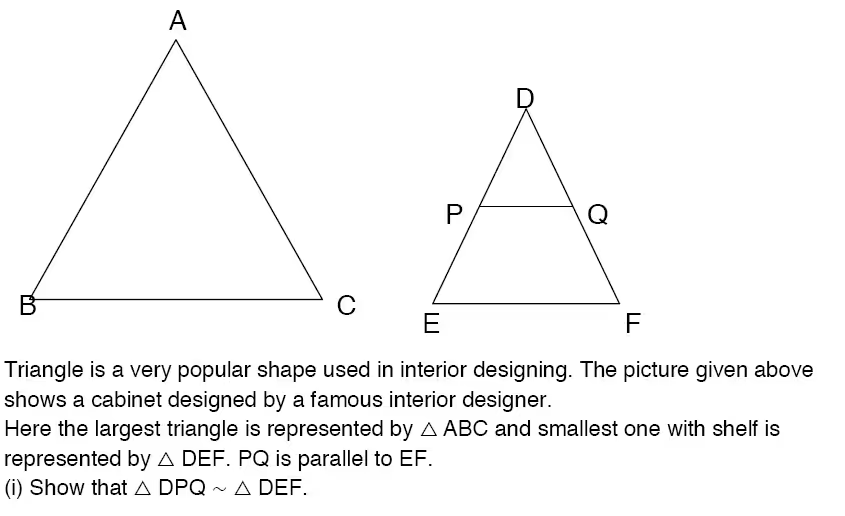
In a biology exam, students might be given a case study about a particular ecosystem and asked how human activities like deforestation or pollution could affect the biodiversity of that ecosystem.
Situation-Based Questions
Situation-based questions place students in hypothetical situations, requiring them to respond or provide solutions based on their understanding of concepts. These questions assess how well students can think critically and make decisions when faced with unfamiliar circumstances.
Problem-Solving Questions
Problem-solving questions require students to identify and solve a problem using the concepts they’ve learned. These questions are common in mathematics and science, where students are given a practical problem and must use logical steps to find a solution.
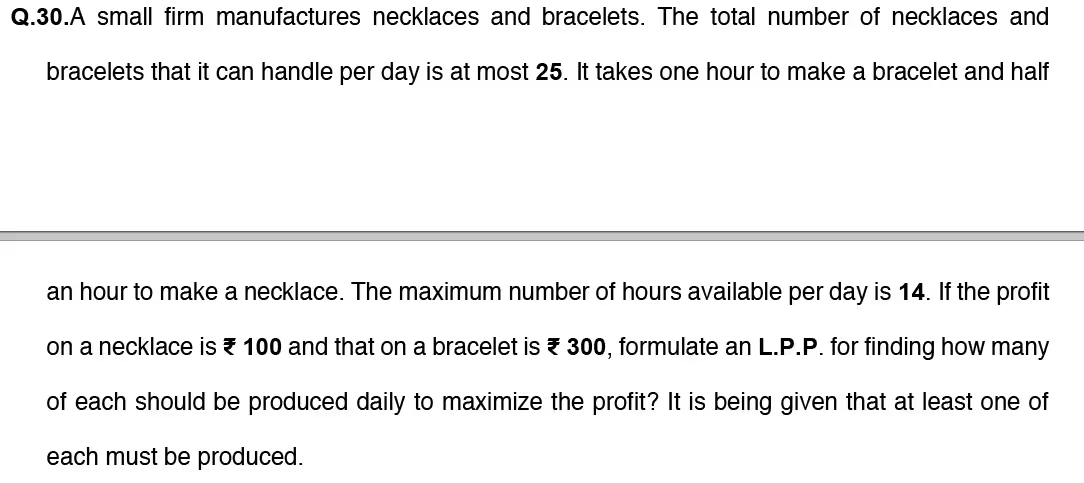
Example:
A math question might ask students to calculate the most efficient route for delivering goods across different cities, factoring in variables like distance, fuel consumption, and traffic conditions.
Data Interpretation Questions
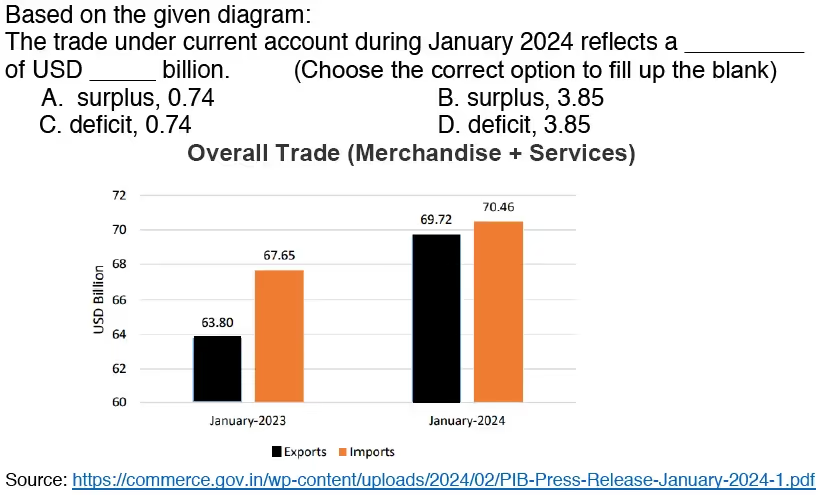
These questions provide students with data in the form of charts, graphs, tables, or statistics and ask them to interpret the data to answer the question. These types of questions test a student’s ability to understand and come to a solution from given information, which is a key competency in subjects like economics, geography, and science.
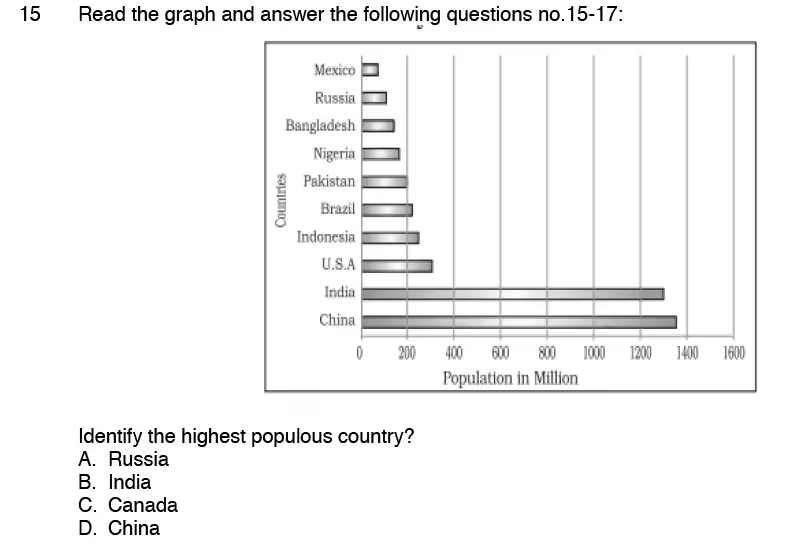
Example:
In a geography exam, students might be shown a graph of temperature variations in different cities over a year. They would be asked to analyse the data and explain the factors affecting these variations.
Analytical Reasoning Questions
These questions challenge students to scan information, break it down into components, and then reason their way through it to conclude. They test a student’s logical thinking and ability to identify patterns or underlying principles.

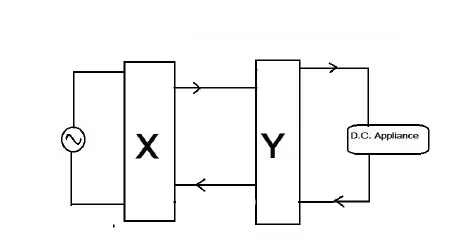
Example:
A physics exam might include a question where students must analyse the forces acting on an object in motion and determine the object’s velocity or acceleration based on given data.
Higher-Order Thinking Skills (HOTS) Questions
HOTS questions are created to push students beyond simple recall and comprehension. They require application, analysis, evaluation, and synthesis of information. These questions demand creativity and innovative thinking.
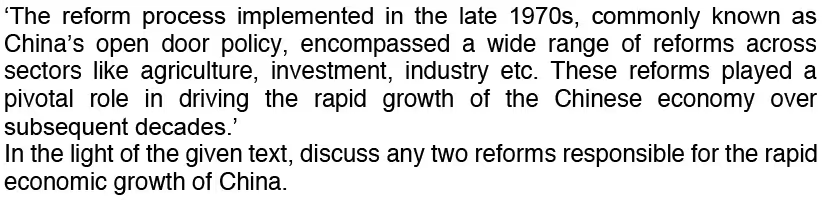
Example:
In an English exam, students might be asked to read a passage and then evaluate the author’s arguments, compare it to other texts they’ve read, and suggest how the narrative style impacts the reader’s perception.
Open-Ended Questions
Open-ended questions allow students to explore multiple ways to solve a problem or answer a question. Unlike traditional multiple-choice questions, open-ended questions reassure creativity and the expression of the student’s thought processes, offering students more freedom in their responses.

In a history exam, students might be asked an open-ended question like, “How did the Industrial Revolution affect global trade patterns?” requiring them to present a well-thought-out argument based on historical evidence.
Multiple Choice Questions (MCQs)
These questions present a situation or problem, followed by several possible answers, with students having to choose the most appropriate one based on their understanding. Unlike traditional MCQs that may rely on fact recall, competency-based MCQs require careful analysis of the question.
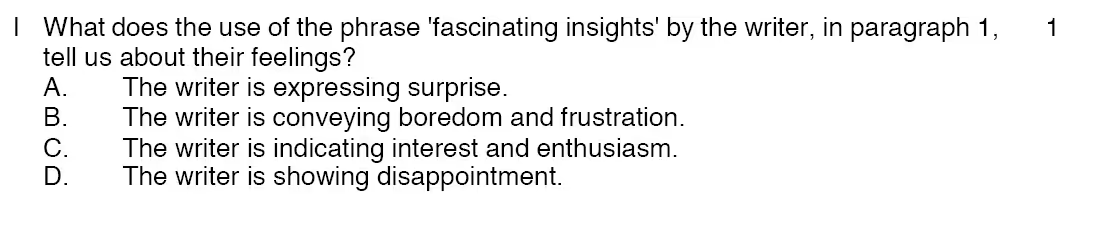
Example:
In a chemistry exam, an MCQ might present a chemical reaction and ask students to identify which conditions (temperature, pressure, or catalyst) would speed up the reaction.
How can competency-based questions help students?
Competency-based questions are made to go beyond just normal assessments by focussing on real-world applications and critical thinking. Here are several ways in which competency-based questions can help students:
- Develop Critical Thinking Skills: Competency-based questions challenge students to think critically rather than simply memorise facts. These questions often present complex, real-life situations that require students to analyse information, assess different perspectives, and make reasoned decisions.
- Better Problem-Solving Abilities By focussing on real-world scenarios, competency-based questions teach students how to solve practical problems. These questions require students to break down complex issues, identify key factors, and propose solutions, which are skills they can apply outside of the classroom.
- Deep Understanding of Concepts: Rather than promoting rote learning, competency-based questions give importance to understanding core concepts. Students need to apply their knowledge in new situations, which makes sure that they catch the material on a deeper level. This deeper understanding also helps them retain knowledge for longer.
- Improved Creativity: Competency-based questions are often open-ended, allowing students to explore creative solutions to problems. This flexibility encourages students to think outside the box and consider multiple ways of solving a single issue, stimulating innovative and original thinking.
- Prepare Students for Higher Education and Careers Competency-based questions prepare students for the challenges they will face in higher education. By pointing up critical thinking, problem-solving, and real-world application, these questions make sure the students are not just exam-ready but life-ready. They also align with the types of assessments students are likely to encounter in college or university, such as research-based projects or case studies.
How do I prepare for competency-based questions?
With the growing focus on competency-based questions in modern assessments like those from CBSE, students must adapt their preparation strategies to meet these new demands. Here’s how you can effectively prepare for these types of questions:
Understand the Concepts
- Break down each topic into key concepts.
- Use diagrams, flowcharts, or mind maps to simplify complex ideas.
- Revisit topics regularly to strengthen your conceptual understanding.
Practice application-based problems.
- Solve case studies or scenario-based questions from textbooks or reference guides.
- Try to relate each theoretical concept to everyday situations.
- Practice problems that require higher-order thinking and analysis.
Focus on critical thinking and reasoning.
- Engage in activities that promote critical thinking, such as puzzles, logical games, or debates.
- Practice analysing data, graphs, and charts to make informed conclusions.
- Use past papers or mock tests that include competency-based questions to build your analytical thinking.
Use real-life examples.
- Stay updated on current affairs and try to relate them to the subjects you’re studying.
- Explore how your textbook theories are used in professional fields like medicine, engineering, or business.
- Discuss real-life examples in study groups to increase your understanding of how concepts apply outside the classroom.
Go through past question papers.
- Check the structure of competency-based questions from past papers and sample papers.
- Time yourself while practicing these questions to simulate real exam conditions.
- Identify recurring topics and the ways they have been framed in questions.
Practice higher-order thinking skills.
- Practice questions that require you to study data, interpret graphs, and justify your answers.
- Take part in discussions, debates, or activities that push you to think beyond surface-level information.
- Break down complex problems into smaller parts and evaluate the possible outcomes.
Revise Using Multiple Resources
- Watch educational videos or attend online webinars to gain a fresh perspective on complex topics.
- Refer to NCERT Exemplar books or other advanced material to explore application-based problems.
- Use resources like online quizzes or concept-building platforms to increase understanding.
Work on time management.
- Practice answering competency-based questions under timed conditions.
- Break down the questions and allocate specific time slots for each part.
- Prioritise questions that seem more straightforward, then return to more complex ones.
The introduction of competency-based questions in CBSE exams is a transformative step towards preparing students for real-world challenges. By focussing on skills like critical thinking, analysis, and problem-solving, these questions not only make exams more engaging but also prepare students to succeed in the future.

FAQs
Q1. Are the competency-based questions increased or decreased for 2026-27?
Ans. No. CBSE confirms the structure of the question paper: 20% MCQs, 50% competency-based questions, 30% short/long answer questions, is the same as the 2024-25 pattern.
Q2. What is the marks distribution of competency-based questions in Class 10 Maths and Science?
Ans. Each subject has approximately 40 out of 80 marks to be allocated to theory, with a mix of competency-based, case-based, and application questions.
Q3. Are competency-based questions found in Board Exams 1 and 2?
Ans. Yes. Both attempts follow the same paper pattern and have the same marks allotted for competency-based questions.
Q4. Will the CBSE 10th Syllabus change between two exam attempts?
Ans. No. The syllabus for both Exam 1 and Exam 2 (optional) is the same.
Q5. How can I get 2026-27 sample papers with competency-based questions?
Ans. CBSE official 2026-27 sample papers are available on cbseacademic.nic.in, while we also provide CBSE Class 10 Sample Papers with subject-wise practice paper sets containing competency-based questions with detailed solutions and marking schemes for both CBSE.
Glimpse of the Event

Share Article


.svg)




%2520(1).avif)


















.svg)

