
.svg)

Have you ever heard about biomolecules? They’re basically the building blocks that keep your body alive. Carbohydrates give you energy, proteins made of amino acids build and repair tissues, lipids like triglycerides store fuel, and nucleic acids such as deoxyribonucleic acid (DNA) carry your genetic info.
In this blog, we’ll make biomolecules easy to understand. You’ll learn what each type does, how scientists test them with simple experiments, and why they matter - from essential amino acids to lipid profiles, all explained in a simple, student - friendly way.
What Are Biomolecules? (And Why Your Body Runs on Them)
Biomolecules are the natural chemical compounds that make up every living organism. They help your body get energy, grow, heal, and even store genetic information. In simple words, biomolecules are the reason your cells stay alive and functioning every second.
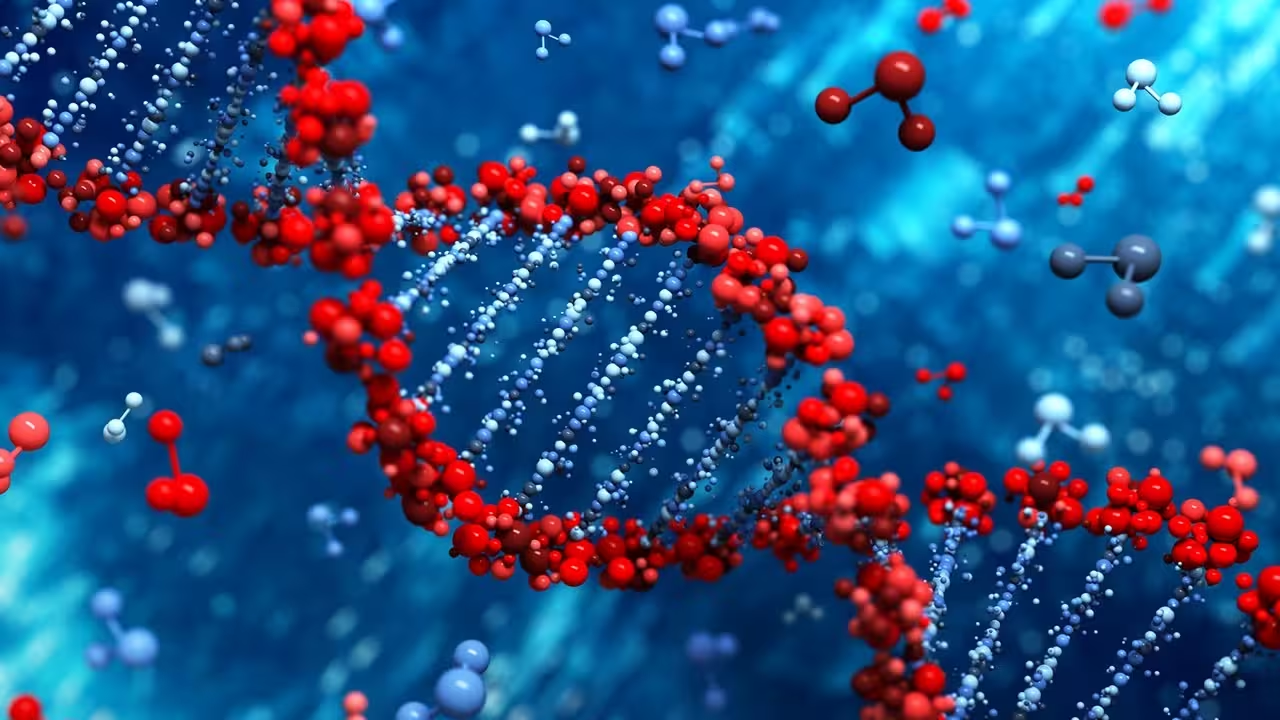
Here’s what biomolecules basically do:
- They provide energy through carbohydrates.
- They build and repair tissues using proteins made of amino acids.
- They store long-term energy using lipids like triglycerides.
- They carry genetic information through nucleic acids such as deoxyribonucleic acid (DNA).
The four main types you need to remember:
- Carbohydrates: quick-energy molecules.
- Proteins: growth, repair, enzymes, everything!
- Lipids: fats and oils that store energy + protect organs.
- Nucleic acids: DNA & RNA that control heredity and cell functions.
In short: Biomolecules are the foundation of life. Once you understand them, topics like metabolism, nutrition, enzymes, and even lab tests (like a lipid profile) start making much more sense.

Carbohydrates, Proteins, Lipids, DNA – What Each One Actually Does
Living organisms depend on four major biomolecules, and each one has a very specific job. Once you understand what they do, topics like metabolism, nutrition, and lab tests start feeling much easier.
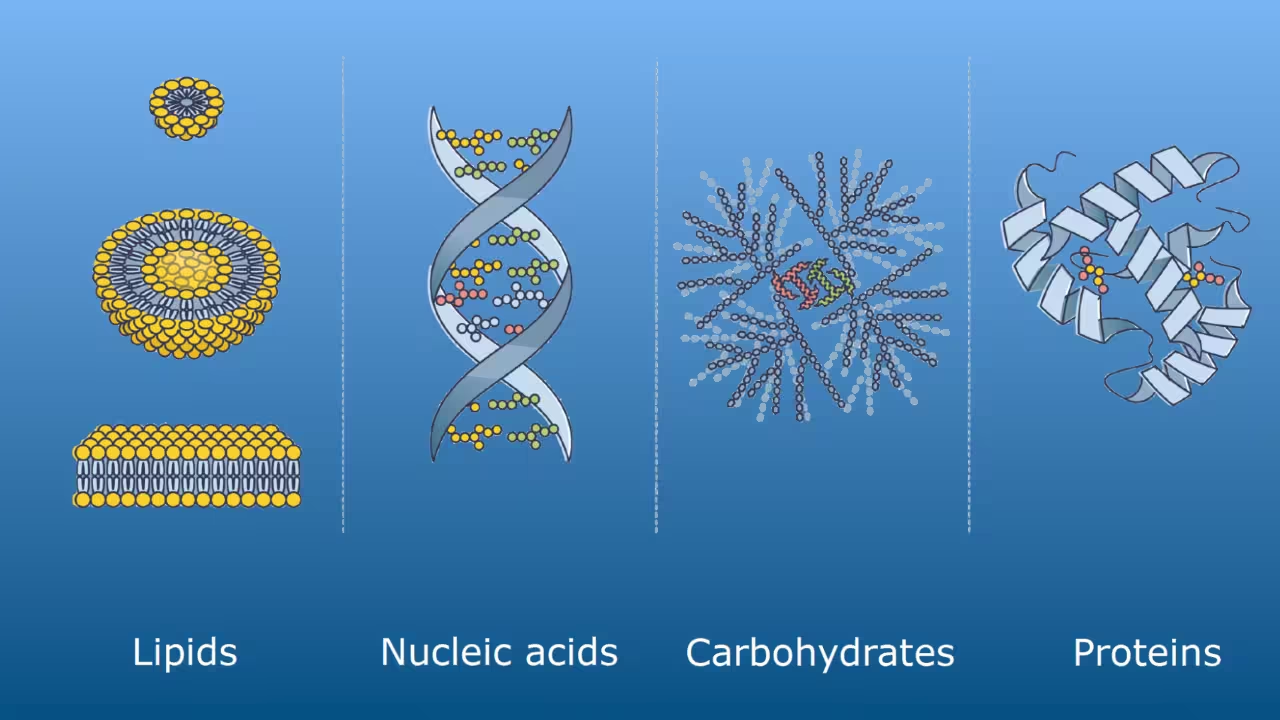
1. Carbohydrates – Your Body’s Main Energy Source
Carbohydrates are the molecules your body breaks down to get quick energy. They come in forms like glucose, starch, and glycogen. Whenever you study, walk, breathe, or do anything - your cells burn carbohydrates first.
2. Proteins – Builders, Repairers, and Enzymes
Proteins are made of amino acids, including some essential amino acids that your body cannot make on its own. They help in muscle repair, immunity, hormone production, and enzyme activity. Basically, if something needs to be built or fixed in your body, proteins handle it.
3. Lipids – Long-Term Energy + Cell Protection
Lipids include fats, oils, and molecules like triglycerides. They store long-term energy, protect organs, and form cell membranes. Your lipid profile in medical tests checks the levels of these fats to monitor your health.
4. Nucleic Acids – DNA & RNA (The Genetic Instructions)
Nucleic acids include deoxyribonucleic acid (DNA) and RNA. They store and transfer your genetic information - everything from your eye colour to how your cells function. DNA acts as a blueprint, and RNA helps in making proteins.
Why Scientists Analyse Biomolecules (And Why It Matters in Medicine)
Biomolecule analysis may sound like something only scientists care about, but it actually affects everyday life more than you think. From your blood tests to the food you eat, biomolecule testing is happening everywhere.

Why biomolecule analysis is important:
- To understand how the body works: Studying carbohydrates, proteins, lipids, and nucleic acids helps scientists track how cells use energy, grow, and repair themselves.
- To detect diseases early: Tests like a lipid profile, blood glucose test, or protein levels can reveal diabetes, liver issues, heart disease, and nutritional deficiencies.
- To develop medicines: Researchers study amino acids, enzymes, DNA, and other biomolecules to create safe and effective drugs.
- To check food quality: Food industries test proteins, fats, and carbohydrates to make sure products are safe and nutritious.
Where you see it in real life:
- When a doctor checks your cholesterol or triglycerides, that’s biomolecule analysis.
- When labs study DNA for genetic conditions, that’s biomolecule analysis.
- When athletes monitor protein levels for recovery, that’s biomolecule analysis.
Analysing biomolecules helps us diagnose diseases, create treatments, improve food quality, and understand life at the deepest level.
How We Identify Biomolecules – Simple Colour Tests Explained
In school and college labs, the easiest way to check what biomolecule is present is by watching how a solution changes colour. Every biomolecule reacts differently, so these colour changes act like clues that tell you whether it’s a carb, protein, fat, or DNA.
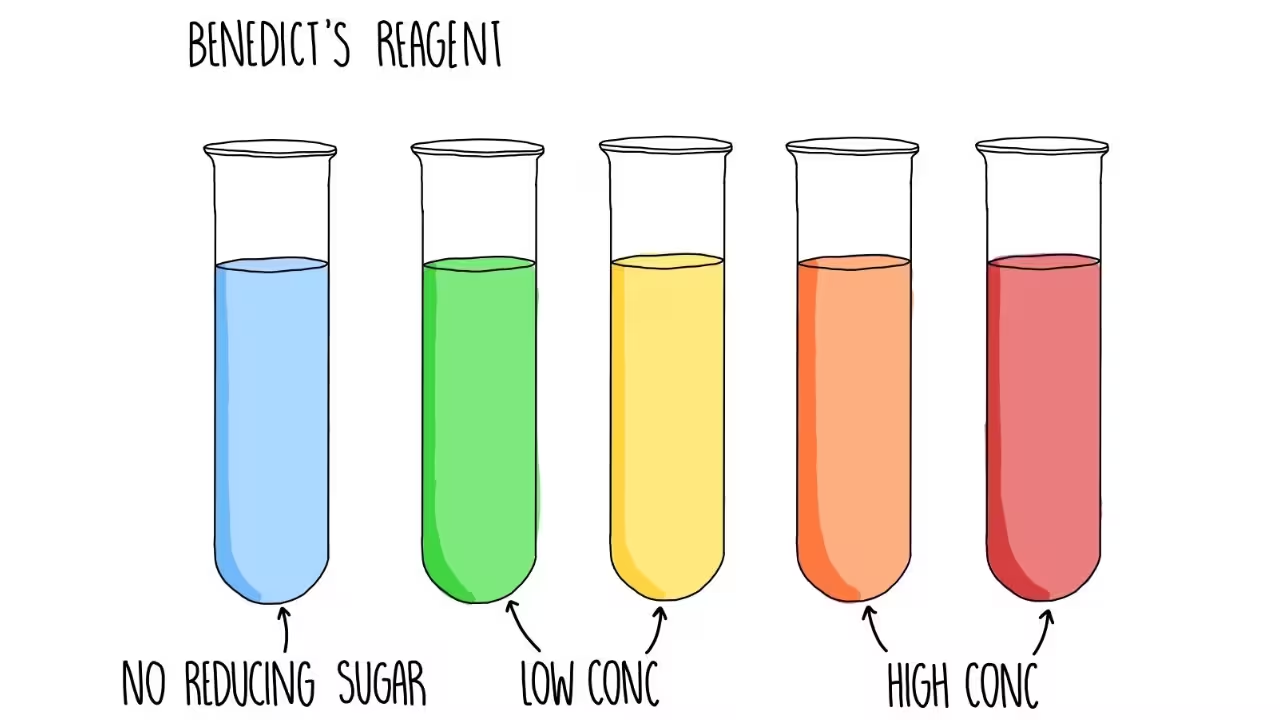
Tests for Carbohydrates
- Benedict’s Test: Used to check for simple sugars like glucose. When heated, the solution slowly turns green → yellow → orange → brick-red. The darker the colour, the more sugar present.
- Fehling’s Test: Also meant for reducing sugars. A clear brick-red solid forms at the bottom - this confirms the sugar.
- Molisch’s Test: A general test for all carbs. A purple-violet ring forms where the two liquids meet. If this ring appears, some form of carbohydrate is definitely there.
Tests for Proteins
- Biuret Test: One of the simplest protein tests. If the sample turns violet, it means proteins (or peptide bonds) are present.
- Millon’s Test: Useful for proteins containing the amino acid tyrosine. A reddish colour shows a positive result.
- Xanthoproteic Test: Shows the presence of aromatic amino acids. The sample first turns yellow, and after adding alkali, it becomes orange.
Tests for Lipids
- Sudan III Test: The dye sticks only to fats. If lipids are present, they appear bright orange-red.
- Grease Spot Test: A very simple test - just place a drop on paper. If the spot looks oily or transparent, lipids are present.
Tests for Nucleic Acids
- Diphenylamine Test: Mostly used for DNA. a blue or blue-green colour shows that deoxyribose (in DNA) is present..
These quick colour reactions help identify biomolecules even when you don’t have advanced lab machines. They’re used in school labs, food testing, and even basic medical checks.
Quantitative Tests – When We Need the Exact Amount
Sometimes knowing that a biomolecule exists in a sample isn’t enough. Doctors, researchers, and labs often need to know exactly how much protein, sugar, lipid, or DNA is present. That’s where quantitative tests come in - they turn colours, light, and chemical reactions into actual numbers.
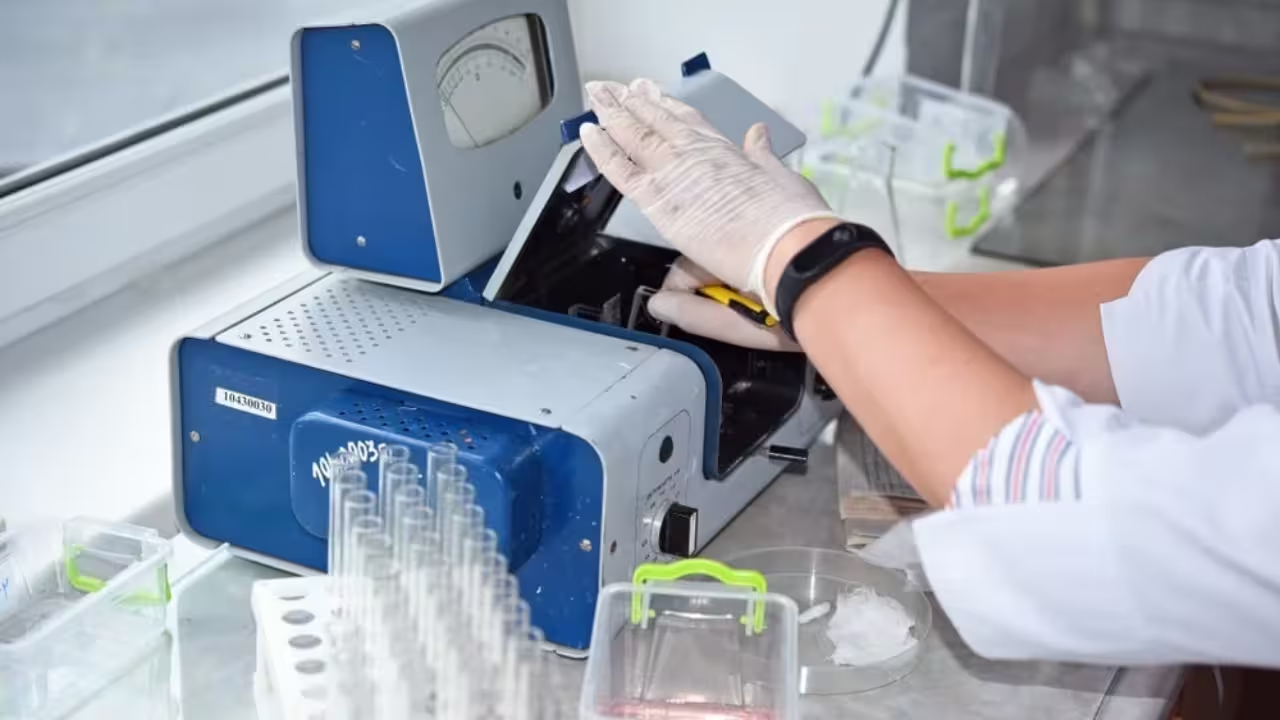
Why these tests matter:
- They help diagnose diseases (like measuring glucose in blood).
- They check if food contains the right nutrients.
- They measure protein, DNA, or enzyme levels in biology labs.
- They detect imbalances that affect health (like high triglycerides in a lipid profile).
Most common quantitative methods (explained simply):
1. Colorimetric Assays
These tests create a colour, and the darker the colour, the higher the concentration.
Used for: glucose, proteins, amino acids.
Examples: Lowry method, Bradford assay, DNSA test for reducing sugar.
2. Spectrophotometry
This instrument passes UV or visible light through a sample and measures how much light is absorbed.
More absorption = more molecules present.
Used for: DNA, RNA (at 260 nm), proteins (at 280 nm), enzyme activity.
3. Chromatography (Paper/TLC/Column)
Separates molecules based on size or polarity and can measure their concentration after separation.
Used for: amino acids, sugars, pigments, lipids.
4. Titration Methods
You add a reagent drop by drop until the reaction finishes (endpoint).
Used for: vitamin C, amino acids, acids/bases in food chemistry.
Instruments That Make Testing Possible
Before scientists can test any biomolecule, they need the right tools to measure, separate, or check what’s inside a sample. Here’s a simple look at the major instruments that make these tests possible and the exact job each one handles.
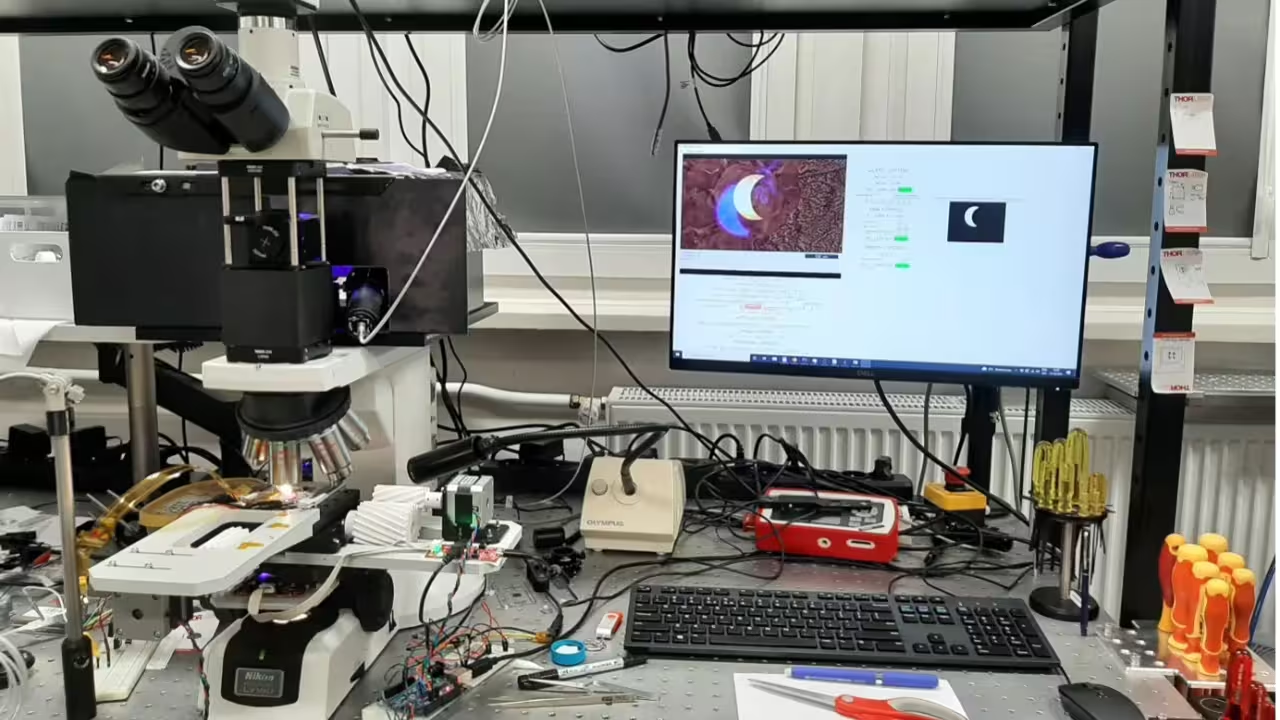
Spectrophotometer - Helps You Measure Concentration
This machine measures how much light a sample absorbs.
- More absorption = more molecules present.
- Used to quantify DNA (260 nm), proteins (280 nm), enzyme activity, and even glucose. It’s basically the lab’s “calculator” for figuring out how much of a biomolecule is in a solution.
Centrifuge - Helps You Separate Components
A centrifuge spins samples at high speeds so heavier components move down while lighter ones stay on top.
- Helps isolate blood plasma, DNA pellets, and cell parts.
- Also clears impurities before chemical tests. It’s the tool that gives you a clean, separated sample to work with.
PH Meter - Helps You Keep Reactions Stable
Every biomolecule test depends on the right pH. A pH meter gives an exact reading, which is crucial because:
- Enzymes stop working at the wrong pH
- DNA extraction can fail
- Buffers need precise acidity. It ensures your experiment doesn’t get ruined by a tiny pH mistake.
Electrophoresis Unit - Helps You Sort DNA, RNA & Proteins
When you load samples on a gel and turn on the current, molecules separate based on size.
- Smaller molecules move faster
- Larger ones move slower. This creates bands that help identify DNA fragments, check RNA quality, or compare protein samples.
Where Biomolecule Testing Is Used in Real Life
Biomolecule testing might sound like something that only happens in fancy labs, but it’s actually a part of everyday life. If you look around, you’ll see it used in places you’d never expect.
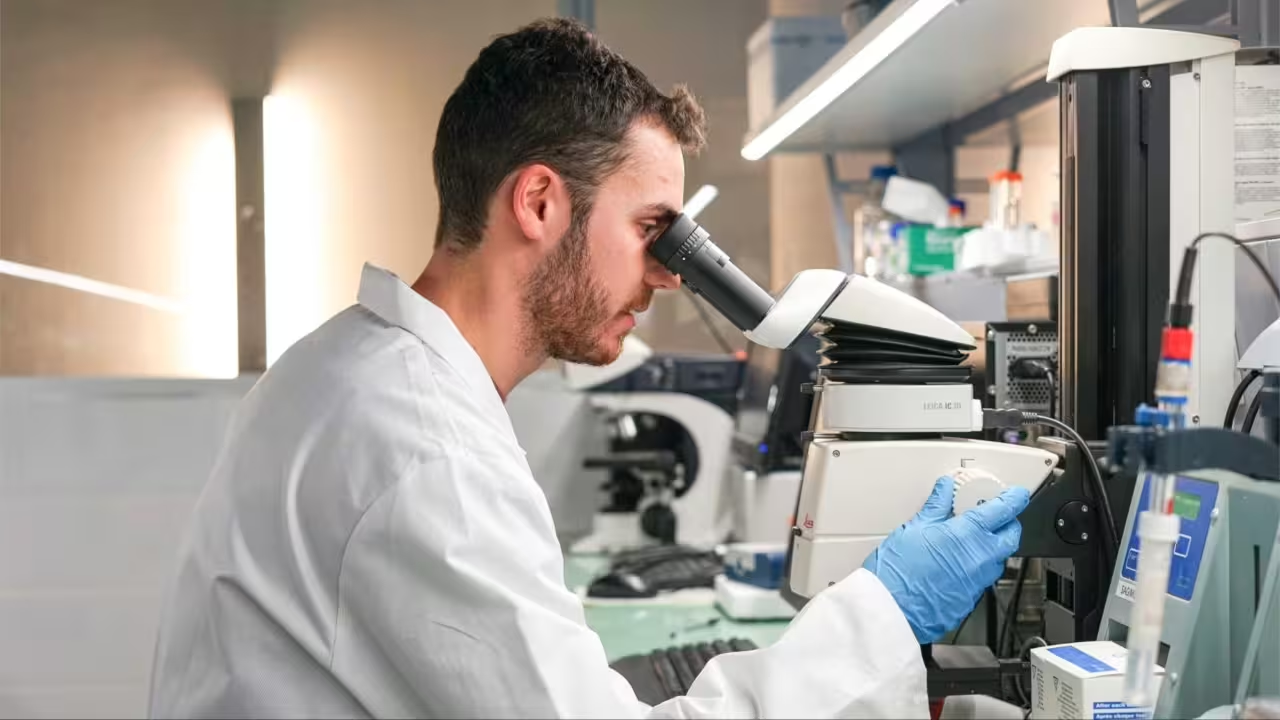
1. In Hospitals & Medical Diagnostics
When a patient walks in for a health check-up, the first thing the lab checks is their biomolecules. A lipid profile measures your triglycerides and cholesterol to see if your heart is at risk. A blood glucose test checks carbohydrate levels to diagnose diabetes.
Even protein levels in the blood help doctors detect infections, kidney issues, or liver problems. Most medical decisions start with analysing these molecules.
2. In Food & Nutrition Testing
Every food item you eat - milk, bread, biscuits, juices - gets tested for biomolecules before it reaches stores. Scientists check protein content, carbohydrate levels (like sugar), and the type of lipids present. This helps confirm if the product is actually healthy, meets safety standards, and matches what the label claims.
3. In Genetics & Research Labs
Whenever researchers study DNA, RNA, or proteins, biomolecule testing is the first step. DNA samples are measured using spectrophotometers, protein samples are checked with assays, and lipids are analysed to understand cell health.
It’s how scientists study diseases, develop medicines, and understand how the human body works.
4. In Agriculture & Plant Science
Plants are also full of biomolecules - sugars, starch, proteins, lipids. Farm labs check these levels to understand crop quality and nutrient value. Seed companies test DNA to verify plant variety and disease resistance. It's all biomolecule analysis working behind the scenes.
5. In Cosmetics & Skincare Testing
Even your facewash and moisturizer go through biomolecule testing. Companies check the lipids, proteins, and active ingredients to make sure the product is safe, effective, and not harmful to the skin. If a product claims “vitamin-rich,” that’s verified with biomolecule analysis.
Short-Term & Long-Term Effects of Imbalance in Biomolecules
Biomolecules like proteins, carbohydrates, lipids, and nucleic acids are important for your body to function properly. When their levels are out of balance, your body reacts quickly. Some effects appear within days or weeks (short-term), while others develop slowly over months or years (long-term).
.avif)
Short-Term Effects (Immediate or Within Weeks)
- Sudden Energy Drops or Fatigue: Carbohydrates are the main source of energy for your cells. If they are imbalanced, your cells don’t get a steady glucose supply. This can cause tiredness, dizziness, or difficulty concentrating, especially during physical activity or studying.
- Muscle Weakness or Cramps: Proteins are made of amino acids, which are essential for muscle repair and growth. Low protein intake can result in muscle soreness, slower recovery after exercise, and general weakness, even with mild activity.
- Hormonal Fluctuations: Lipids (fats) are building blocks for many hormones. Too little or too much fat can disturb hormone production, leading to mood swings, irregular appetite, irritability, or sudden emotional changes.
- Digestive Issues: Proteins and lipids also help with digestion by supporting enzyme production. An imbalance may cause bloating, nausea, or difficulty digesting heavy foods, as the body struggles to break down nutrients efficiently.
.avif)
Long-Term Effects (Months or Years)
- Obesity or Malnutrition: Excess lipids or sugars can lead to obesity, while deficiency can cause malnutrition. Both extremes affect growth, immunity, metabolism, and overall health.
- Weak Immunity: Proteins are vital for making antibodies. Low protein intake over time weakens the immune system, making you more prone to infections, slower to heal wounds, and frequently ill.
- Chronic Diseases: Long-term lipid imbalances (like high triglycerides) increase the risk of heart disease, while improper carbohydrate metabolism can lead to type 2 diabetes.
- Cellular or Genetic Damage: Nucleic acids (DNA and RNA) are crucial for cell division and repair. Imbalance can cause slow wound healing, poor tissue repair, and a higher risk of mutations.
- Hormonal Disorders: Persistent lipid imbalance may trigger thyroid problems, PCOS, irregular menstrual cycles, or metabolic syndrome, because hormones rely on healthy fats for proper functioning.
Short-term effects act as warning signals, while long-term imbalances can lead to serious health problems. Maintaining a balanced intake of carbohydrates, proteins, lipids, and essential nucleic acids is key for staying healthy and energetic.

Frequently Asked Questions

.avif)
Table of Content
Further Study













.svg)

