
.svg)


Class 9 Science Chapter 6 Tissues explains how groups of similar cells work together to perform specific functions in plants and animals. From meristematic tissues responsible for plant growth to muscular and nervous tissues that control body movement and coordination, every concept is important for exams.
These notes from cbse class 9 science syllabus are carefully structured according to the NCERT textbook to make revision quick, clear, and stress-free. Read step by step, understand the diagrams, and you’ll find this chapter much easier than it first appears.

What is a Tissue?
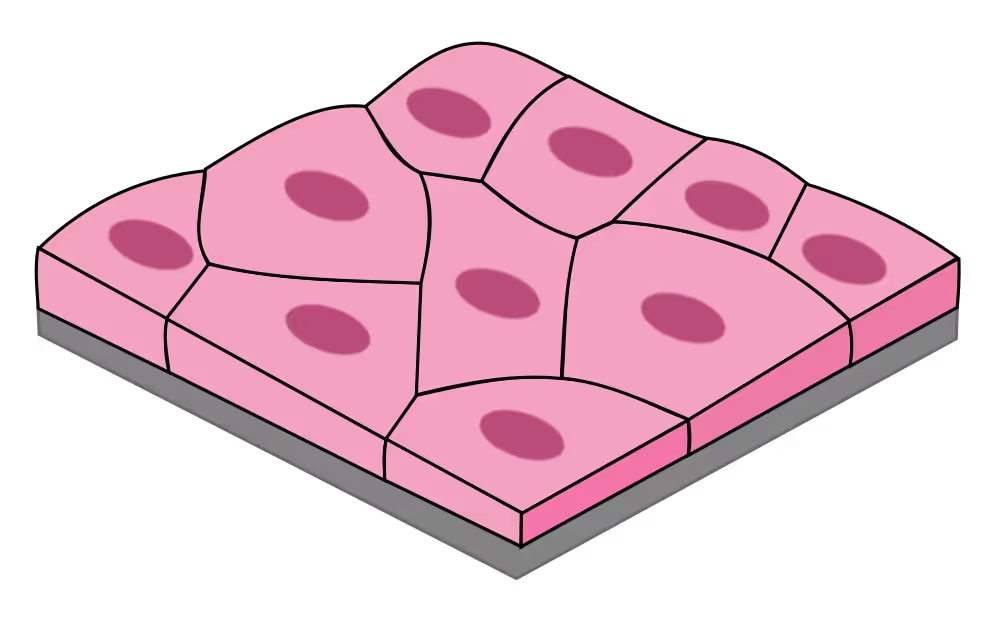
A tissue is a group of similar cells that work together to perform a specific function in the body. Different cells join hands to form different tissues, and each tissue has a special role.
Levels of Organisation in Our Body
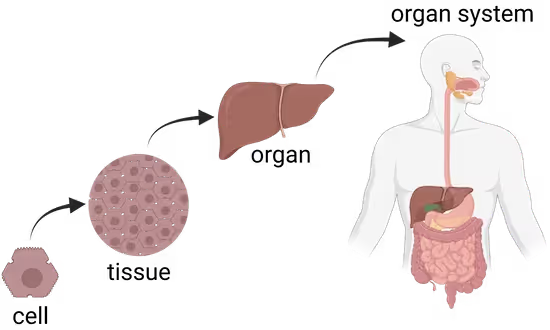
Living organisms are organised in a proper sequence:
- Cells: The basic structural and functional unit of life
- Tissues: Groups of similar cells performing one function
- Organs: Different tissues working together
- Organ System: Organs working together for life processes
- Organism: All organ systems together form a living being
Types of Tissues
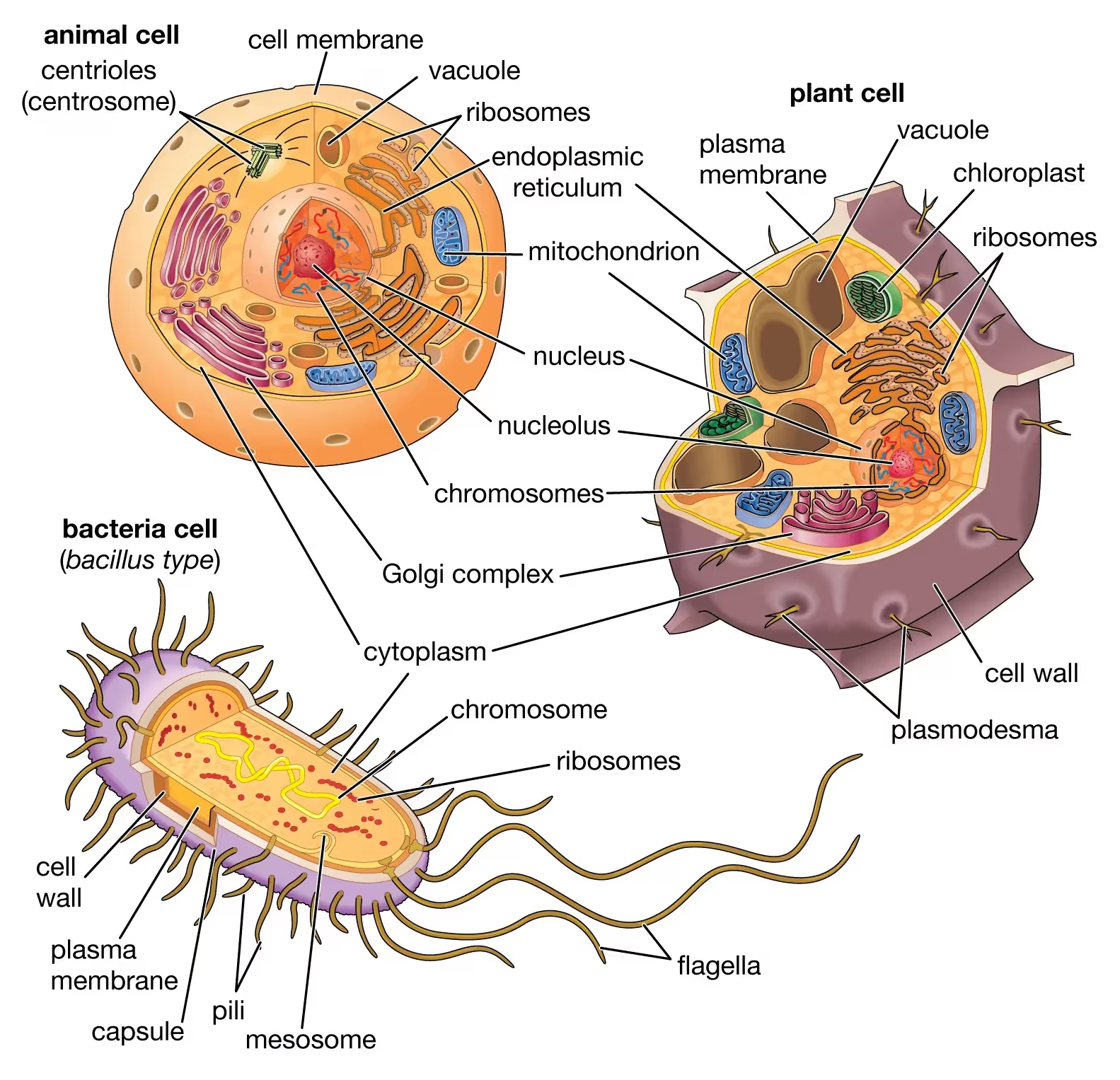
There are two main types of tissues:
- Animal Tissues
- Plant Tissues
Animal Tissues
Animal tissues perform different functions in the animal body. They are divided into four types:
- Connective Tissue
- Muscle Tissue
- Nervous Tissue
- Epithelial Tissue
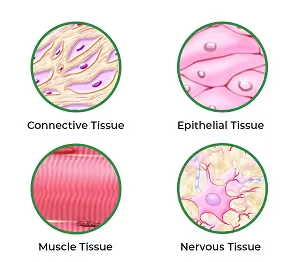
Each tissue is different in structure and function.
- Connective Tissue
Connective tissues have cells separated by a non-living material called the extracellular matrix. They give shape, support, and protection to the body.
Examples: blood, bone, tendon, ligament, adipose, areolar tissue
Types of connective tissue:
- Fluid connective tissue
- Fibrous connective tissue
- Skeletal connective tissue
Functions:
- Supports and binds body parts
- Maintains shape and position of organs
- Transports nutrients, gases, hormones, and wastes
- Protects against infections
- Stores energy and conserves body heat
- Muscle Tissue
Muscle tissues help in movement by producing force. They are responsible for both external and internal movements.
Types of muscle tissue:
- Skeletal muscle: Attached to bones
- Cardiac muscle: Found in the heart
- Smooth (visceral) muscle: Found in internal organs
Functions:
- Helps in walking, running, chewing, lifting, etc.
- Maintains posture
- Controls voluntary and involuntary movements
- Helps in blood circulation and breathing
- Nervous Tissue
Nervous tissue forms the brain, spinal cord, and nerves. It acts as the body’s communication system.
Structure of Neuron:
- Cell body (cyton)
- Dendrites (receive impulse)
- Axon (transmits impulse)
Functions:
- Transmits messages within the body
- Controls and coordinates activities
- Helps in thinking, memory, emotions, and reasoning
- Maintains awareness of surroundings
- Epithelial Tissue
Epithelial tissue forms the body surface and lines internal organs like the digestive tract, airways, and blood vessels.
Functions:
- Protection from injury and toxins
- Absorption, filtration, and secretion
- Sensory reception
- Provides mechanical strength
Types:
- Areolar Tissue: Fills spaces between organs
- Adipose Tissue: Stores fat
- Bone: Hard supportive tissue
- Cartilage: Flexible support (ear, nose)
- Blood: Fluid connective tissue
- Tendon: Connects muscle to bone
- Ligament: Connects bone to bone
Plant Tissues
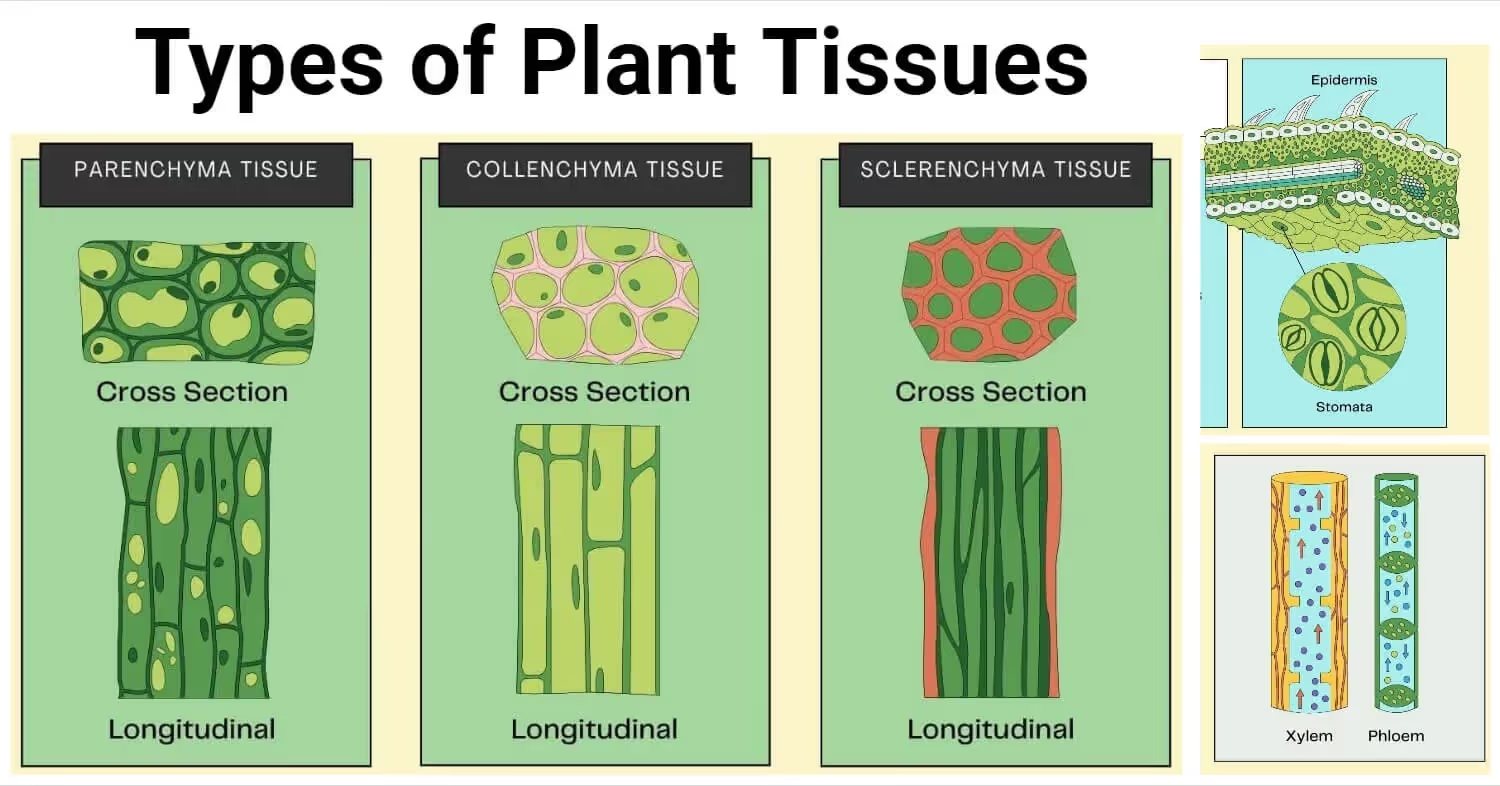
Plant tissues help plants grow, stay strong, and transport food and water.
Plant tissues are mainly divided into:
- Meristematic Tissue
- Permanent Tissue
- Meristematic Tissue
Meristematic tissues are responsible for plant growth. Their cells divide continuously and remain active.
Characteristics:
- Actively dividing cells
- Large nucleus and dense cytoplasm
- Thin cell walls
- Vacuoles are absent
Types of meristematic tissue:
- Apical meristem: Found at root and shoot tips; increases length
- Intercalary meristem: Found at nodes and leaf bases; helps grasses regrow
- Lateral meristem: Found on sides of stems and roots; increases thickness
- Permanent Tissues
Permanent tissues are formed when meristematic cells mature. They do not divide and perform specific functions.
They are of two types:
A. Simple Permanent Tissues
Made of only one type of cell.
- Parenchyma – Living cells; store food and water
- Chlorenchyma: photosynthesis
- Aerenchyma: helps aquatic plants float
- Collenchyma – Living cells with thick corners; provides flexibility
- Sclerenchyma – Dead cells with thick lignin walls; provides strength
B. Complex Permanent Tissues
Made of different types of cells working together for transport.
- Xylem: Transports water and minerals from roots to leaves
- Mostly upward movement
- Made of four elements–Tracheids, Vessels, Xylem fibres, and Xylem parenchyma
- Phloem: Transports food from leaves to all parts of the plant
- Movement is both upward and downward
- Made of–Sieve tubes, Companion cells, Phloem fibres, and Phloem parenchyma
Difference Between Plant and Animal Tissues
Plant and animal tissues differ in structure, function, growth pattern, and organisation because plants are stationary while animals show movement.
Plant tissues are mainly adapted for support, growth, and transport because plants are fixed in one place. In contrast, animal tissues are more specialised and complex as animals require movement, coordination, and faster response to stimuli.
This is why animals have muscular and nervous tissues, which are absent in plants.
FAQs
Q1. Why are meristematic cells small with dense cytoplasm?
Ans. Because they divide continuously and need active metabolism.
Q2. Why is cartilage flexible but bone hard?
Ans. Cartilage has a soft matrix, while bone has calcium salts making it rigid.
Q3. Why is phloem transport bidirectional?
Ans. Because food moves from leaves to growing and storage regions in both directions.
Q4. Why are epithelial cells tightly packed?
Ans. To form a continuous protective layer without gaps.
Q5. Why is sclerenchyma tissue dead?
Ans. Because lignin deposition makes the walls thick and rigid for mechanical support.












.svg)

