
.svg)


The Lake Isle of Innisfree by W.B. Yeats is a peaceful lyric poem. It expresses his longing for the quiet island of Innisfree in Ireland, where he had spent time as a boy. He dreams of going to Innisfree, a quiet island in Ireland, where he will build a small cabin and live alone.
Notes & Study Material PDF
Poet’s Background and Context
These NCERT Beehive The Lake Isle of Innisfree Class 9 notes provide stanza-wise summary, line explanation, poetic devices, central idea, themes, glossary and FAQs for exam preparation. Even if you’re preparing for your exams or just trying to understand the poem better, this is your one-stop solution. Download the CBSE Class 9 english syllabus and start practicing now.
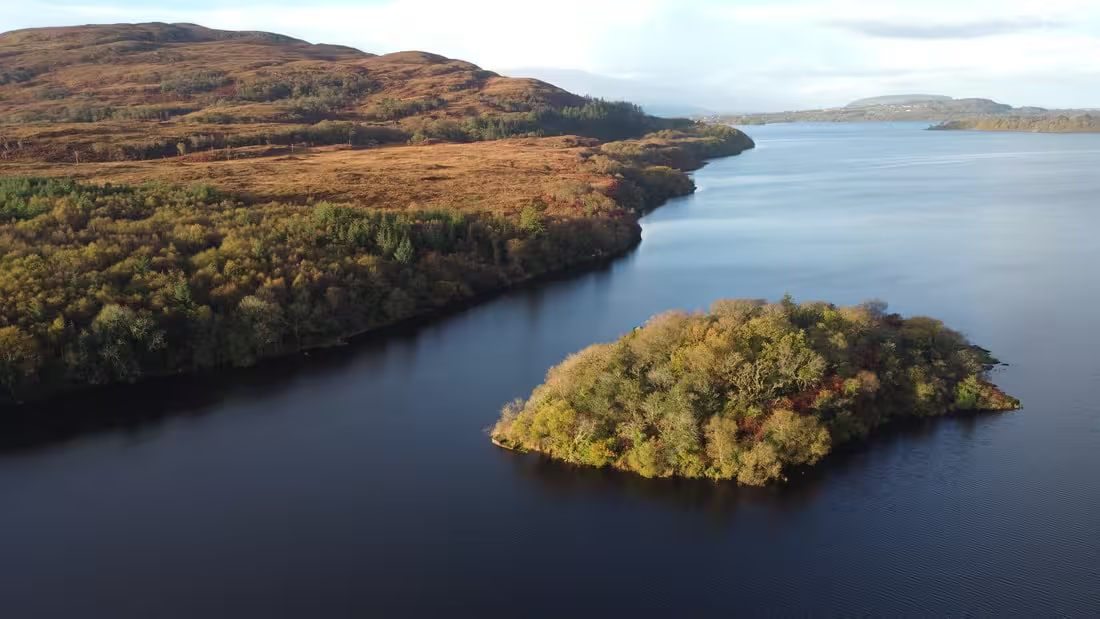

Poem The Lake Isle of Innisfree Summary
The Lake Isle of Innisfree is a peaceful and thoughtful poem written by W.B. Yeats. It expresses the poet’s strong wish to leave behind the noisy city life and live quietly in nature, on a small island in Ireland called Innisfree.
- The Poet's Dream
The poet wants to build a simple hut with clay and sticks at Innisfree. He plans to grow beans and keep a beehive. He imagines living a slow, calm life surrounded by the beauty of nature, far from stress and noise.
- Peace in Nature
For Yeats, real peace comes from natural surroundings. He dreams of hearing the buzzing bees, the lapping lake water, and enjoying the calmness of dawn, noon, and night. Nature offers him the quiet comfort he longs for.
- City Life vs Natural Life
Although he is standing in a busy city, the poet feels a strong inner connection to Innisfree. In his mind, he hears the soft sounds of the lake and wishes to return to a place that brings him peace.
- A Deep Inner Calling
The poet isn’t just dreaming of a place. He’s feeling a deep pull from within. Innisfree represents not only a real location but also a peaceful state of mind he constantly desires, showing his emotional need for escape and healing.
Line by Line Explanation - The Lake Isle of Innisfree
This shall help you to understand the poem line by line.
Stanza 1
- I will arise and go now, and go to Innisfree,
The poet says he will get up and go to a place called Innisfree, a peaceful island he dreams about.
- And a small cabin built there, of clay and wattles made:
He plans to build a small and simple hut made from clay and sticks (wattles).
- Nine bean-rows will I have there, a hive for the honeybee,
He will grow beans in nine rows and also keep a beehive to get fresh honey.
- And live alone in the bee-loud glade.
He wants to live all by himself in a peaceful open space where the sound of bees fills the air.
Stanza 2
- And I shall have some peace there, for peace comes dropping slow,
He believes he will find peace there, which comes slowly and gently in such a natural place.
- Dropping from the veils of the morning to where the cricket sings;
This peace starts in the early morning, covered in mist, and lasts until the sounds of crickets are heard later in the day.
- There midnight’s all a glimmer, and noon a purple glow,
At midnight, everything glimmers, and at noon, there is a purple glow in the light.
- And evening full of the linnet’s wings.
In the evening, birds called linnets will fly around, filling the air with their presence and sounds.
Stanza 3
- I will arise and go now, for always night and day
He repeats his strong wish to leave for Innisfree, because all day and night,
- I hear lake water lapping with low sounds by the shore;
He imagines or hears in his mind the soft sound of water touching the shore of the lake.
- While I stand on the roadway, or on the pavements grey,
Even when he is standing on a busy road or on a dull city pavement,
- I hear it in the deep heart’s core.
He hears these peaceful sounds deep inside his heart, it’s a strong desire and feeling that won’t go away.
Glossary of Difficult Words
- Wattles: twisted sticks used in building
- Glade: an open space
- Linnet: a small brown-grey bird
Poetic Devices in The Lake Isle of Innisfree
Let us understand the poetic devices used in the poem.
- Alliteration: Repeating the same consonant sound at the beginning of nearby words. For example, “lake water lapping with low sounds”.
- Imagery: Using words that create pictures in the reader’s mind by describing sights, sounds, and feelings. For example, “a small cabin… of clay and wattles made”, “bee-loud glade”, “midnight’s all a glimmer”.
- Personification: Giving human qualities to non-living things or nature. For example, “peace comes dropping slow”.
- Repetition: Repeating a word or line to show importance. For example, “I will arise and go now”.
- Metaphor: A comparison made without using “like” or “as”. For example, “veils of the morning”.
- Onomatopoeia: A word that imitates the sound it describes. For example, “lapping with low sounds”.
Exam Tip: In board exams, students are often asked to explain imagery in the poem (e.g., ‘bee-loud glade’ or ‘lake water lapping’). Be ready with at least two examples of imagery with explanation. Make sure to practice more such latest pattern Qs from Sample Papers.
Themes of the Poem
Understanding the themes of the poem will help you in writing better answers in the exam.
- Desire for Peace and Simplicity
The poet dreams of escaping the noise and stress of city life to find peace in a quiet, natural place. He believes that real peace comes from living a simple life close to nature.
- Love for Nature
Nature is shown as calm, beautiful, and healing. The poet describes birds, bees, water, and natural light to show how peaceful and comforting nature can be.
- Escape from City Life
The poem shows a clear difference between city life and natural life. The poet feels unhappy in the city and wants to go to Innisfree, where there is no noise or crowd.
- Power of Imagination and Inner Feelings
Even though the poet is in the city, he can still feel the calmness of Innisfree in his heart. It shows that our imagination and deep desires can mentally take us to a better place.
- Connection to One’s Roots
Innisfree is both a real place from the poet’s childhood and a symbol of a peaceful state of mind he longs for. The poem shows his emotional attachment to that place and how he longs to return to where he once felt happy and peaceful.
Central idea of The Lake Isle of Innisfree NCERT
The poem The Lake Isle of Innisfree by W.B. Yeats expresses the poet’s deep desire to escape the busy, noisy life of the city and live in peace and quiet close to nature. He dreams of going to Innisfree, a small island in Ireland, where he plans to build a simple cabin and live alone surrounded by natural beauty.
The poet believes that true peace comes from the calmness of nature like the sound of bees, birds, water, and the soft light of the sky. Even though he lives in the city, the thought of Innisfree brings him peace in his heart.
The central idea of the poem is the contrast between the stress of modern life and the peace of nature. It shows how nature can bring comfort and inner happiness, and how strong our feelings and imagination can be in keeping us connected to the places we love.
Conclusion & Key Takeaways
Now that you’ve gone through these notes, we hope the poem The Lake Isle of Innisfree feels much easier to understand. These notes are perfect for quick revision and clearing any last-minute doubts before your exam.
You don’t need to look anywhere else. This is your complete guide to mastering this poem. Whether it’s understanding the poet’s love for nature or his wish for peace, it’s all explained here clearly.
With these notes by your side, you’re fully prepared to score well and confidently answer any question from this chapter. Keep revising, and poetry will never feel difficult again!
FAQs
Q1. What is the summary of The Lake Isle of Innisfree?
Ans. The poem shows the poet’s wish to live peacefully on Innisfree island, close to nature. He dreams of a simple life with huts, bees and natural beauty around.
Q2. What is the main theme of the poem Lake Isle of Innisfree?
Ans. The theme is peace in nature. The poet longs to escape city life’s noise and stress, finding calmness, happiness and spiritual satisfaction in nature’s simple and quiet environment.
Q3. What is the central idea of The Lake Isle of Innisfree Class 9?
Ans. The central idea is that real peace comes from nature. The poet imagines Innisfree as a place of beauty, silence and joy, away from the busy, crowded modern life.
Q4. What is the poetic device of the poem The Lake Isle of Innisfree?
Ans. The poem uses imagery, alliteration and repetition. These poetic devices create a musical effect, painting a clear picture of Innisfree’s peaceful environment and the poet’s strong desire for it.
Q5. Why does Yeats want to go to Innisfree?
Ans. Yeats want to go to Innisfree because he longs for peace and simplicity, away from the city’s noise.
Q6. Is Innisfree only a physical place?
Ans. No, it is also a state of mind representing peace and inner calm.












.svg)

