
.svg)
On 23 May 2026, more than 160 educators gathered for Educart's CPD webinar–The Classroom Reset; a 2-hour session that turned its attention not to curriculum or assessment, but to the inner life of an adolescent student.
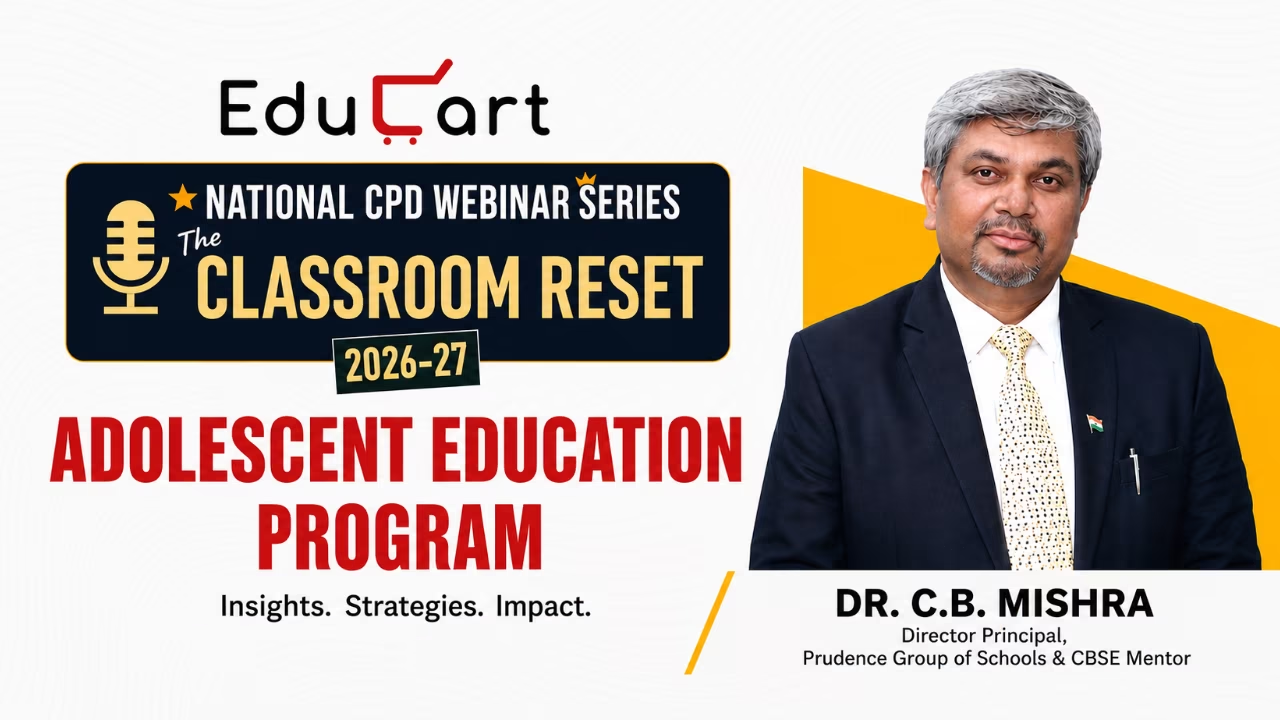
Dr. C.B. Mishra, Director Principal of the Prudence Group of Schools led the discussion, along with Mr. Nishant Singh as the anchor. Being more of an open conversation; the webinar actually asked teachers to look beyond academic performance and consider what students are quietly carrying into the classroom.
Webinar Highlights
- Topic: Adolescent Education Program
- Speaker: Dr. C.B. Mishra, Director Principal, Prudence Group of Schools
- Discussion Led By: Mr. Nishant Singh
- Date: 23 May 2026
- Duration: 2 Hours
- Type of Event: National CPD Webinar (Online)
- Organized By: Educart
- Participation Fee: Free
Looking Beyond the Marks
Dr. Mishra opened with a simple reframing: a teenager who acts out or withdraws is almost never being difficult. He named these hidden pressures the “invisible burdens” which students carry to class everyday, coming from a few familiar directions:
- Academic pressure - the constant push for marks and results
- Emotional strain - the everyday anxieties of growing up
- Social stress - peer comparison and the fear of being left out
- Family circumstances - tensions at home that follow a child to school
His point was clear: You cannot teach a child you do not understand. Marks tell you almost nothing about what a fifteen-year-old is actually battling with, and the most useful thing a teacher can do is learn to read the student rather than just the report card.
The Teacher as a Listener First
A major focus of the session was on the role of teachers as emotional support for students. Dr. Mishra motivated teachers to listen carefully, not for providing any advice but to actually understand the reason behind a child’s behaviour.
Some important points discussed were:
- Try to understand the child behind the behaviour
- See behaviours like silence or anger as signs requiring attention
- Listen first before giving advising students
- Appreciate students for the good they do
He also shared that positive encouragement often helps students improve more than constant criticism.
Real Cases, Real Classrooms
Instead of keeping scenarios theoretical, Dr. Mishra walked educators through real classroom experiences to cover various sensitive topics:
- Cyberbullying and the emotional and mental impact it leaves
- Emotional withdrawal, where a student goes quiet and emotionally distant
- Mood swings that comes during teenage years
- Appearance-based insecurities that can flare up without warning
- Discipline challenges that are faced in the classroom on an everyday basis
For each topic covered, the focus stayed on responding calmly with empathy rather than reaching out through discipline.
One of the ideas to cater to these situations well was the ‘Wait and Watch’ approach which encouraged teachers to pause before responding to any situation. This way the reaction fits the actual problem instead of the heat of the moment.
Building a Safe Space, Online and Off
After understanding the real life scenarios, the discussion circled back to a safe classroom culture where the students can be honest, comfortably.
This is the age where students' lives are displayed on digital media, Dr. Mishra mentioned the importance of keeping classroom culture healthy in this era of social media.
Following up he added by saying positive discipline over fear.
Much of the discussion circled back to the kind of classroom culture that lets students feel safe enough to be honest. In an age where so much of a teenager's social life plays out on a screen, Dr. Mishra spoke about digital safety and the importance of keeping classroom culture healthy in the social media era.
He made a clear case for positive discipline over fear.
- A classroom controlled by fear looks disciplined, but the connection between the students and the teacher is missing
- A classroom built on respect and trust helps students feel safe, making space for honest conversations
Practical Tools Teachers Could Use Tomorrow
The webinar did not ended at the discussions but gave something that teachers could actually take straight back to their classrooms:
- Think-Pair-Share: A method for better student engagement. Students first thinking individually, then discussing in pairs, and finally sharing with the entire classroom. By this those voices are given a way which were left unheard.
- Head-Heart-Hand: A framework for complete development that connects what students know, what they feel, and what they can do, instead of treating learning as pure intellectual exercise.
- Reimagined Homework: Making assignments reflective, practical and connected to the world so they no more feel like basic school homework.
Connected through all these qualities, Dr. Mishra kept returning to the qualities that bind everything together: empathy, communication, and trust-building. In his view, these qualities are not the final layer of good teaching but are those that set the foundation.
"They Won't Care How Much You Know..."
To capture the essence of the entire session in one line, Dr Mishra said ‘Students don’t care how much you know until they know how much you care’.
The webinar stayed interactive throughout with open discussions, reflection activities, teachers swapping their classroom experiences.When asked after the session, educators kept coming back to the same things:
- The practical applicability of every strategy shared
- The relatable case studies drawn from real classrooms
- The space to reflect and exchange ideas rather than just listen
In The End
Dr. Mishra closed the session by reminding that adolescence is not a problem to be managed but a stage in life requiring guidance, patience and a good deal of compassion.
The teachers who get the best out of teenagers are usually the ones who remember that human connection and academic excellence are two different goals growing out of each other and not competing against each other.
Through “The Classroom Reset” series, Educart continues to create a space where teachers can reflect, learn, and take practical ideas back to their classrooms. This session also showed that more and more teachers are looking for such meaningful conversations.
Glimpse of the Event

Share Article


.svg)





%2520(1).avif)






















.svg)

