
The Class 10 SST board exam paper comes with various MCQs from Geography, History, Economics and Civics. Thus, effective preparation for the Class 10 MCQ Social Science Board Exam becomes necessary to score high.
This article allows you to get access to download the PDF of the Top 100 Class 10 SST MCQ for the CBSE Board Exam 2027. It includes all the important questions and answers

Download PDF of 100 MCQs for the CBSE Class 10 Social Science
Get access to the top 100 Class 10 MCQ Social Science Board Exam 2027 in the PDF below. You can download the PDFs by clicking the button below. You can also practise MCQs and put a tick “✓” in the right answers of the MCQs and test your results.
CBSE MCQ for Class 10 Social Science for Board Exam 2027
Practice the top 100 CBSE MCQ for Class 10 Social Science below. Also compare your answers with the answer keys provided at the bottom. All the Class 10 SST MCQ divided into four sections, History, Geography, Political Science and Economics. Moreover, each section has 25 questions for practice.
Section A: History (Q1–Q25)
Q1. Frédéric Sorrieu's series of four prints (1848) visualised his dream of a world made up of:
(a) Absolute monarchies
(b) Military dictatorships
(c) Colonial empires
(d) Democratic and social republics
Q2. The Civil Code of 1804 introduced in France is usually known as the:
(a) Frankfurt Code
(b) Napoleonic Code
(c) Vienna Code
(d) Habsburg Code
Q3. The customs union 'Zollverein' was formed in 1834 at the initiative of:
(a) France
(b) Austria
(c) Prussia
(d) Britain
Q4. The Treaty of Constantinople (1832) recognised which country as an independent nation?
(a) Poland
(b) Belgium
(c) Italy
(d) Greece
Q5. "When France sneezes, the rest of Europe catches cold." Who made this remark?
(a) Duke Metternich
(b) Giuseppe Garibaldi
(c) Otto von Bismarck
(d) Giuseppe Mazzini
Q6. Who was proclaimed king of united Italy in 1861?
(a) Giuseppe Mazzini
(b) Victor Emmanuel II
(c) Giuseppe Garibaldi
(d) Count Cavour
Q7. Assertion (A): Romanticism sought to develop a particular form of nationalist sentiment.
Reason (R): Romantic artists and poets focused on emotions, intuition and mystical feelings rather than reason and science alone.
(a) Both A and R are true, and R is the correct explanation of A
(b) Both A and R are true, but R is not the correct explanation of A
(c) A is true, but R is false
(d) A is false, but R is true
Q8. Arrange in chronological order: I. Unification of Germany II. Treaty of Vienna III. Recognition of Greek independence IV. Frankfurt Parliament
(a) III, II, I, IV
(b) II, IV, III, I
(c) I, II, III, IV
(d) II, III, IV, I
Q9. The Rowlatt Act (1919) gave the British government enormous powers to:
(a) Detain political prisoners without trial for two years
(b) Impose salt tax
(c) Ban the Indian National Congress
(d) Collect land revenue at higher rates
Q10. The Jallianwala Bagh massacre at Amritsar took place on:
(a) 13 April 1919
(b) 12 March 1930
(c) 26 January 1930
(d) 6 April 1919
Q11. Gandhiji withdrew the Non-Cooperation Movement in February 1922 after the incident at:
(a) Dandi
(b) Chauri Chaura
(c) Champaran
(d) Kheda
Q12. The Khilafat Committee was formed in Bombay in March 1919 under the leadership of:
(a) Muhammad Ali and Shaukat Ali
(b) Maulana Azad and Hakim Ajmal Khan
(c) Sayyid Ahmad Khan and Agha Khan
(d) Muhammad Iqbal and M.A. Jinnah
Q13. The demand for 'Purna Swaraj' was formalised at the Lahore Congress session (December 1929) presided over by:
(a) Mahatma Gandhi
(b) Subhas Chandra Bose
(c) Motilal Nehru
(d) Jawaharlal Nehru
Q14. Gandhiji began the famous Salt March to Dandi from:
(a) Sevagram Ashram
(b) Champaran
(c) Wardha
(d) Sabarmati Ashram
Q15. The Poona Pact (September 1932) between Gandhiji and Dr B.R. Ambedkar gave the Depressed Classes:
(a) Separate electorates
(b) A separate province
(c) Reserved seats in legislative councils, voted in by the general electorate
(d) Free education in government schools
Q16. The Swaraj Party was formed within the Congress by:
(a) Lala Lajpat Rai and Bipin Chandra Pal
(b) C.R. Das and Motilal Nehru
(c) Tilak and Gokhale
(d) Gandhiji and Nehru
Q17. Assertion (A): The Simon Commission was greeted with the slogan 'Go back Simon' when it arrived in India in 1928.
Reason (R): The Commission did not have a single Indian member.
(a) Both A and R are true, and R is the correct explanation of A
(b) Both A and R are true, but R is not the correct explanation of A
(c) A is true, but R is false
(d) A is false, but R is true
Q18. The 'silk routes' got their name from:
(a) Western cargoes of silk sent to China
(b) Silk worms found along the routes
(c) The importance of Chinese silk cargoes carried along them
(d) Silk tents used by traders
Q19. Which of the following common foods was introduced to Europe and Asia from the Americas?
(a) Rice
(b) Noodles
(c) Potatoes
(d) Wheat
Q20. The Irish Potato Famine (1845–49) was caused mainly by:
(a) Excessive exports of potatoes
(b) War with England
(c) Floods
(d) Disease (blight) destroying the potato crop
Q21. The most powerful weapon of the Spanish conquerors in the 16th-century Americas was:
(a) Horses
(b) Navy
(c) Germs such as smallpox
(d) Guns and cannons
Q22. The earliest kind of print technology (hand printing) was developed in:
(a) Egypt
(b) China, Japan and Korea
(c) India
(d) Europe
Q23. The first book printed by Johann Gutenberg on his press was the:
(a) Ninety-five Theses
(b) Diamond Sutra
(c) Bible
(d) Ramayana
Q24. Who said, "Printing is the ultimate gift of God and the greatest one"?
(a) Erasmus
(b) Menocchio
(c) Louise-Sébastien Mercier
(d) Martin Luther
Q25. The Vernacular Press Act, which gave the government powers to censor Indian-language newspapers, was passed in:
(a) 1857
(b) 1905
(c) 1919
(d) 1878
Section B: Geography (Q26–Q50)
Q26. Agenda 21 was signed by world leaders at the Earth Summit held in 1992 at:
(a) Geneva
(b) Rio de Janeiro
(c) Stockholm
(d) Kyoto
Q27. On the basis of exhaustibility, resources are classified as:
(a) Potential and developed
(b) Biotic and abiotic
(c) Individual and community
(d) Renewable and non-renewable
Q28. Which is the most widely spread and important soil in India?
(a) Black soil
(b) Alluvial soil
(c) Laterite soil
(d) Red and yellow soil
Q29. Black soil is also known as:
(a) Bhangar
(b) Laterite
(c) Khadar
(d) Regur
Q30. Laterite soil develops in areas with:
(a) High temperature and heavy rainfall
(b) High temperature and low rainfall
(c) Low temperature and heavy rainfall
(d) Low temperature and low rainfall
Q31. In which states does net sown area account for over 80 per cent of the total area?
(a) Rajasthan and Gujarat
(b) Punjab and Haryana
(c) Manipur and Andaman & Nicobar
(d) Arunachal Pradesh and Mizoram
Q32. Assertion (A): Arid soils are generally sandy in texture and saline in nature.
Reason (R): Arid soils have a high humus and moisture content.
(a) Both A and R are true, and R is the correct explanation of A
(b) Both A and R are true, but R is not the correct explanation of A
(c) A is true, but R is false
(d) A is false, but R is true
Q33. 'Slash and burn' agriculture is known as 'Jhumming' in:
(a) Odisha
(b) Madhya Pradesh
(c) Kerala
(d) The north-eastern states
Q34. Rabi crops are sown in:
(a) Winter, from October to December
(b) Summer, from April to June
(c) With the onset of monsoon
(d) Between rabi and kharif seasons
Q35. Rice requires high temperature (above 25°C), high humidity and annual rainfall of:
(a) 75–100 cm
(b) Above 100 cm
(c) Below 50 cm
(d) 50–75 cm
Q36. Which of the following is grown during the Zaid season?
(a) Paddy
(b) Mustard
(c) Wheat
(d) Watermelon
Q37. The Bhoodan–Gramdan movement was initiated by:
(a) Mahatma Gandhi
(b) Sunderlal Bahuguna
(c) Jayaprakash Narayan
(d) Vinoba Bhave
Q38. Tea cultivation in India is an example of:
(a) Primitive subsistence farming
(b) Plantation agriculture
(c) Intensive subsistence farming
(d) Shifting agriculture
Q39. Which crop is known as the 'golden fibre'?
(a) Cotton
(b) Jute
(c) Hemp
(d) Silk
Q40. Aluminium is obtained from which ore?
(a) Haematite
(b) Bauxite
(c) Limonite
(d) Magnetite
Q41. Mica is indispensably used in the:
(a) Fertiliser industry
(b) Iron and steel industry
(c) Cement industry
(d) Electric and electronic industries
Q42. The highest quality hard coal with the highest carbon content is:
(a) Lignite
(b) Peat
(c) Bituminous
(d) Anthracite
Q43. The largest wind farm cluster, from Nagercoil to Madurai, is located in:
(a) Rajasthan
(b) Tamil Nadu
(c) Karnataka
(d) Gujarat
Q44. Which of the following is a non-conventional source of energy?
(a) Tidal energy
(b) Petroleum
(c) Coal
(d) Natural gas
Q45. The monazite sands of Kerala are rich in:
(a) Uranium
(b) Bauxite
(c) Thorium
(d) Manganese
Q46. The first successful textile mill in India was established in 1854 in:
(a) Kolkata
(b) Kanpur
(c) Mumbai
(d) Ahmedabad
Q47. The iron and steel industry is called a 'basic industry' because:
(a) All other industries depend on it for machinery
(b) It employs the most women
(c) It is owned only by the government
(d) It uses agricultural raw materials
Q48. Most of India's jute mills are located along the banks of the:
(a) Yamuna
(b) Hugli
(c) Narmada
(d) Godavari
Q49. Limestone is the principal raw material of which industry?
(a) Textile
(b) Jute
(c) Sugar
(d) Cement
Q50. Which of the following is an agro-based industry?
(a) Cement
(b) Aluminium smelting
(c) Sugar
(d) Iron and steel
Section C: Political Science (Q51–Q75)
Q51. The Act passed in Sri Lanka in 1956 recognised which language as the only official language?
(a) Tamil
(b) English
(c) Sinhala
(d) Hindi
Q52. In Belgium, the 'community government' is elected by people belonging to:
(a) One language community – Dutch, French or German
(b) The Dutch community only
(c) Brussels only
(d) All regions jointly
Q53. Power shared among the legislature, executive and judiciary is called:
(a) Horizontal distribution of power
(b) Community government
(c) Federal distribution of power
(d) Vertical distribution of power
Q54. Under the Belgian constitution, the number of Dutch- and French-speaking ministers in the central government is:
(a) Equal
(b) Decided by population
(c) Decided by the King
(d) Two Dutch for every French
Q55. Which city in Belgium has a separate government with equal representation for both communities?
(a) Ghent
(b) Bruges
(c) Antwerp
(d) Brussels
Q56. Assertion (A): Power sharing is good for democracy.
Reason (R): Power sharing helps to reduce the possibility of conflict between social groups.
(a) Both A and R are true, and R is the correct explanation of A
(b) Both A and R are true, but R is not the correct explanation of A
(c) A is true, but R is false
(d) A is false, but R is true
Q57. A coalition government is an example of power sharing among:
(a) Different levels of government
(b) Different organs of government
(c) Political parties
(d) Social groups
Q58. Which of the following is an example of a 'holding together' federation?
(a) USA
(b) India
(c) Australia
(d) Switzerland
Q59. Subjects such as defence, foreign affairs, banking and currency are included in the:
(a) Residuary subjects
(b) Concurrent List
(c) Union List
(d) State List
Q60. In India, the power to legislate on 'residuary' subjects lies with the:
(a) State governments
(b) Union government
(c) Supreme Court
(d) Local governments
Q61. Under the 1992 constitutional amendment, what share of seats in local government bodies is reserved for women?
(a) One-half
(b) One-fourth
(c) At least one-third
(d) Two-thirds
Q62. The political head of a municipal corporation is the:
(a) District Collector
(b) Mayor
(c) Chairperson of Zila Parishad
(d) Sarpanch
Q63. Which of the following subjects is in the Concurrent List?
(a) Education
(b) Police
(c) Defence
(d) Agriculture
Q64. Which feature makes India a secular state?
(a) Only minorities can practise religion freely
(b) There is no official religion for the Indian state
(c) It bans all religions in public life
(d) Hinduism is the state religion
Q65. 'Sexual division of labour' refers to a system in which:
(a) Women work only in factories
(b) All work inside the home is done by women of the family
(c) Men do all household work
(d) Men and women are paid equally
Q66. The term 'patriarchy' literally means:
(a) Rule by priests
(b) Rule by mothers
(c) Rule by fathers
(d) Rule by elders
Q67. Who among the following worked to establish a society free of caste inequalities?
(a) Jotiba Phule, B.R. Ambedkar and Periyar Ramaswami Naicker
(b) Only Jotiba Phule
(c) Only Mahatma Gandhi
(d) None of these
Q68. The Constitution (106th Amendment) Act, 2023 provides reservation for women in the Lok Sabha and State Assemblies of:
(a) One-half of seats
(b) Two-fifths of seats
(c) One-third of seats
(d) One-fourth of seats
Q69. Which country is an example of a one-party system?
(a) United Kingdom
(b) USA
(c) China
(d) India
Q70. A 'partisan' is a person who:
(a) Works for the Election Commission
(b) Is strongly committed to a party, group or faction
(c) Contests elections independently
(d) Is neutral in politics
Q71. To be recognised as a 'national party', a party must secure at least 6% of votes in Lok Sabha or Assembly elections in four states and win at least:
(a) Four Lok Sabha seats
(b) Ten Lok Sabha seats
(c) Two Lok Sabha seats
(d) One Lok Sabha seat
Q72. The Bahujan Samaj Party (BSP) was formed in 1984 under the leadership of:
(a) Ram Vilas Paswan
(b) Mayawati
(c) B.R. Ambedkar
(d) Kanshi Ram
Q73. The main purpose of the anti-defection law is to:
(a) Fund elections from the state
(b) Limit the number of parties
(c) Ban regional parties
(d) Prevent elected representatives from changing parties
Q74. Democracy is considered better than other forms of government because it:
(a) Promotes equality among citizens
(b) Enhances the dignity of the individual
(c) Provides a method to correct its own mistakes
(d) All of the above
Q75. The most basic outcome of democracy is that it produces a government that is:
(a) Accountable, responsive and legitimate
(b) Fast in decision-making
(c) Free of corruption
(d) Run by experts
Section D: Economics (Q76–Q100)
Q76. Per capita income of a country is calculated by dividing:
(a) Total population by national income
(b) National income by total population
(c) GDP by number of states
(d) National income by number of workers
Q77. The Human Development Report is published by the:
(a) IMF
(b) UNDP
(c) WTO
(d) World Bank
Q78. Infant Mortality Rate (IMR) indicates the number of children who die:
(a) At birth per 100 births
(b) Before the age of ten per 1000 children
(c) Before the age of five per 1000 live births
(d) Before the age of one year per 1000 live births
Q79. The World Bank's main criterion for classifying countries is:
(a) Per capita income
(b) Literacy rate
(c) Life expectancy
(d) Size of population
Q80. Kerala has a low Infant Mortality Rate mainly because it has:
(a) Adequate provision of basic health and educational facilities
(b) Good climate
(c) High per capita income
(d) A large number of factories
Q81. Body Mass Index (BMI) is calculated as:
(a) Weight (kg) × height (m)
(b) Height ÷ weight
(c) Weight (kg) ÷ square of height (m)
(d) Height (m) ÷ square of weight (kg)
Q82. Assertion (A): Overuse of groundwater is a threat to sustainable development.
Reason (R): Groundwater is a renewable resource that is replenished by rainfall.
(a) Both A and R are true, and R is the correct explanation of A
(b) Both A and R are true, but R is not the correct explanation of A
(c) A is true, but R is false
(d) A is false, but R is true
Q83. The tertiary sector is also known as the:
(a) Manufacturing sector
(b) Agricultural sector
(c) Service sector
(d) Industrial sector
Q84. Gross Domestic Product (GDP) is the value of:
(a) All goods and services produced by citizens abroad
(b) All intermediate goods produced in a year
(c) All final goods and services produced within a country in a year
(d) All goods exported in a year
Q85. A situation where more people are working on a farm than are actually needed is called:
(a) Seasonal unemployment
(b) Open unemployment
(c) Educated unemployment
(d) Disguised unemployment
Q86. The Mahatma Gandhi National Rural Employment Guarantee Act (MGNREGA) 2005 guarantees employment for:
(a) 50 days a year
(b) 365 days a year
(c) 200 days a year
(d) 100 days a year
Q87. The organised sector covers enterprises that:
(a) Have no fixed working hours
(b) Are registered by the government and follow its rules
(c) Are small and scattered
(d) Are largely outside government control
Q88. Which of the following is an example of the public sector?
(a) Infosys
(b) Indian Railways
(c) Reliance Industries
(d) Tata Iron and Steel Company
Q89. Which sector continues to be the largest employer in India?
(a) Primary sector
(b) Tertiary sector
(c) Quaternary sector
(d) Secondary sector
Q90. Money eliminates the need for:
(a) Savings
(b) Credit
(c) Double coincidence of wants
(d) Banks
Q91. Modern currency is accepted as a medium of exchange because:
(a) It is authorised by the government
(b) It is made of gold
(c) It has intrinsic value
(d) It is printed on special paper
Q92. Who issues currency notes in India on behalf of the central government?
(a) Ministry of Finance
(b) Reserve Bank of India
(c) State Bank of India
(d) NABARD
Q93. 'Collateral' is:
(a) An asset the borrower owns and uses as a guarantee to the lender
(b) Interest charged on a loan
(c) The total amount of a loan
(d) A type of bank deposit
Q94. A typical Self Help Group (SHG) has how many members?
(a) 5–10
(b) 50–60
(c) 100–150
(d) 15–20
Q95. The Grameen Bank of Bangladesh was founded by:
(a) Raghuram Rajan
(b) Muhammad Yunus
(c) Amartya Sen
(d) Manmohan Singh
Q96. Which of the following is a formal source of credit?
(a) Cooperative society
(b) Landlord
(c) Moneylender
(d) Trader
Q97. Globalisation is the process of rapid integration or interconnection between:
(a) Villages and cities
(b) States of a country
(c) Countries
(d) Public and private sectors
Q98. Which factor has been the major stimulus to the globalisation process?
(a) Agriculture
(b) Population growth
(c) Trade barriers
(d) Rapid improvement in technology
Q99. Removing barriers or restrictions set by the government is known as:
(a) Globalisation
(b) Privatisation
(c) Nationalisation
(d) Liberalisation
Q100. A tax on imports is an example of a:
(a) Trade barrier
(b) Foreign investment
(c) Subsidy
(d) Liberalisation measure
Answer Key
The following are the section-wise Class 10 SST MCQ answers. Compare your answer with the given answers below to test your progress in Social Science.
Section A: History
Section B: Geography
Section C: Political Science
Section D: Economics
How to Practice with 100 MCQs for the CBSE Class 10 Social Science Board Exam
Effective practice with Class 10 MCQ Social Science requires a good strategy that can enhance understanding and recall of concepts. The recommended pointers below will help you to strategise your study plan for the CBSE MCQ for the Class 10 Social Science board exam 2026-27.
- Complete NCERT syllabus coverage: Initially, every student must study Class 10 NCERT SST textbooks for conceptual learning. They may use Class 10 SST chapter-wise notes to study and clear all SST concepts.
- Weekly practice: Class 10 students may have a plan to practice MCQs weekly after completing the NCERT syllabus.
- Review answers: After completing Class 10 MCQ Social Science, they must review their answers against the given answer keys. It will help find the gaps in conceptual learning in the topics.
- Analyse the gaps: Students need to carefully analyse the gaps to identify the topics they have grasped incorrectly.
- Work to improve: Further, they may work on improving and reducing mistakes while solving Class 10 MCQ Social Science. They may revisit the chapters to learn the concepts.
Related Resources for Class 10 SST Board Exam
Apart from the top 100 Class 10 MCQ Social Science, students may include the below study resources in their strategy. It will help them learn the exam patterns, gain concept clarity, and practise important questions for the Class 10 SST board exam 2026-27.
Recommended Books for CBSE Class 10 Board Exam
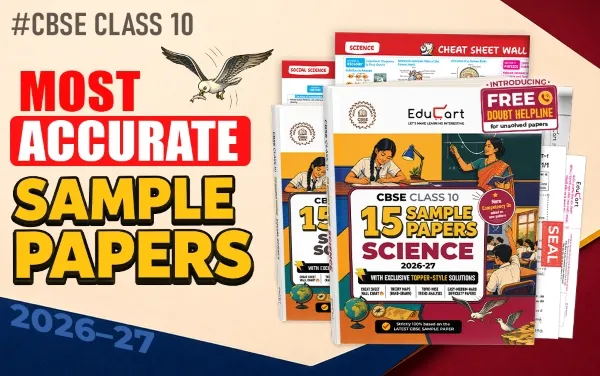
CBSE Class 10 students can also order Educart’s updated books for more study materials for the 2026- 27 board exam.
FAQs
Q1. Where can students download the Top 100 Class 10 Social Science MCQ PDF?
Ans. Students can download the PDF of 100 important CBSE Class 10 Social Science MCQs directly from this page for Board Exam 2027 preparation.
Q2. Which subjects are covered in the Class 10 SST MCQ PDF?
Ans. The practice questions cover all four Social Science subjects: Geography, History, Civics and Economics, with questions based on important concepts.
Q3. Does the page provide answers to the Class 10 Social Science MCQs?
Ans. Yes, an answer key is provided after the practice questions so students can check their responses and identify areas that need improvement.
Q4. What types of questions are included in the CBSE MCQ for Class 10 Social Science?
Ans. The questions include case-based situations, assertion-reason questions, data interpretation and concept-based multiple-choice questions across different SST subjects.
Q5. How should students practise these 100 Class 10 SST MCQs for the board exam?
Ans. Students should attempt the questions regularly, check their answers using the answer key, analyse mistakes and revisit NCERT topics that need more practice.
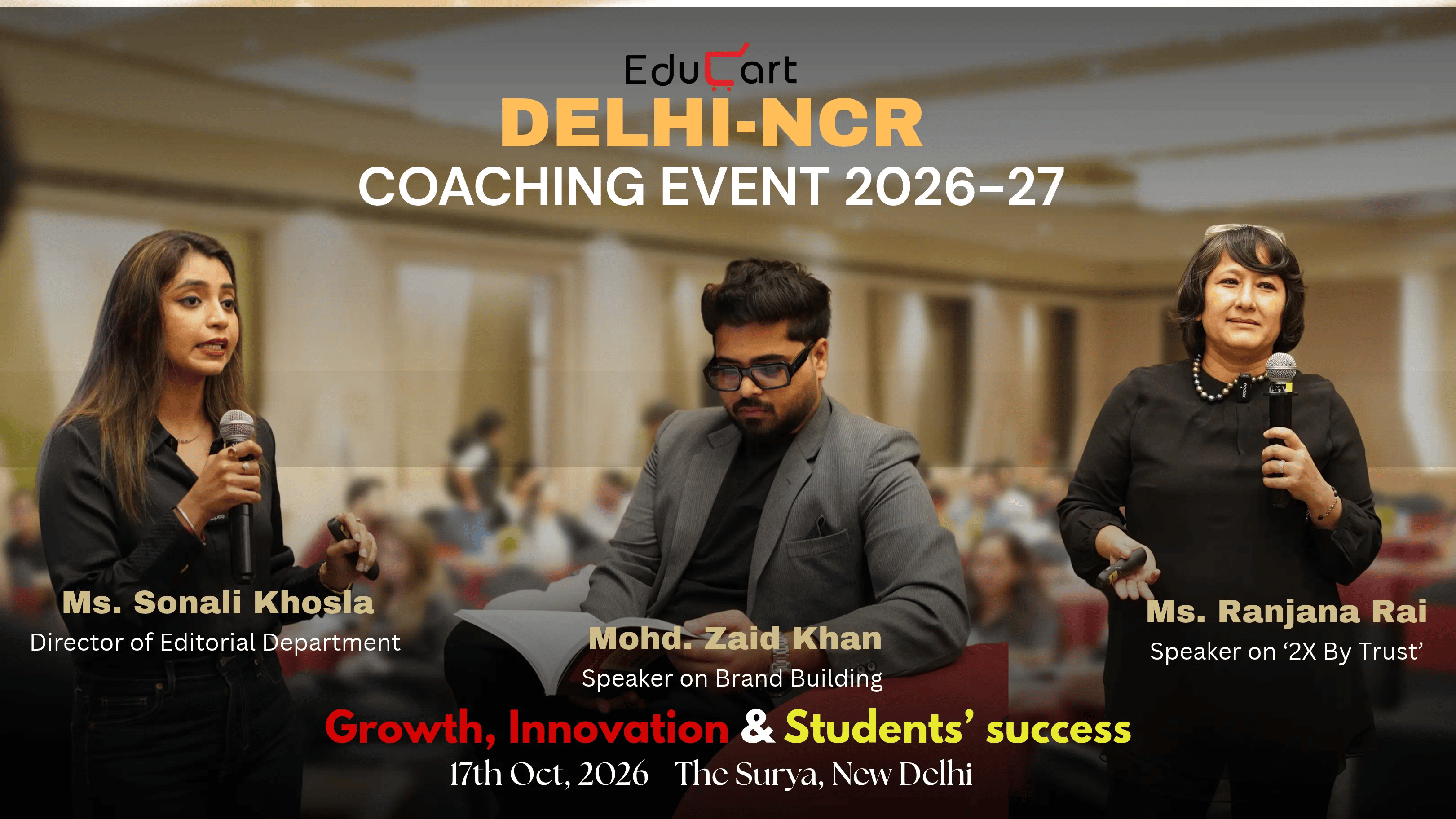
Glimpse of the Event

Share Article