
.svg)
India’s climate is strongly influenced by monsoon winds. The country experiences distinct seasonal changes that affect agriculture, water supply, economy, and daily life.
This chapter from CBSE Class 9 SST Syllabus explains the factors affecting India’s climate, the mechanism of monsoon, seasonal changes, and distribution of rainfall across the country.

Climate v/s Weather
Climate refers to the average weather conditions of a place over a long period of time (about 30 years). Example: The Sahara Desert remains hot for most of the year due to its climatic conditions.
Weather refers to the day-to-day condition of the atmosphere at a particular place and time. Example: A sunny morning followed by rainfall in the afternoon shows a change in weather.
Factors Affecting India’s Climate
Following factors affect India’s climate:
Latitude
- The Tropic of Cancer (23°30′N) passes through India. It divides India into:–Tropical region (south of the Tropic of Cancer) and Subtropical region (north of the Tropic of Cancer).
- Tropical regions experience higher temperatures throughout the year.
Altitude
- Temperature decreases with increase in altitude.
- For every 166 meters rise, temperature falls by 1°C.
- Hill stations are cooler because temperature falls with increasing altitude.
Air Pressure and Surface Winds
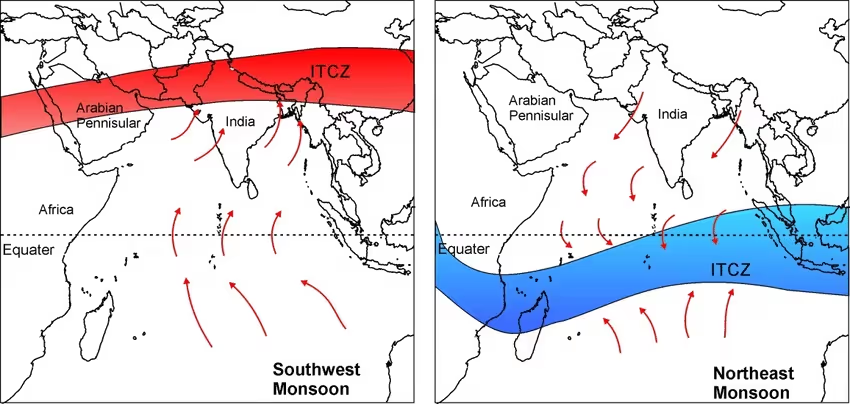
- India experiences seasonal reversal of winds due to differential heating of land and water, and shift of Inter Tropical Convergence Zone (ITCZ)
- In winter, cold winds blow from land to sea. In summer, winds blow from sea to land carrying moisture and causing rainfall.
Jet Streams
- Jet streams are narrow belts of high-speed winds in the upper atmosphere.
- Subtropical westerly jet streams bring western disturbances, causing winter rainfall in north-west India.
Western Disturbances
- These are temperate cyclones originating near the Mediterranean Sea.
- They bring winter rainfall in Punjab, Haryana, and western Uttar Pradesh.
Note: El Niño is a warm ocean current that appears off the coast of Peru. It affects the Indian monsoon by weakening rainfall in some years.
Seasons of India
There are four main seasons in India.
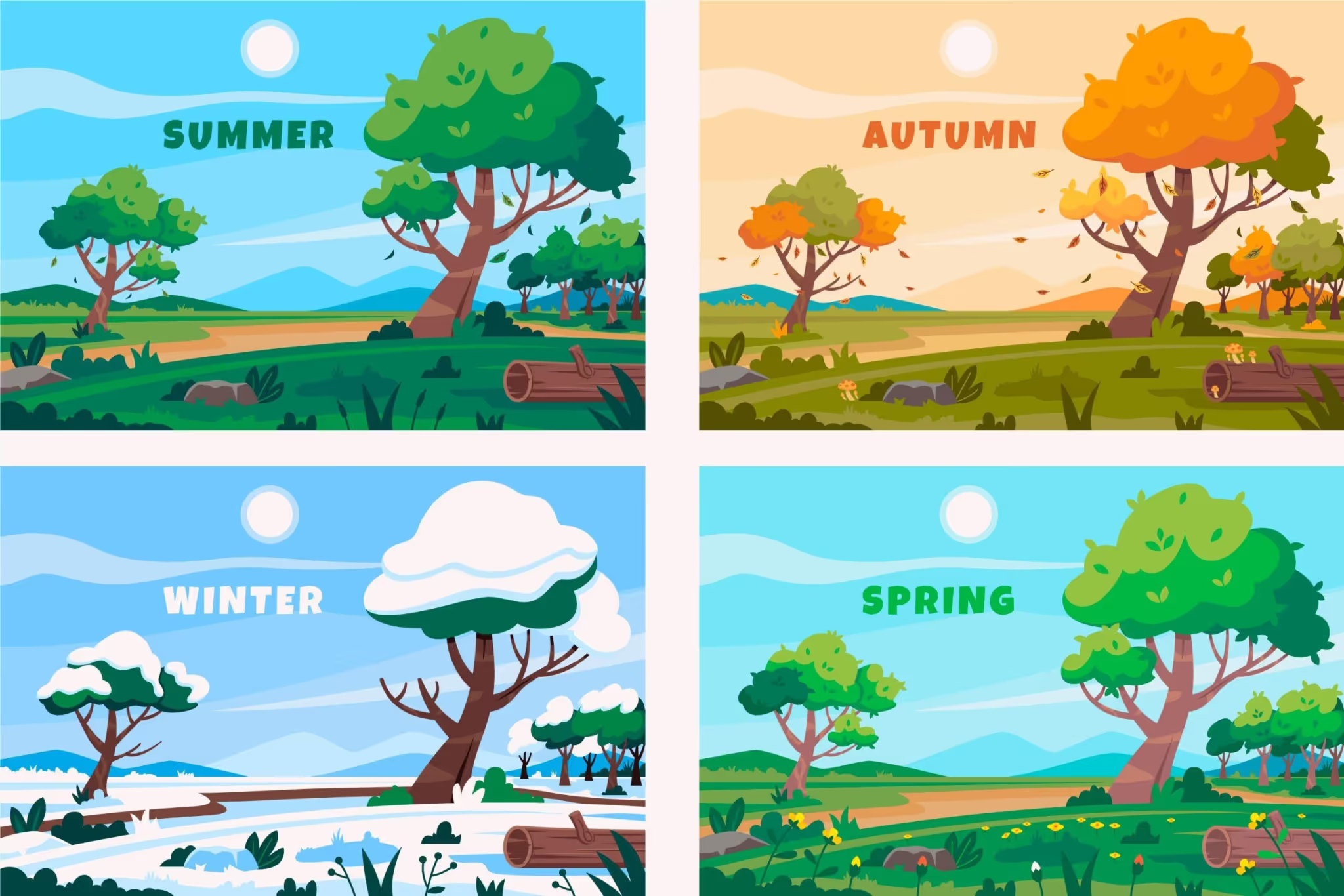
Winter Season (Mid-November to February)
- Cold winds blow from the north
- Clear skies and low humidity
- Rainfall occurs in north-west India due to western disturbances
Summer Season (March to May)
- High temperatures across India
- Loo (hot, dry winds) blow in northern plains
- Can cause heat-related health problems
- Pre-monsoon showers (Mango showers in Kerala)
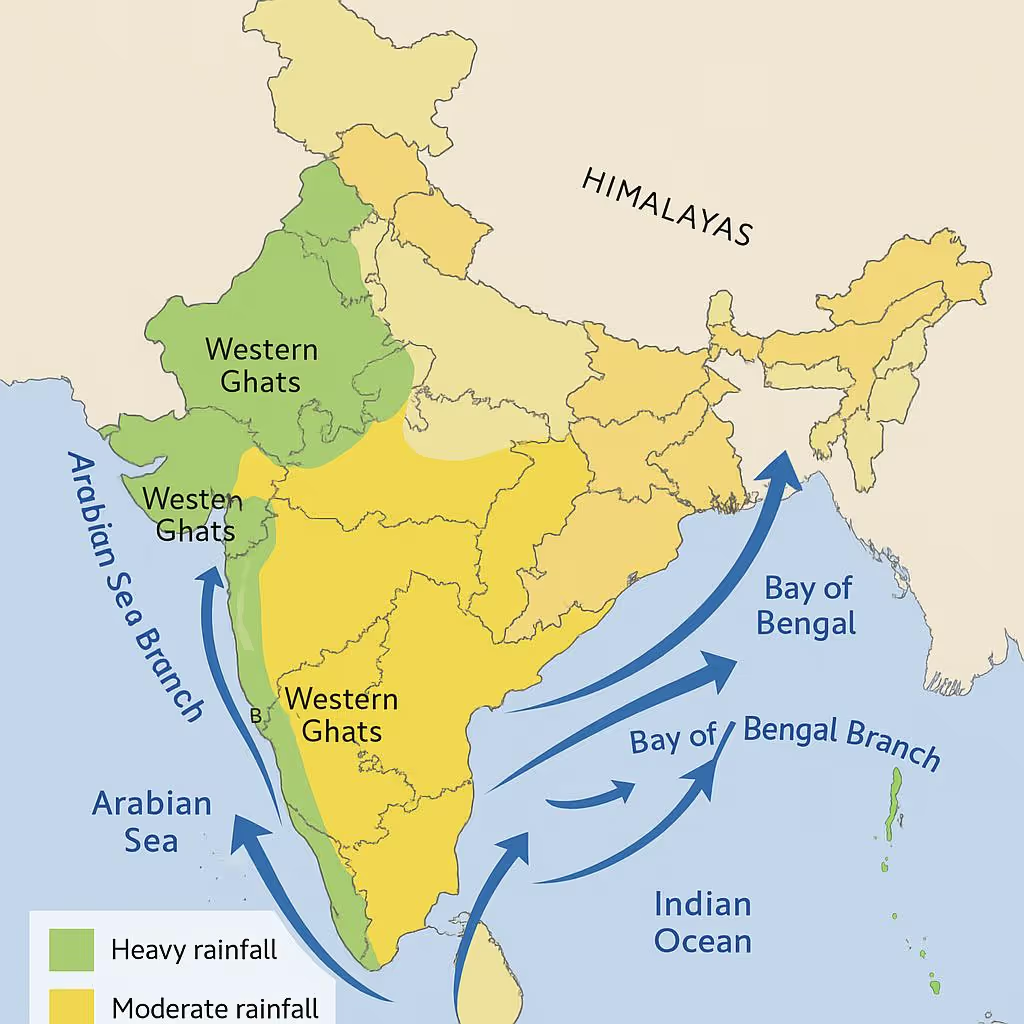
Advancing Monsoon (June to September)
Monsoon is known as the lifeline of Indian agriculture.
- Onset in Kerala around 1st June
- Arabian Sea branch
- Bay of Bengal branch
- Heavy rainfall
- Break in monsoon (dry spells)
Retreating Monsoon (October-November)
- Monsoon winds start withdrawing from northern plains.
- Clear skies and rise in temperature known as October Heat.
- Cyclonic depressions form in the Bay of Bengal.
- Coromandel Coast receives rainfall during this season.
Monsoon Mechanism
Monsoon occurs due to:
- Differential heating of land and sea
- Low pressure over north-west India in summer
- Shift of ITCZ northward
- Coriolis force affecting wind direction
Distribution of Rainfall in India
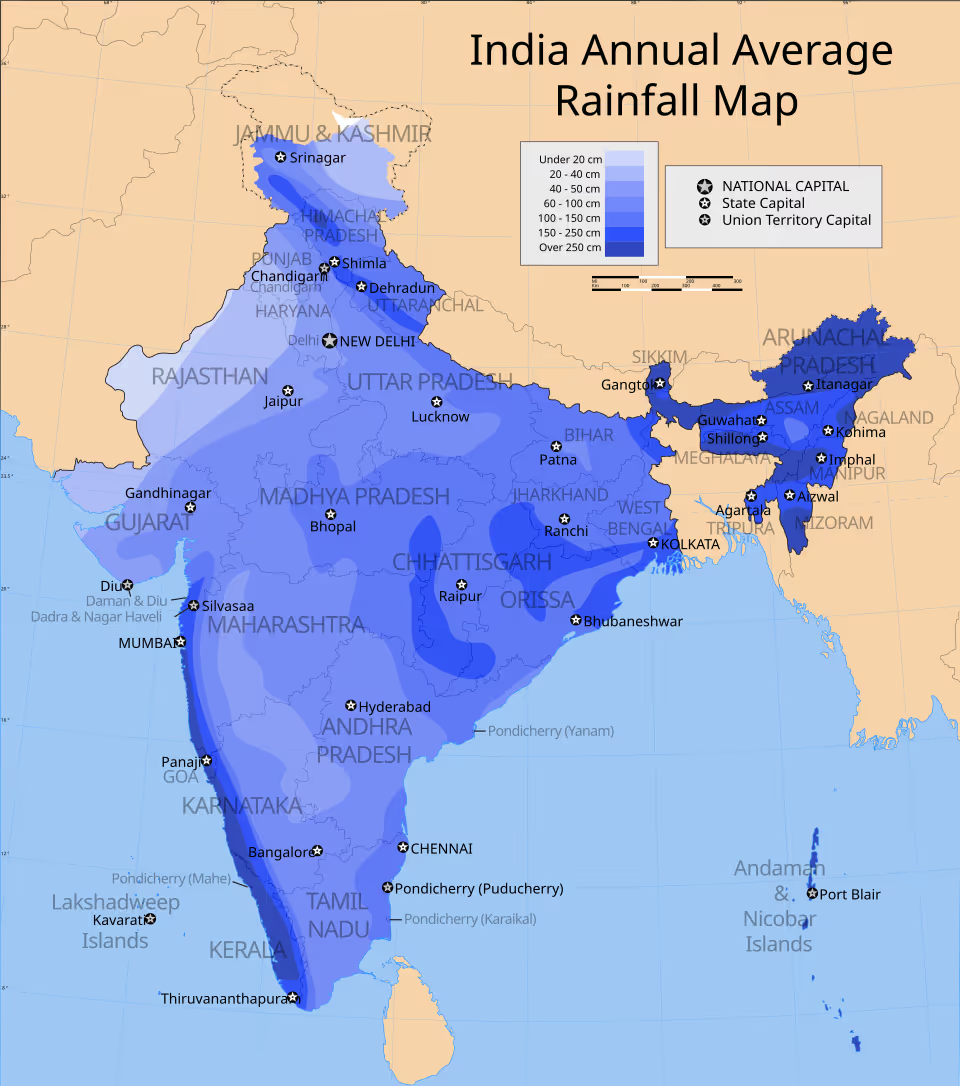
Rainfall in India is uneven.
- Western coast and northeastern states (like Meghalaya) receive more than 400 cm rainfall.
- Mawsynram in Meghalaya receives the highest rainfall.
- Rajasthan and parts of Gujarat receive less than 60 cm rainfall.
Conclusion
India’s climate is shaped by geographical factors and the monsoon system. Seasonal changes influence agriculture, water resources, and economic activities.
Understanding climate patterns helps explain rainfall distribution, droughts, floods, and regional variations across the country.
FAQs
Q1. What is the difference between weather and climate?
Ans: Weather refers to the day-to-day condition of the atmosphere, while climate refers to the average weather conditions of a place over a long period of time (about 30–40 years).
Q2. Why does India experience a monsoon type of climate?
Ans: India experiences a monsoon type of climate due to the seasonal reversal of winds caused by differences in air pressure over land and sea.
Q3. What role does the Himalayas play in India’s climate?
Ans: The Himalayas act as a climatic barrier by preventing cold winds from Central Asia and forcing monsoon winds to shed moisture, resulting in rainfall.
Q4. Why are hill stations cooler than plains?
Ans: Temperature decreases with increase in altitude. Since hill stations are located at higher elevations, they are cooler than the plains.
Q5. Why is the monsoon called the lifeline of India?
Ans: Monsoon provides most of the annual rainfall, supports agriculture, replenishes water resources, and plays a vital role in India’s economy and daily life.












.svg)

