
.svg)
Exams coming up and this chapter feels long? Don’t worry - Microbes in Human Welfare Class 12 Biology Notes is actually one of the easiest and most scoring chapters if you understand the logic.
We often think microbes only cause diseases. But NCERT shows us something different - microbes are tiny helpers that support food production, medicine, agriculture, energy, and even environmental cleaning.
In this chapter, you’ll understand how microorganisms work for human welfare and why they are more beneficial than harmful. Important topics are listed in Biology Syllabus Class 12.

Microbes in Human Welfare Summary
Microorganisms, commonly called microbes, are tiny living beings that are invisible to the naked eye but can be seen under a microscope. They include bacteria, fungi, protozoa, microscopic algae, and viruses.
Though viruses are strictly not considered living outside a host, they are included because of their importance in disease and biotechnology.
Microbes are found everywhere, in soil, air, water, and even inside the bodies of plants and animals, including humans. While some microbes cause diseases, a large number of them play an essential role in human welfare. They are involved in processes like production of food and beverages, industrial products, antibiotics, biofertilisers, and sewage treatment.
This chapter explains the beneficial roles of microbes in detail.
Microbes in Household Products
Microbes have been used in domestic processes for centuries, often without people understanding the science behind them. Many traditional foods are prepared with the help of microbial fermentation.
a) Fermented Beverages
- Yeast (Saccharomyces cerevisiae), also known as brewer’s yeast, is used to ferment sugars in cereals and fruits to produce ethanol (alcohol).
- Wine is produced by fermenting grapes, while beer is produced from malted barley and other grains.
- Different alcoholic drinks vary based on the raw material and the type of fermentation used.
- In India, traditional drinks like toddy are prepared by fermenting sap from palms.
b) Fermented Foods
- Microbes like Lactobacillus and other lactic acid bacteria (LAB) convert milk into curd.
- LAB not only causes coagulation of milk proteins but also improves the nutritional quality by increasing vitamin B12 content.
- The LAB in curd inhibits the growth of harmful microbes in the stomach.
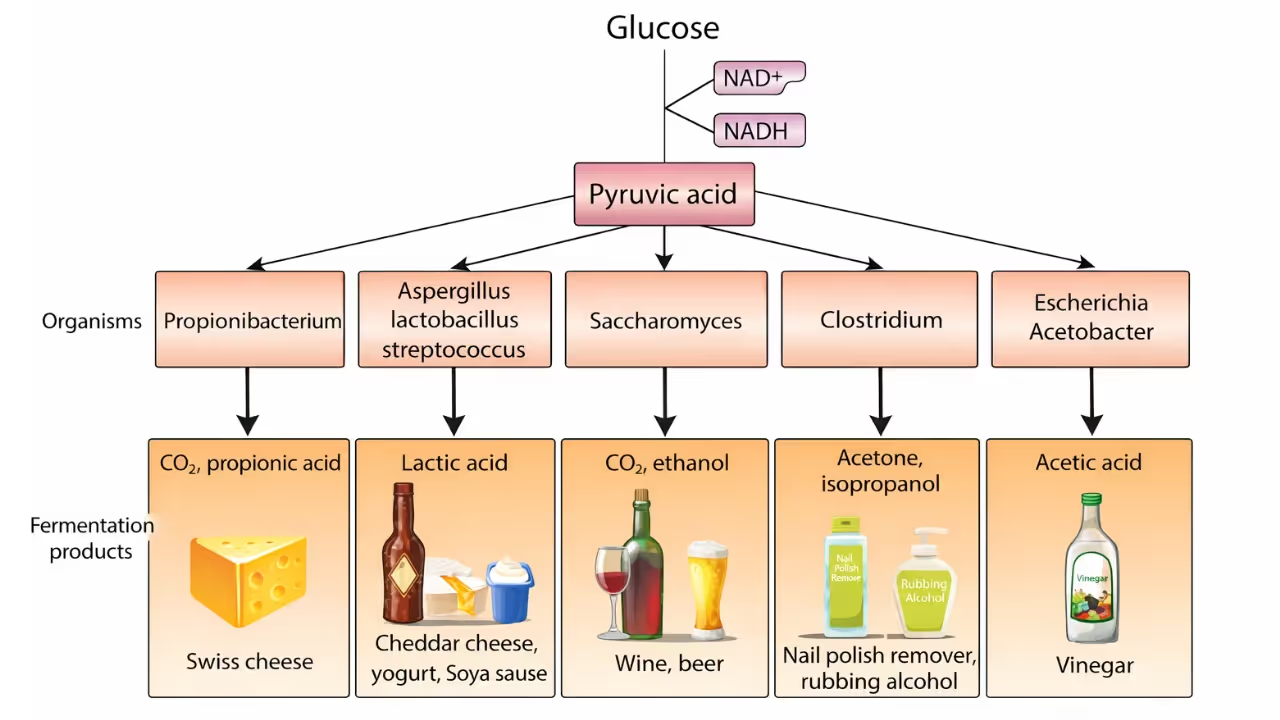
- Dosa and idli batter is fermented by a combination of Lactobacillus and yeasts, which produce carbon dioxide, making the batter fluffy.
- Bread is made using baker’s yeast (Saccharomyces cerevisiae), which produces carbon dioxide during fermentation, making the dough rise.
- In Switzerland, a bacterium Propionibacterium sharmanii produces large amounts of carbon dioxide in cheese, creating the characteristic holes.
c) Other Examples
- Traditional cheese varieties like Roquefort and Camembert are ripened with specific fungi to develop characteristic flavours.
Soy sauce and tempeh are prepared using fungi like Aspergillus and certain yeasts.
Microbes in Industrial Products
In industries, microbes are used on a large scale to manufacture products of economic importance. These are produced in fermenters, large vessels providing controlled conditions for microbial growth and product formation.
Bioactive Molecules
Some microbes produce important bioactive compounds:
- Cyclosporin A – Produced by Trichoderma polysporum
Used as an immunosuppressive drug in organ transplantation. - Statins – Produced by yeast Monascus purpureus
Used to lower blood cholesterol by inhibiting cholesterol synthesis enzymes.
a) Beverages and Solvents
Alcoholic beverages (like wine, beer, whisky) are produced by fermentation using yeast. Industrial alcohol (ethanol) is used for manufacturing chemicals and as biofuel.
b) Antibiotics
- Antibiotics are chemical substances produced by microbes that kill or inhibit other microbes.
- The first antibiotic, penicillin, was discovered by Alexander Fleming (1928) from the fungus Penicillium notatum.
- Industrial production of penicillin was made possible by Ernst Chain and Howard Florey.
- Today, many antibiotics such as streptomycin (Streptomyces griseus), tetracycline, and erythromycin are produced from bacteria and fungi.
- Antibiotics have revolutionised medicine by saving millions of lives from bacterial infections.
c) Enzymes
- Microbes produce important industrial enzymes.
- Lipases are used in detergents for removing oily stains.
- Pectinases and proteases are used in the clarification of bottled juices.
- Streptokinase, produced by Streptococcus, is used as a clot-buster to remove clots from blood vessels in myocardial infarction patients.
d) Organic Acids
- Aspergillus niger produces citric acid.
- Acetobacter aceti produces acetic acid (vinegar).
- Clostridium butylicum produces butyric acid.
- Lactobacillus produces lactic acid.
Microbes as Single Cell Protein
Some microbes are used as a protein-rich food source called Single Cell Protein.
Examples:
- Spirulina
- Methylophilus methylotrophus
- Yeast
SCP is:
- Rich in protein
- Cost-effective
- Used as animal feed and nutritional supplements
Microbes in Sewage Treatment
Wastewater (sewage) from homes and industries contains organic matter and harmful microbes. If released untreated into rivers, it causes water pollution and spreads disease. Sewage treatment involves removing contaminants using microbes before water is discharged into natural water bodies.
Primary Treatment
- Physical removal of large and small particles through filtration and sedimentation.
- The solid particles that settle down are called primary sludge, and the supernatant liquid is called effluent.
Secondary Treatment (Biological Treatment)
In secondary treatment, the effluent is pumped into aeration tanks where air is supplied continuously. Aerobic microbes form flocs and consume organic matter, thereby reducing the Biochemical Oxygen Demand (BOD). BOD is the amount of oxygen required by microorganisms to break down organic matter, and higher BOD indicates higher pollution.
After BOD decreases, the water becomes safe for discharge. The microbial biomass, called activated sludge, is partly recycled and partly sent to anaerobic digesters where biogas (methane, CO₂ and H₂S) is produced. Projects like the Ganga Action Plan and the Yamuna Action Plan were launched to reduce river pollution.
Microbes in Production of Biogas
Biogas is a mixture of gases produced during the breakdown of organic matter by anaerobic microbes. The major component is methane (CH₄).
Biogas Production
- The process occurs in biogas plants, where methanogenic bacteria like Methanobacterium decompose cow dung and other organic wastes in anaerobic conditions.
- The slurry is fed into an airtight digester, where microbes degrade complex organic matter into methane, CO₂, and H₂S.
- Biogas is used as a clean fuel for cooking and lighting, and the digested slurry is used as manure.
Microbes in Biological Control
Microbes are used as biocontrol agents to protect crops from pests and diseases, reducing chemical pesticide use. Biological control works on the principle of maintaining ecological balance instead of completely eliminating pests.
- Bacillus thuringiensis (Bt) produces a toxin that kills insect larvae but is harmless to humans and other animals. But spores are sprayed on crops.
- Certain viruses, called baculoviruses, infect insect pests and are highly specific, making them safe biocontrol agents.
- Fungal pathogens like Trichoderma act against other plant pathogens in the soil.
Microbes as Biofertilizers
Biofertilisers are organisms that naturally enrich the nutrient quality of soil naturally. They help reduce dependence on chemical fertilisers.
a) Bacteria
- Rhizobium forms symbiotic associations with roots of leguminous plants, fixing atmospheric nitrogen into ammonia.
- Azospirillum and Azotobacter are free-living nitrogen fixers in the soil.
b) Cyanobacteria
- Photosynthetic blue-green algae like Anabaena, Nostoc, and Oscillatoria fix nitrogen in paddy fields.
- They increase soil fertility and also add organic matter.
c) Fungi
- Mycorrhiza are symbiotic associations between fungi and plant roots.
- The fungal hyphae absorb water and minerals (especially phosphorus) more efficiently, while the plant provides sugars to the fungus.
- An example is the Glomus species.
Conclusion
Microbes may be too small to see, but their benefits in our daily lives are huge. They help us prepare food, make medicines, clean the environment, and grow crops without using harmful chemicals. They also produce energy in the form of biogas and keep our soil healthy through biofertilisers.
By using microbes wisely, we can solve many problems in food production, health, and environmental protection. They are nature’s tiny workers, quietly making life better for humans and the planet.
If you ever need a quick revision, you can check microbes in human welfare short notes to remember their many uses and importance.
FAQs
Q1. What are flocs in sewage treatment?
Ans. Flocs are masses of aerobic bacteria and fungal filaments formed in aeration tanks that help reduce BOD.
Q2. Why is BOD important?
Ans. BOD measures the pollution level of water by indicating how much oxygen is needed to decompose organic matter.
Q3. What is the importance of methanogens?
Ans. Methanogens produce methane gas during anaerobic digestion and help generate biogas fuel.
Q4. How do biofertilisers help farmers?
Ans. They naturally increase soil fertility by fixing nitrogen and improving nutrient availability.
Q5. What is Bt in agriculture?
Ans. Bt is a bacterium that produces toxin proteins that kill insect larvae and reduce pesticide use.












.svg)

