
.svg)
NCERT has released the updated syllabus and textbook named Sharda for Grade 9 Sanskrit for the 2026-27 academic session. The revised curriculum goes hand in hand with NCF-SE 2023 and NEP 2020, with a strong focus on communication skills, cultural awareness, and the integration of Indian Knowledge Systems (IKS).
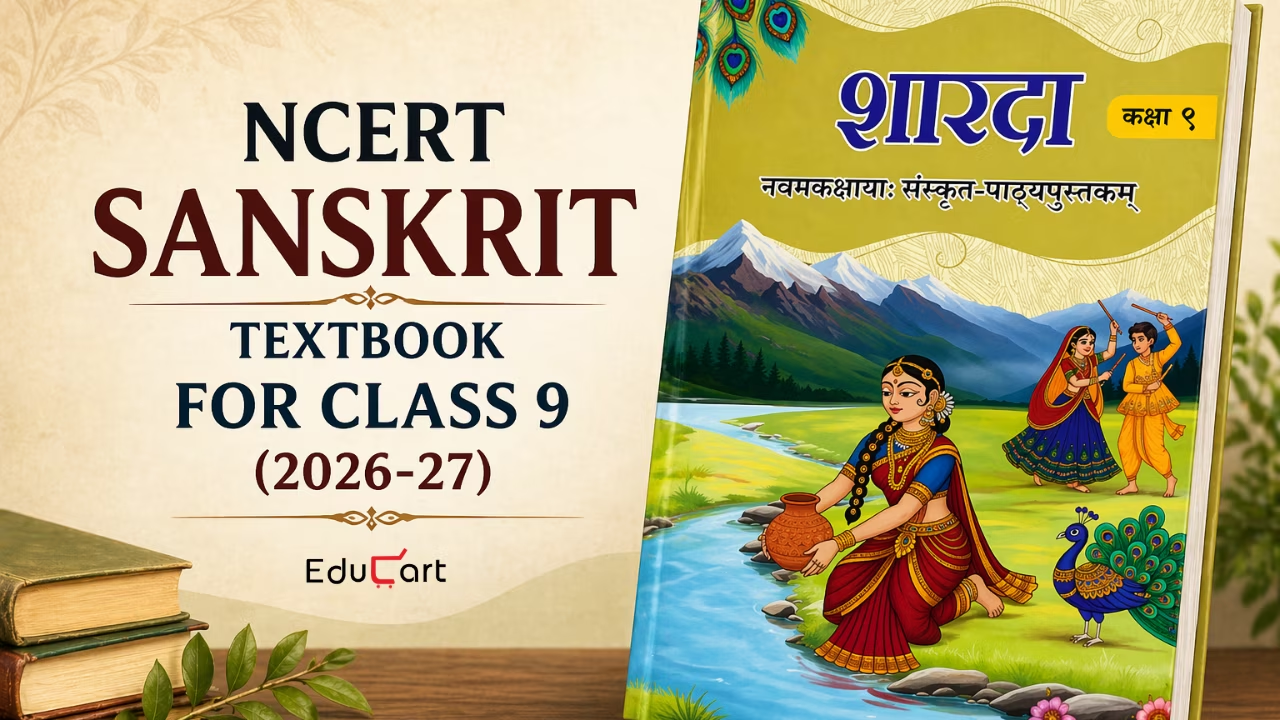
The updated structure emphasizes the four language skills - listening (श्रवण), speaking (भाषण), reading (पठन), and writing (लेखन) - alongside a shift to competency-based evaluation. To know more about the updated syllabus and the textbook, follow along with the article.
NCERT Class 9 Sanskrit (Sharada) Textbook 2026-27 PDF
The change in the Sanskrit syllabus for Grade 9 took place keeping in mind the following reasons:
- Alignment with NEP 2020 and NCF-SE 2023 - The revision recognizes language as a tool of human empowerment (मानवसशक्तीकरणस्य आधारः), a principle accepted in NEP 2020, and re-establishes India's distinguished past knowledge heritage (भारतस्य परमविशिष्टस्य गतज्ञानवैभवस्य पुनः प्रतिष्ठापनम्), which is a stated aim of the policy.
- Communication-based Teaching (सम्भाषण-विधिः) - Shifts pedagogy from grammar-heavy memorization to teaching Sanskrit through conversation, linking the language to daily life and mutual exchange of ideas (भावविनिमयः) between students.
- Integration of Indian Knowledge Systems (IKS) - Recognizes Sanskrit as the mother of Indian languages (भारतीयभाषाणां जननी) and the carrier of all traditional knowledge streams - the four Vedas, six Vedangas (शिक्षा, व्याकरण, निरुक्त, ज्योतिष, छन्दस्, कल्प), fourteen Vidyas, Ayurveda, Yoga Shastra, and more.
- Four-fold Skill Development - Explicit focus on building श्रवण (listening), भाषण (speaking), पठन (reading), and लेखन (writing) competencies, supported by modern technology, audio-visual aids, and activity-based learning.
Sanskrit Class 9 NCERT Book (Old v/s New Textbook)
Here’s a clear chapter comparison between previous and currency year Sanskrit NCERT textbook Sharada and Shemushi respectively.
What Does This Mean for Class 9 Sanskrit Teachers?
With the introduction of the updated 2026-27 Sanskrit textbook and syllabus, teachers are expected to adapt their teaching methods, classroom strategies, and assessment practices to align with a more competency-based and skill-focused approach. The comparison below highlights these key shifts clearly.
What Does This Mean for Students?
Students might find it difficult to adjust to the changes in the Class 9 Sanskrit NCERT textbook syllabus, but on understanding how this change will actually help them, adjusting to it would become convenient.
- Deeper conceptual understanding of Sanskrit as a living, communicative language
- Better listening and problem-solving skills through सम्भाषण (conversation) practice
- Connecting Sanskrit to real life - daily situations, values, and Indian heritage
- Engaging, low-stress experience with creative activities like drama, songs, and shlokas
Takeaway
The Grade 9 Sanskrit textbook syllabus for 2026-27 focuses on promoting communication, listening-speaking-reading-writing skills, and cultural awareness that are important for the modern world.
It focuses on building strong language skills and cultural connections rather than memorizing grammar rules. It encourages students to understand Sanskrit clearly, think logically, and apply the language in everyday life.
The new approach connects Sanskrit with real-life situations, ethics, Indian heritage, and innovation. Overall, this is not just a change in topics but a meaningful shift towards making Sanskrit practical, engaging, and skill-oriented for students.
FAQs
Q1. How many chapters are included in the Class 9 Sanskrit textbook 2026-27?
Ans. The updated textbook includes 11 chapters (themes), each designed to develop language skills along with ethical and cultural understanding.
Q2. What are the main themes covered in the textbook?
Ans. The chapters focus on:
- Moral values (धर्म, कर्तव्य)
- Wisdom and decision-making
- Human behaviour
- Indian culture and traditions
- Real-life applications of Sanskrit
Q3. What is the focus of the first chapter “सत्यं शिवं सुन्दरं संस्कृतम्”?
Ans. This chapter introduces Sanskrit as a rich, scientific, and culturally significant language, highlighting its beauty, importance, and relevance in modern life.
Q4. Is the new textbook easier or more difficult than the previous one?
Ans. The new textbook is easier to understand but more application-based. It reduces rote learning but requires active participation and practice.
Q5. Does the textbook help in real-life application of Sanskrit?
Ans. Yes, the textbook connects Sanskrit with daily life situations, communication, and values, making it more practical and relatable for students.


.svg)

