Students require clear concepts, calculation accuracy, and proper answer presentations for CBSE Class 12 Accountancy. They need to understand accounting treatments and properly demonstrate each step in correct formats while solving numericals.
Students can download CBSE Class 12 Accountancy Topper Answer Sheets 2026 from this page. Using topper answer sheets will help students learn how top scorers present their answers and improve their board exam preparation.
Download CBSE Class 12 Accountancy Topper Answer Sheets Year-Wise
Check the table below and find the previous years’ CBSE Class 12 Accountancy Topper Answer Sheets. Refer to them and learn how to present answers for theoretical questions, journal entries, prepare financial statements and solve numericals.

How to Write Topper-Style Answers in the CBSE Board Exams
Toppers generally follow a structured approach when solving Accountancy questions. A topper-style accountancy answer has correct accounting format, a clear step-by-step numerical approach, necessary working notes and calculations in a logical sequence.
Toppers present journal entries and numerical solutions using appropriate accounting formats. They show step-by-step calculations and working notes to explain their answers. Using CBSE Class 12 Topper Answer Sheets helps you understand effective answer presentation and apply these practices during board exam preparation. for your board preparation.
What Do Class 12 Toppers Write in an Accountancy Answer?
Accountancy has different requirements for different questions. Some questions require journal entries and accounting treatments, whereas numericals require stepwise solutions. Learn how toppers tackle different question types by following these ways.
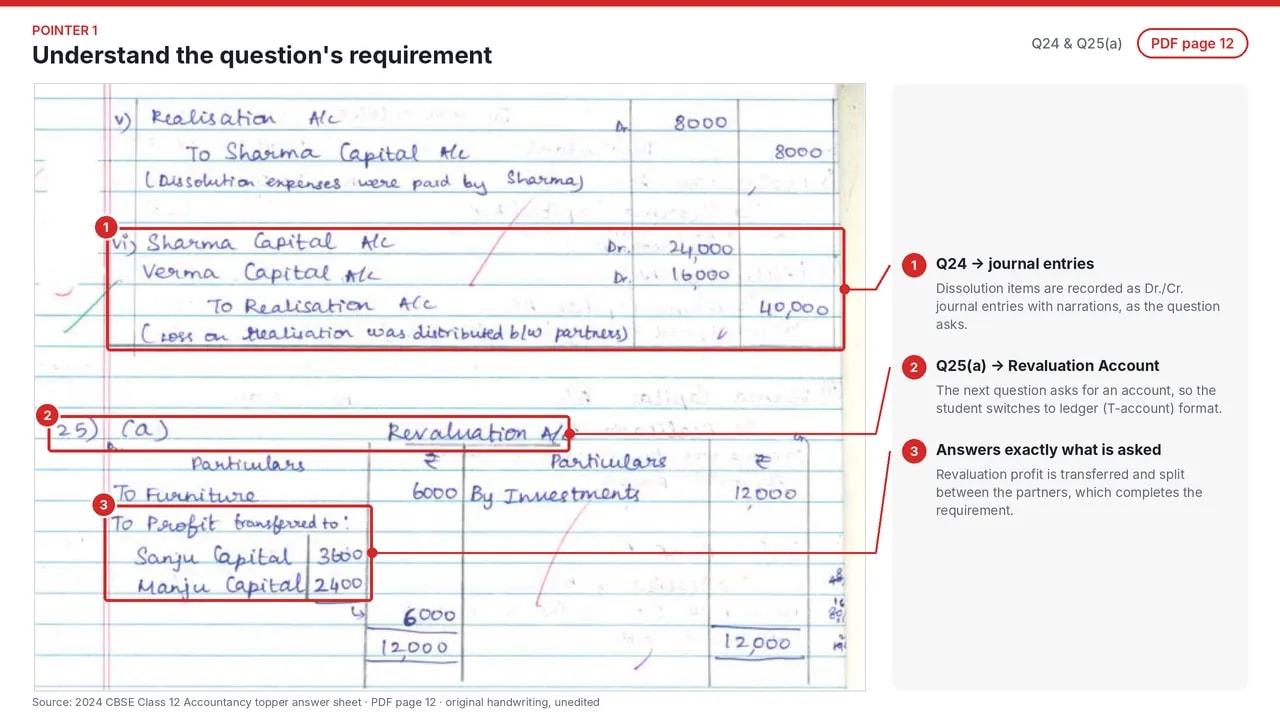
- Understand the question’s requirement: First, understand the question’s requirements. Understand whether it asks for journal entries, prepare ledger accounts, calculate ratios, prepare financial statements or explain accounting concepts. Then present the answer accordingly.
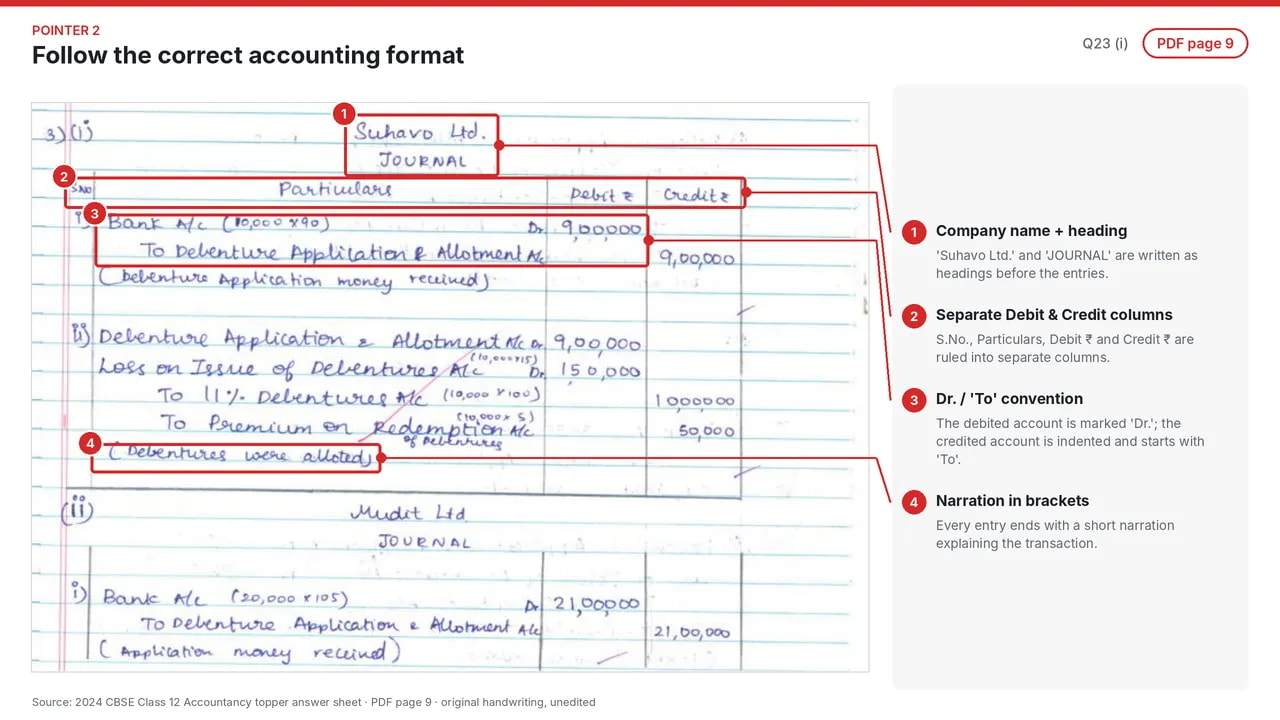
- Follow the correct accounting format: Make sure you follow proper accounting formats while answering. Make separate columns for debit and credit in journal entries. Use proper headings, account names, and dates while presenting Revaluation Accounts, Balance Sheets and Cash Flow Statements.
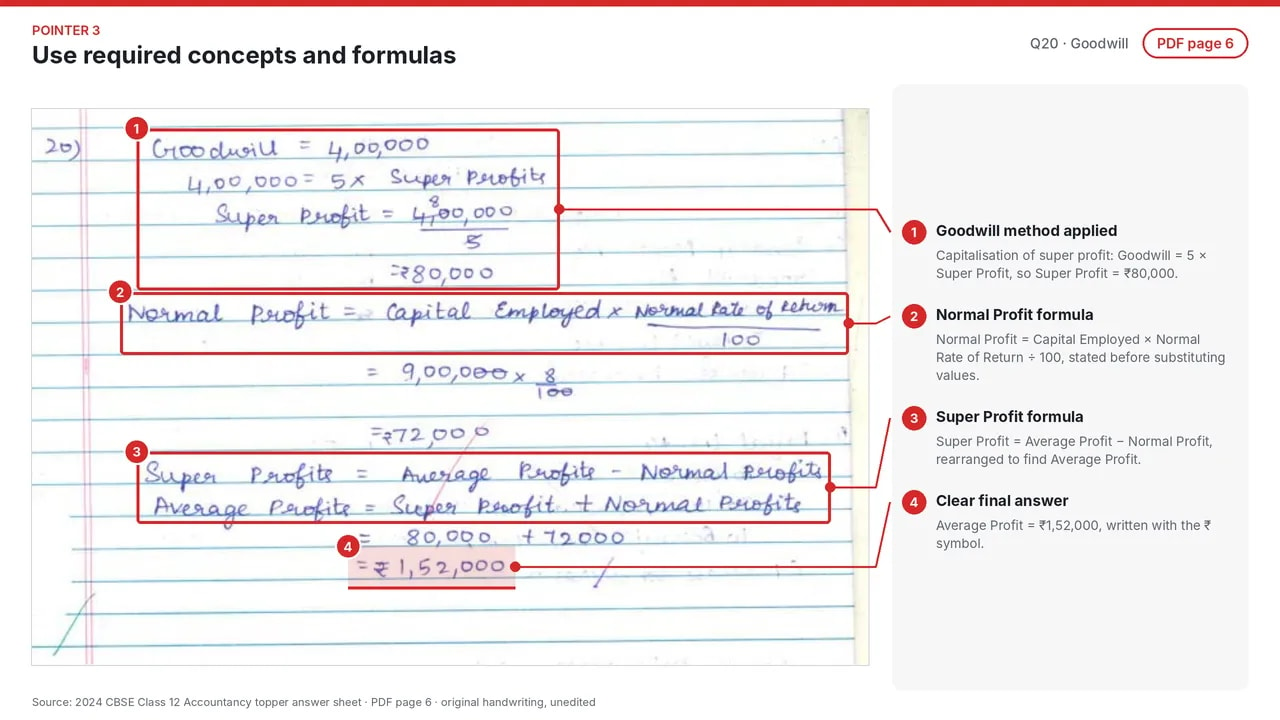
- Use required concepts and formulas: Mention concepts where required, apply correct methods for goodwill valuation, and calculate sacrificing or gaining ratios. Use prescribed formulas for liquidity, solvency and profitability ratios.
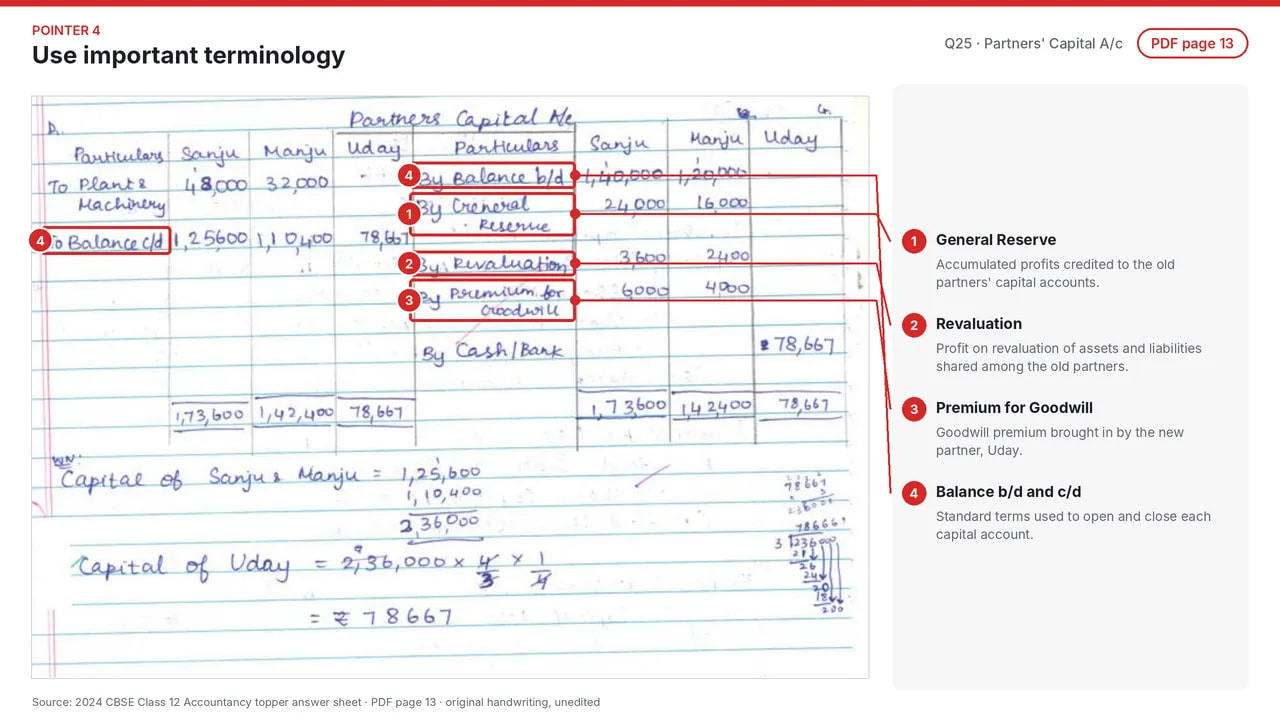
- Use important terminology: Use terminology while phrasing your answers in board exams. Include terms such as revaluation of assets, accumulated profits, etc to provide a more structured and impactful answer.
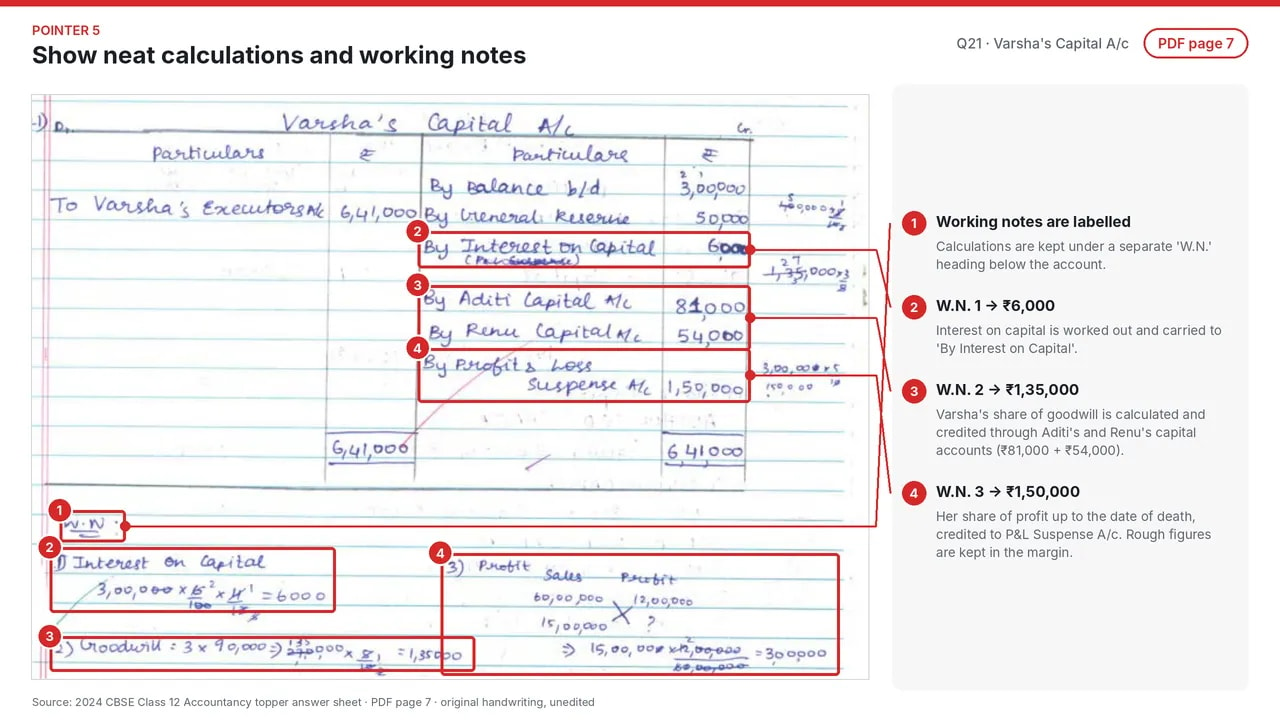
- Show neat calculations and working notes: Provide calculations and rough work while solving numerical questions. Number each working note and connect it to the relevant figure in your final answer.
Points to Remember
Students should start focusing on revising accounting treatments and practising numerical questions once they complete the syllabus. Make a structured revision plan and follow these tips for last-minute preparation.
- Focus on weak areas: Focus more on the concepts that you find difficult. Revisit topics like Partnership Firms and Accounting for Companies. Practise questions after revising each concept to improve accuracy.
- Revise formulas: Revise formulas and methods like goodwill valuation, interest calculations and accounting ratios. Students can make a separate sheet for a quick revision.
- Practise journal entries: Practise journal entries for admission, retirement, dissolution, shares and debentures-based questions.
- Solve numerical questions: Practise numerical questions and present stepwise answers and rough work to explain how you have reached that answer.
- Attempt SQPs and PYQs: Solve CBSE Class 12 Accountancy sample papers and previous-year question papers for additional preparation. It will also help you understand question patterns and manage time.
- Check errors: After completing the question paper, compare your answers with solutions to identify your errors. Note common calculation errors, correct them and reattempt the questions.
- Manage your revision time: Allocate sufficient time for formula revision, numerical practice and mock tests. Keep aside your final days for revising familiar topics to stay confident and relaxed.
Recommended Books for CBSE Class 12 Accountancy Preparation
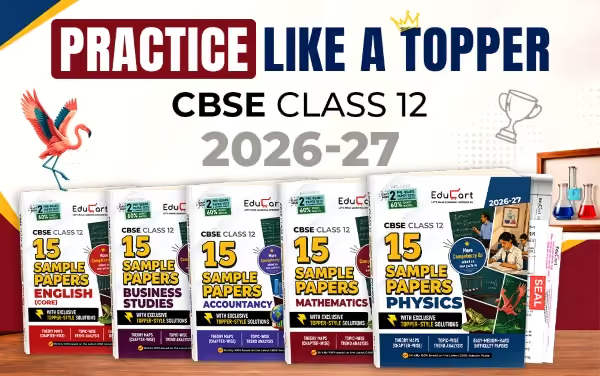
Topper-style answer writing also requires structured exam preparation. Educart provides different types of study resources to support your CBSE Class 12 board preparation for 2026-27. Refer to the table below:
CBSE Class 12 Accountancy-Related Resources
FAQs
Q1. Where can I download the CBSE Class 12 Accountancy Topper Answer Sheet 2026?
Ans. You can download previous-year CBSE Class 12 Accountancy topper answer sheets using the year-wise table above.
Q2. How do topper answer sheets help in Accountancy preparation?
Ans. They show how toppers present journal entries, calculations, working notes and financial statements in board exams.
Q3. What should I focus on while writing Accountancy answers?
Ans. Focus on correct accounting treatments, prescribed formats, accurate calculations and clearly numbered working notes.
Q4. How can I improve my Accountancy answer-writing skills?
Ans. Practise journal entries, solve numerical questions and review sample papers and previous-year questions regularly.
Q5. Are previous-year Accountancy topper answer sheets useful for CBSE board exams?
Ans. Yes, they help you understand answer presentation and organise solutions for different types of Accountancy questions.