.svg)
Boards are near and Ecosystem Class 12 Biology feels long and confusing? Don’t worry - this chapter is actually very logical once you understand how energy and nutrients move in nature.
In simple words, an ecosystem is a system where living organisms and the physical environment interact with each other. From a small pond to a large forest, everything works together in balance. All units are clearly explained in Biology Syllabus Class 12.
In these notes, we’ll break down the chapter in a simple, exam-friendly way so you can revise faster and write better answers in your board exam.

Ecosystem Summary
An ecosystem is a functional unit of nature, where living organisms interact with each other and with their physical environment to form a stable, self-sustaining system. It includes both biotic components (plants, animals, microorganisms) and abiotic components (soil, water, air, light, temperature, and nutrients). These components are linked together through nutrient cycles and energy flows.
The term “ecosystem” was first coined by A.G. Tansley in 1935. Every ecosystem, whether it is a forest, grassland, pond, desert, or the ocean, functions according to certain universal principles. Despite variation in size and complexity, the basic structure and function remain similar across ecosystems.
Structure of an Ecosystem
The structure of an ecosystem includes components and their arrangement in space and function. Broadly, an ecosystem has two main components:
- Abiotic Components: These include non-living factors such as temperature, light, water, soil minerals, pH, and gases. They determine the kinds of organisms that can survive in a given ecosystem and influence their adaptations.
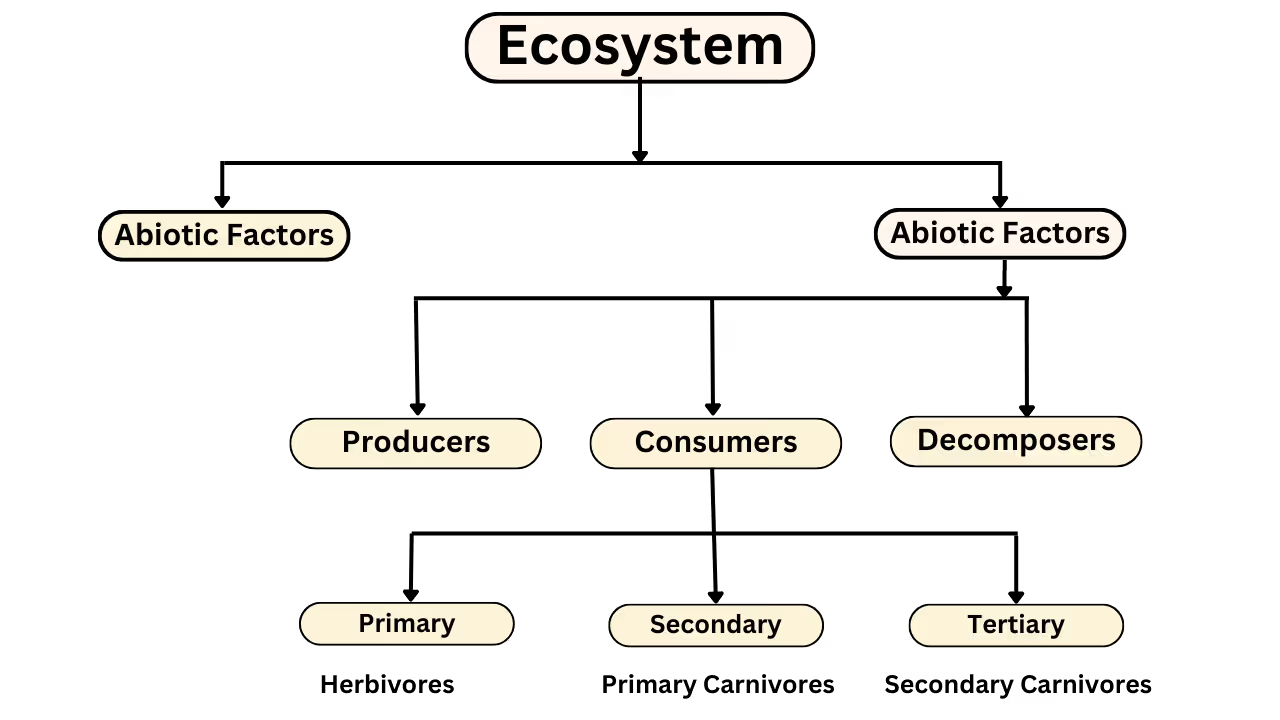
- Biotic Components: These include all living organisms, classified based on their mode of nutrition:
1. Producers (Autotrophs) → Green plants, algae, and some bacteria that can manufacture their own food by photosynthesis or chemosynthesis.
2. Consumers (Heterotrophs) → Organisms that depend on producers for food. They can be herbivores (primary consumers), carnivores (secondary/tertiary consumers), or omnivores.
3. Decomposers (Saprotrophs) → Mainly fungi and bacteria that break down dead organic matter into simpler inorganic substances, releasing nutrients back into the environment.
The interdependence between these components forms the foundation of ecosystem function.
Pond Ecosystem
A pond is a self-sustaining ecosystem. It includes Abiotic components like water, light, temperature, dissolved oxygen, nutrients and Biotic components includes producer, primary, secondary, tertiary consumers and decomposers. Energy flows from producers to consumers, while decomposers recycle nutrients.
Functional Aspects of an Ecosystem
The functioning of an ecosystem revolves around energy flow and nutrient cycling.
- Productivity
Productivity refers to the rate at which biomass is produced in an ecosystem.
- Primary Productivity: The rate at which energy is captured by producers through photosynthesis. It is expressed in terms of biomass per unit area per unit time (e.g., g m⁻² yr⁻¹).
1. Gross Primary Productivity (GPP) → Total photosynthetic production.
2. Net Primary Productivity (NPP) → GPP minus the energy used for respiration (R) by producers.
NPP = GPP – R - Secondary Productivity: The rate at which consumers produce biomass from the food they consume.
- Standing Crop: The amount of living biomass present in a unit area at a particular time.
- Energy Flow
Energy flow in an ecosystem is unidirectional from the sun to producers, then to consumers, and finally to decomposers. At each trophic level, a portion of energy is lost as heat according to the second law of thermodynamics.
Energy transfer follows the 10% Law proposed by Lindeman: only about 10% of the energy available at one trophic level is transferred to the next, while the rest is lost as heat and through metabolic processes.
- Trophic Levels and Food Chains
Organisms are organized into trophic levels based on their position in the food chain.
- Food Chain: A linear sequence of organisms through which energy flows.
- Grazing food chain → Begins with producers eaten by herbivores and then by carnivores.
- Detritus food chain → Begins with dead organic matter consumed by decomposers and detritivores.
- Food chains are interconnected to form a food web, which provides stability to the ecosystem.
- Ecological Pyramids
Ecological pyramids are graphical representations of trophic levels in terms of number, biomass, or energy.
- Pyramid of Numbers: Shows the number of organisms at each trophic level. Can be upright or inverted.
- Pyramid of Biomass: Represents the total biomass at each trophic level. In terrestrial ecosystems, it is generally upright; in aquatic ecosystems, it can be inverted.
- Pyramid of Energy: Always upright, as energy decreases at each successive trophic level.
Nutrient Cycling (Biogeochemical Cycles)
Nutrients move through ecosystems in cyclic pathways called biogeochemical cycles. The main cycles include:
- Carbon Cycle: Involves the movement of carbon through the atmosphere, organisms, and earth via processes like photosynthesis, respiration, decomposition, and combustion.
- Phosphorus Cycle: A sedimentary cycle where phosphorus moves mainly through rocks, soil, water, and organisms.
- Nitrogen Cycle: Includes nitrogen fixation, nitrification, assimilation, ammonification, and denitrification.
- Water Cycle: Movement of water through evaporation, condensation, precipitation, and runoff.
These cycles maintain ecosystem stability by recycling essential elements.
Decomposition
Decomposition is the breakdown of dead organic matter into simpler inorganic substances by decomposers like bacteria and fungi. It plays a crucial role in recycling nutrients back into the ecosystem.
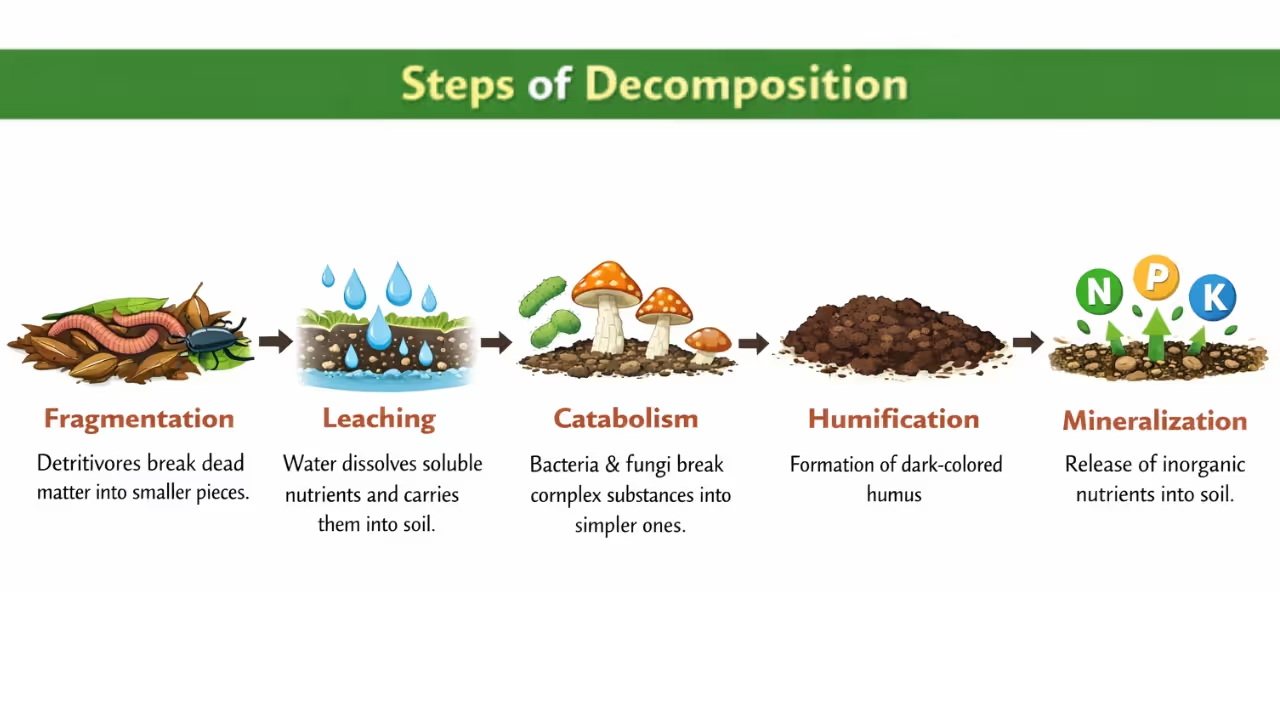
Steps of Decomposition
- Fragmentation – Detritivores like earthworms break dead matter into smaller pieces
- Leaching – Water dissolves soluble nutrients and carries them into soil
- Catabolism – Bacteria and fungi secrete enzymes to break complex substances into simpler ones
- Humification – Formation of dark-colored humus which is resistant to decomposition
- Mineralization – Release of inorganic nutrients into soil
Factors affecting decomposition:
- Temperature
- Moisture
- Oxygen availability
- Chemical composition of detritus
Types of Ecosystems
Ecosystems can be classified as:
- Natural Ecosystems
- Terrestrial: Forests, grasslands, deserts
- Aquatic: Freshwater (ponds, lakes, rivers), marine (oceans, estuaries)
- Artificial Ecosystems
- Human-made systems like crop fields, aquariums.
Ecological Succession
Ecological succession is the gradual and predictable change in species composition of a community over time.
- Primary Succession: Occurs in lifeless areas where there is no soil (e.g., bare rock, volcanic lava). Pioneer species like lichens initiate soil formation.
- Secondary Succession: Occurs in areas where a community has been disturbed but soil remains (e.g., abandoned farmland).
- Seral Stages: Intermediate stages between pioneer and climax communities.
- Climax Community: The final, stable community in equilibrium with the environment.
Ecosystem Services
Ecosystems provide invaluable services to humans and the planet, including:
- Provision of food, water, fuel, and medicines.
- Regulation of climate, floods, and disease.
- Nutrient cycling and soil formation.
- Recreational, cultural, and spiritual benefits.
Costanza et al. (1997) estimated the global value of ecosystem services to be in trillions of US dollars annually.
Human Impacts and Conservation
Human activities such as deforestation, pollution, overfishing, and urbanization disrupt ecosystem functioning. Conservation strategies involve sustainable resource use, habitat restoration, and protection of biodiversity.
Conclusion
That’s a complete wrap on the Ecosystem chapter. If you clearly understand energy flow, productivity, ecological pyramids and succession, this chapter becomes very scoring.
Focus on diagrams like pond ecosystems and decomposition steps - they are frequently asked. Hope this helped you revise better. Share it with a friend if it helps.
FAQs
Q1. What is a food web?
Ans. A food web is a network of interconnected food chains that shows the feeding relationships among organisms in an ecosystem.
Q2. What is an ecological pyramid?
Ans. Ecological pyramids are graphical representations showing relationships between organisms at different trophic levels in terms of number, biomass or energy.
Q3. What is primary productivity?
Ans. Primary productivity is the rate at which producers capture solar energy and convert it into chemical energy in the form of organic matter.
Q4. What is ecological succession?
Ans. Ecological succession is the gradual and natural process by which ecosystems change and develop over time, leading to the establishment of a stable community.
Q5. What are natural and artificial ecosystems?
Ans. Natural ecosystems include forests, grasslands, deserts, and oceans, while artificial ecosystems are human-made, such as gardens, crop fields and aquariums.












.svg)

