
.svg)
NCERT English Class 9 textbook PDF Kaveri is now available for free download - this is the new edition 2026-27 that replaces the earlier Beehive and Moments textbooks.
Students looking for the Class 9 new NCERT English book PDF 2026-27 can download the full book or individual chapter PDFs (Prose and Poetry) from the links below.
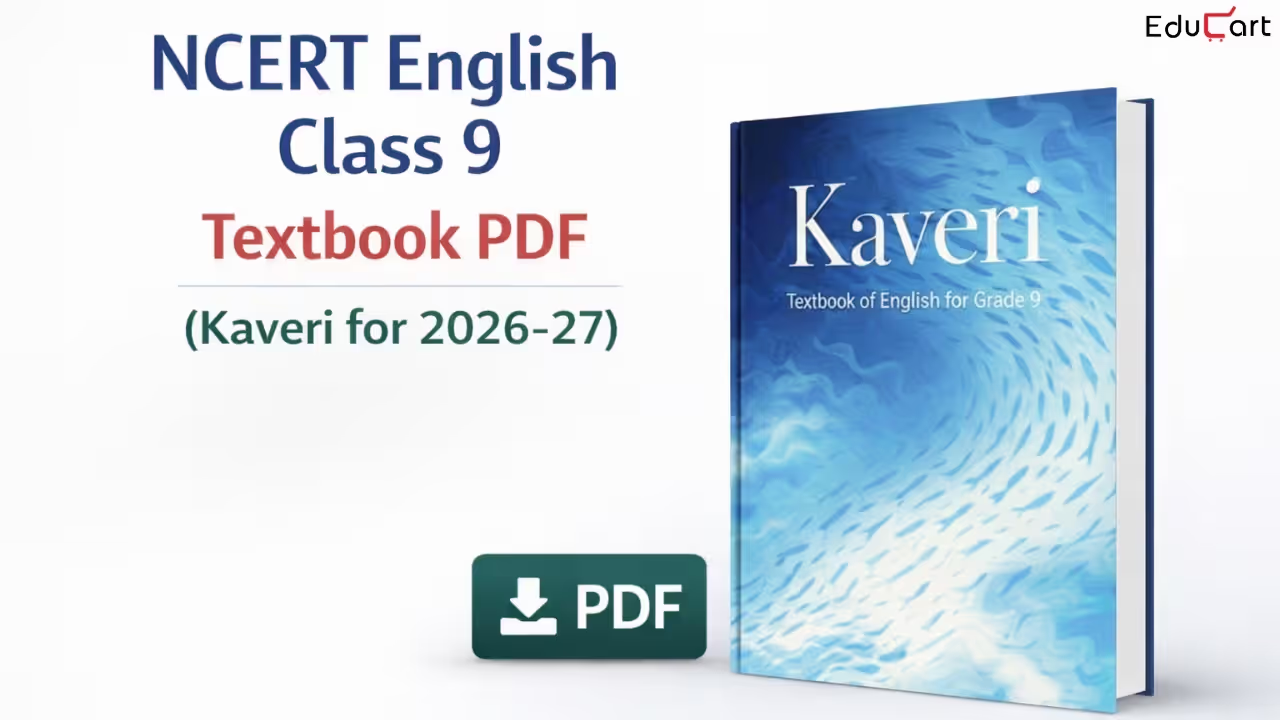
As mentioned, Class 9 students must now learn from Kaveri - the New NCERT English Book of 9th Class, aligned with the NCF-SE 2023 and NEP 2020.
NCERT English Class 9 Textbook PDF Kaveri - New Edition 2026-27 (Full Book)
NCERT Class 9 Kaveri (Prose) Ch-wise PDFs
NCERT Class 9 Kaveri (Poetry) Ch-wise PDFs
As per the draft syllabus document, purpose of these changes in 9th Class English textbook PDF is:
- to move away from rote learning and promote comprehension and communication, in students, along with critical analysis;
- to emphasise experiential learning and holistic assessment; and
- to integrate all aspects of English as a language, rather than subject.
Note: NCERT’s draft is about how students use language, not how they are assessed in exams. This will change their textbook to NCERT class 9 new English book named Kaveri.
Make the most of Kaveri with the NCERT Solutions for Class 9 English, covering every prose, poem, and grammar exercise.

Class 9 New NCERT English Book PDF 2026-27 - What is Kaveri?
The new Class 9 NCERT English book (Kaveri) PDF follows a competency-based approach for the 2026-27 session, with 8 prose chapters and 8 poetry chapters. This combined book focuses on practical knowledge over rote learning.
Beehive & Moments v/s Kaveri
If we compare, the biggest difference is not in the story but in how the chapter is structured for learning and assessment. Here are a few major differences.
- Number of Questions per Chapter (Question Design & Assessment)
**new additions
- Structural & Pedagogical Design
- Language and Skill Development
Note: QR codes in the new Kaveri book PDF currently don’t have any content uploaded on e-Pathshala or DIKSHA. But it is expected to be updated soon for virtual and interactive classrooms.
Prepare better with our Class 9 English NCERT Solutions (chapter-wise answers) to understand every concept clearly
NCERT English 2026-27 Expected Changes (Syllabus Analysis)
Here is a surface level analysis of the new draft syllabus with the respect to CBSE Class 9 English Syllabus 2026-27. This is also how the new NCERT class 9 English Kaveri book pdf is expected to be designed for the Literature section. Revise faster using Class 9 English chapter-wise notes & summaries designed for quick learning
What Does This Mean for Teachers?
Before students can understand this new change, teachers would have to accept a new classroom pedagogy altogether.
For teachers now using Kaveri, the classroom moves from “teaching the lesson and asking Qs” to “inviting cross Qs along with facilitating discussion and application.” The emphasis is less on reproducing answers and more on developing communication, listening, and reasoning skills.
And structurally, the shift is clear:
- Beehive focused on comprehension and language practice.
- Moments focused on reading and reflection.
- Kaveri will focus on integrated skills, critical thinking, and competency-based assessment.
Note: If Beehive trained students to answer, Kaveri will train them to interpret and express.
Class 9 English teachers can strengthen their classroom resources by requesting a free specimen books for teachers 2026-27, designed to complement the NCERT curriculum with exam-ready practice content.
Takeaway
After rationalisation in 2023-24 to support NEP 2020, this is the next big change in NCERT textbooks. The vision–to make the books centred on learning outcomes and skill-supporting. Start your preparation with CBSE Class 9 English previous year questions (PYQs) for real exam pattern
2026-27 onwards, the goal with the Class 9 NCERT English textbook has been to use the language in context and critical thinking instead of only preparation for final exams.
FAQs
1. What is the new NCERT Class 9 English textbook for 2026-27?
Ans. It's called Kaveri. NCERT has introduced this book in its draft syllabus (aligned with NEP 2020 and NCF-SE 2023). Unlike Beehive and Moments, which were two separate books, Kaveri is a single integrated textbook with 8 prose and 8 poetry chapters.
2. Is Beehive and Moments removed from Class 9 English in 2026-27?
Ans. Yes. For the 2026-27 session, Kaveri has replaced both Beehive and Moments.
3. What are the major changes in the 2026-27 NCERT Class 9 English syllabus?
Ans. 2 major changes - assessment i.e. practice Qs at the end of every chapter have been upgraded significantly; and Grammar usage is now integrated in all Literature & Writing questions. The bigger shift is pedagogical; Kaveri is designed on how students use English in context, not just how they perform in exams.
4. Will CBSE follow the new NCERT Class 9 English syllabus in 2026-27?
Ans. Yes, CBSE prescribes NCERT textbooks and it was a given that the syllabus will be revised as per the draft NCERT syllabus. And it has. CBSE Class 9 students will be studying from Kaveri from 2026-27 onwards.
5. Where can I download the NCERT Class 9 English books PDF?
Ans. The full Kaveri book PDF and chapter-wise PDFs are available on this page. Chapter-wise PDFs for Prose and Poetry are clearly mentioned as per the book index.





.svg)

