
.svg)

The chapter Our Environment is an essential part of Class 10 Science that connects biological concepts to environmental awareness. It helps students understand how living and non-living components interact within ecosystems and how human activities impact ecological balance.
By studying this chapter, students learn about ecosystems, food chains, food webs, energy flow, trophic levels, and waste management. It builds the foundation for environmental science and ecology studied in higher classes..
The Our Environment Important Questions for Class 10 are carefully prepared to help you:
- Strengthen conceptual understanding of ecosystems and environmental balance.
- Practise reasoning-based and short-answer questions.
- Prepare efficiently for CBSE exams with a focus on high-weightage topics.
PREMIUM EDUCART QUESTIONS
(Most Important Questions of this Chapter from our 📕)
In the table below, we have provided the links to "Our Environment Important questions" downloadable PDFs. Now you can download them without requiring a login.
Chapter 13 Our Environment: Important Questions
1. Answer the following questions based on the given information.
Hydrogen gas is an excellent fuel. It has a high calorific value and produces only water as the product of combustion. It is considered to be a potentially important, non-polluting energy source of the future. Hydrogen is labelled with different 'colours' based on the method by which it is produced, as given below:
- green hydrogen: manufacturing process does not produce carbon dioxide
- blue hydrogen: manufacturing process produces carbon dioxide but it is separated and stored
- grey hydrogen: manufacturing process produces carbon dioxide which is released into the air
(i) Hydrogen is labelled 'brown' if the manufacturing process releases both carbon dioxide and carbon monoxide to the air. In what way is the manufacturing process of brown hydrogen WORSE than that of grey hydrogen for the environment?
a. It releases into the atmosphere a gas that directly causes a greenhouse effect.
b. It releases into the atmosphere carbon which was stored for millions of years.
c. It releases into the atmosphere a gas that is toxic to human beings.
d. It releases into the atmosphere gases that cause acid rain.
Answer:
(a) It releases into the atmosphere a gas that directly causes a greenhouse effect.
Explanation:
The manufacturing process of brown hydrogen is worse than grey hydrogen for the environment because it releases both carbon dioxide (CO₂) and carbon monoxide (CO) into the atmosphere. While CO₂ is a well-known greenhouse gas that contributes to global warming, carbon monoxide (CO) is also a harmful gas. Carbon monoxide is toxic to humans and animals in high concentrations, but more importantly, it can also contribute to the greenhouse effect by indirectly increasing the presence of other greenhouse gases like methane.
Therefore, releasing both CO₂ and CO makes the environmental impact worse compared to grey hydrogen, where only CO₂ is released without the additional toxic or indirect effects of carbon monoxide.
(ii) What is the ratio of average amount of energy absorbed by producers to the average amount of energy absorbed by the primary consumers?
a. 1:2
b. 2:1
c. 1:10
d. 10:1
Answer:
(d) 10:1
Explanation:
In an ecosystem, energy flow follows the 10% law, which states that only about 10% of the energy available at one trophic level is transferred to the next trophic level, while the rest is lost as heat or used in metabolic processes.
Producers (plants, algae, etc.) absorb energy from the sun through photosynthesis, and primary consumers (herbivores) obtain their energy by consuming producers. On average, the energy transferred from producers to primary consumers is about 10% of the energy producers absorb. Therefore, the ratio of the energy absorbed by producers to that absorbed by primary consumers is approximately 10:1.
(iii) Which of the following describes the flow of energy and nutrients, respectively, through the ecosystem?
a. bidirectional and cyclic
b. unidirectional and cyclic
c. cyclic and bidirectional
d. cyclic and unidirectional
Answer: (b) unidirectional and cyclic
Explanation:
Energy flow in an ecosystem is unidirectional: Energy flows in a single direction, starting from the sun to producers (plants), then to consumers (herbivores, carnivores), and finally to decomposers. At each trophic level, a significant amount of energy is lost as heat, and it does not return to its original source.
Nutrient flow in an ecosystem is cyclic: Nutrients such as carbon, nitrogen, phosphorus, and others are recycled through the ecosystem in biogeochemical cycles. For example, carbon cycles between the atmosphere, organisms, and soil, while nitrogen cycles through nitrogen fixation, assimilation, and decomposition. Nutrients are reused within the ecosystem.
2. Lions have no known natural predators.
Based on energy transfer in a food chain, what could be the most likely reason for the above statement?
Answer: The most likely reason lions have no known natural predators is due to the low energy transfer across trophic levels in the food chain.
- Energy transfer inefficiency: According to the 10% law, only about 10% of the energy at one trophic level is transferred to the next. Lions are apex predators at the top of the food chain, meaning they are at the highest trophic level. By the time energy reaches this level, it is minimal, making it inefficient for another predator to evolve that exclusively hunts lions.
- Ecological balance: Lions are keystone species and play a vital role in maintaining the balance of their ecosystems. Predators at the apex level are typically not hunted by others because the energy dynamics of the ecosystem do not support another trophic level above them.
- Behavior and physical attributes: In addition to energy considerations, lions' physical dominance, strength, and social hunting behavior (in prides) make them formidable and unattractive prey, further ensuring their status as apex predators.
Thus, their position in the food chain and the principles of energy transfer explain why lions have no natural predators.
3. The stratosphere is very dry and rarely allows clouds to form. In the extreme cold of the polar winter, however, stratospheric clouds of different types may form. These clouds are called Polar Stratospheric Clouds (PSCs).
Scientists recently discovered that polar stratospheric clouds, long known to play an important role in Antarctic ozone destruction, are occurring with increasing frequency in the Arctic. These high-altitude clouds form only at very low temperatures help destroy ozone in two ways:
(1) They provide a surface which converts benign forms of chlorine into reactive, ozone-destroying forms, and
(2) they remove nitrogen compounds that moderate the destructive impact of chlorine. In recent years, the atmosphere above the Arctic has been colder than usual, and polar stratospheric clouds have lasted into the spring. As a result, ozone levels have been decreasing.(Information credit: NASA)
(a) How is ozone formed in the outer atmosphere?
(b) Ozone is being continuously destroyed due to extreme low temperatures. However, ozone formation is also a continuous process. Why is there a depletion in the ozone layer still?
(c) What can be a positive effect of global warming on the depletion of the ozone layer?
(d) How does ozone layer depletion impact human health?
Answer: (a) Ozone is formed in the stratosphere by a process known as the ozone-oxygen cycle. Ultraviolet (UV) radiation from the Sun splits molecular oxygen (O₂) into two oxygen atoms (O). These oxygen atoms then react with other oxygen molecules to form ozone (O₃). This reaction is represented as:
O2+UV radiation→2O
O+O2→O3
(b) Ozone formation is a continuous process, but the rate of ozone destruction has increased due to human activities and natural factors. Key reasons include:
- Polar Stratospheric Clouds (PSCs): These clouds facilitate chemical reactions that convert benign forms of chlorine (like CFCs and HCFCs) into reactive chlorine compounds, which destroy ozone.
- Chlorofluorocarbons (CFCs): Human-made chemicals released into the atmosphere break down under UV light, releasing chlorine atoms that destroy ozone molecules.
- Nitrogen compound removal: PSCs remove nitrogen compounds that would otherwise moderate the destructive effects of chlorine.
- Extreme low temperatures: Colder temperatures in the polar stratosphere increase the frequency and persistence of PSCs, accelerating ozone destruction.
Despite ongoing ozone formation, these accelerated destruction processes outweigh the natural replenishment rate, leading to net depletion.
(c) Global warming primarily affects the troposphere, causing it to warm, but it can lead to cooling in the stratosphere. Warmer surface temperatures increase greenhouse gas concentrations, which trap heat in the troposphere and reduce the amount reaching the stratosphere. Cooler stratospheric temperatures may decrease the frequency of Polar Stratospheric Clouds (PSCs), thereby reducing the conditions that promote ozone destruction.
(d) Ozone layer depletion allows more harmful UV-B radiation to reach the Earth's surface, leading to:
- Increased risk of skin cancer, particularly melanoma and non-melanoma types.
- Eye damage, including cataracts and photokeratitis (snow blindness).
- Weakened immune system, reducing the body’s ability to fight infections and diseases.
- Harmful effects on ecosystems, indirectly affecting human health through impacts on agriculture, marine life, and biodiversity.
4. Answer the following questions about transfer of materials in the ecosystem.
(a) Mention TWO ways by which energy is lost from the trophic levels in the ecosystem.
(b) A lot of harmful chemicals enter our body through different sources like food. Since human beings are at the top of the food chain/trophic structure, maximum concentration of such chemicals is found in human beings. What is this phenomenon known as?
Answer:
(a)
- Heat loss during metabolic activities: A significant amount of energy is lost as heat during cellular respiration and other metabolic processes. This energy is used for maintaining body temperature, movement, and other physiological activities.
- Energy loss in undigested material and excretion: Not all energy from consumed food is assimilated by organisms. A portion of the energy is lost in undigested materials (e.g., plant fibers) and through excretory products like feces and urine.
(b) This phenomenon is known as biomagnification (or biological magnification).
Biomagnification refers to the progressive increase in the concentration of harmful chemicals (such as pesticides, heavy metals, or pollutants like DDT and mercury) as they move up the food chain. Since human beings occupy the top trophic level, they accumulate the highest concentration of these toxic substances, leading to potential health risks.

5. Arrange the four objects given above according to the time they take to get biodegraded (LEAST time TO MOST time).
Answer: Living organisms rely on numerous essential resources, many of which eventually become waste after serving their purpose. This waste can be classified into organic, biodegradable, and non-biodegradable categories. Solid waste can be segregated accordingly, with recyclable and reusable materials undergoing appropriate processes. Waste that holds no further value is disposed of and managed by municipal authorities. Globally, over 380 million tonnes of plastic are produced annually, a significant portion of which may become pollutants, infiltrating the environment and posing a serious global ecological threat. On the other hand, materials like bone, being biodegradable, decompose relatively quickly.
Bone→Paper sheet→Metal can→Plastic bottle
6. Answer the two following questions based on the information given below.
Shown here is the extent to which two different animals can see in either direction without turning their heads. In animal 1, the eyes are placed towards the front of the head and in animal 2, the eyes are placed on either side of the head.
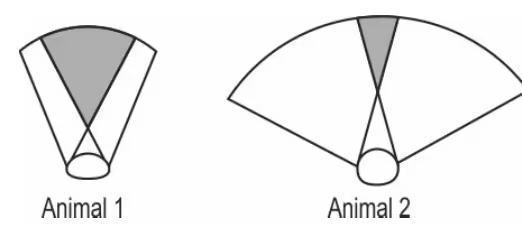
Since the placement of eyes in the two animals is different, their vision is also slightly different.
In the figures above, the grey part represents the parts that can be seen by both eyes at a time, whereas the white parts represent those parts that can be seen only by one eye at a time.
Animal 2 can see a broader area at any time compared to animal 1. Animal 1 can distinguish depths better compared to animal 2.
Based on this, which of the two animals is most likely to be a predator and why?
Answer: A food web represents the interconnected food chains within a single ecosystem. Every organism in the ecosystem participates in multiple food chains, with each chain illustrating a potential pathway for the flow of energy and nutrients. Predators typically have forward-facing eyes, enabling them to focus on and target prey effectively. In contrast, prey animals usually have eyes positioned on the sides of their skulls, providing a broader field of vision to detect predators. Based on this distinction, animals in the food web can be categorized into two groups:
Group 1 (Carnivores): Lion, wild cat, jackal, kite, and owl.
Group 2 (Herbivores): Mouse, goat, and rabbit.
7. Observe the following food web. Classify the animals into two groups - one that would need to have vision as Animal 1 and another as Animal 2 in the diagram above.
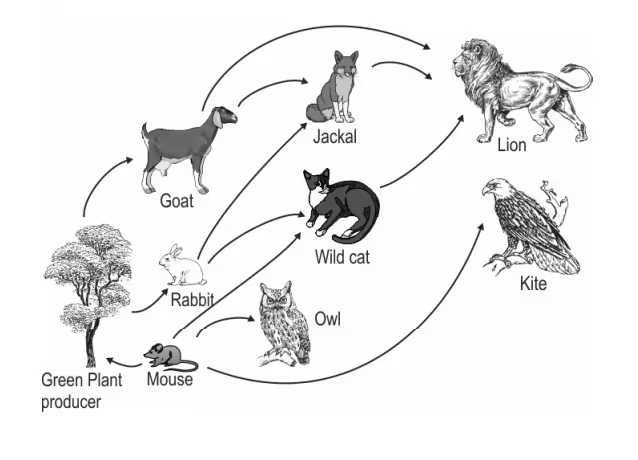
Answer: To classify the animals based on their need for vision in the given food web:
Animal 1: Vision-dependent predators
These animals rely heavily on their vision for hunting and capturing prey.
- Lion
- Kite
- Owl
- Wild cat
Animal 2: Less vision-dependent animals (herbivores/prey)
These animals rely more on other senses or are prey that don't need sharp vision for survival.
- Goat
- Rabbit
- Mouse
Some More Important Question Answers of Class 10 Our Environment
Q1. What is the environment? Explain its biotic and abiotic components with examples.
Ans. The environment is everything that surrounds an organism - living and non-living - that affects its life. It has two main parts:
- Biotic components (living): All living organisms in an area - plants, animals, fungi, bacteria, protists. Examples: trees, grasses, insects, birds, humans, microbes.
- Abiotic components (non-living): Physical and chemical factors such as sunlight, temperature, water, soil, air, minerals. Examples: sunlight (energy source), water (for metabolism), soil (supports plants), temperature (controls metabolic rates).
These components interact continuously. For example, plants (biotic) use sunlight (abiotic) for photosynthesis. Microbes (biotic) decompose dead matter and release nutrients into soil (abiotic).
Q2. What is an ecosystem? Describe its structure and functions.
Ans. An ecosystem is a functional unit formed by the interaction of living organisms (community) with their physical environment. It can be as small as a pond or as large as a forest.
Structure (main parts):
- Producers: Green plants that make their own food by photosynthesis (convert solar energy to chemical energy).
- Consumers: Organisms that eat other organisms. They are classified as herbivores (primary consumers), carnivores (secondary/tertiary consumers), and omnivores.
- Decomposers: Bacteria and fungi that break down dead organic matter and recycle nutrients.
Functions (key processes):
- Energy flow: Sun → producers → consumers → decomposers (one-way flow; energy lost as heat).
- Nutrient cycling: Elements like carbon, nitrogen, phosphorus move through biotic and abiotic components and are recycled.
- Population regulation: Predation, competition, disease control population sizes.
- Homeostasis: Ecosystem processes maintain conditions (soil formation, water purification).
Q3. Explain a food chain and a food web with examples.
Ans.
- Food chain: A linear sequence of organisms where each is eaten by the next. Example: Grass → Grasshopper → Frog → Snake → Hawk.
- Food web: Many food chains linked together showing multiple feeding relationships in an ecosystem. It is more realistic because most organisms eat several kinds of food.
Why food webs are important: They show how energy and matter move in an ecosystem; if one species is removed, effects ripple through the web.
Q4. What is trophic level? Explain primary producers, consumers and decomposers.
Ans. A trophic level is a step in the food chain. Major levels:
- Trophic level 1 - Producers: Plants and algae that synthesize food from sunlight and CO2.
- Trophic level 2 - Primary consumers: Herbivores that eat producers (e.g., rabbits, caterpillars).
- Trophic level 3 - Secondary consumers: Carnivores that eat herbivores (e.g., frogs, small snakes).
- Higher trophic levels: Tertiary/quaternary consumers larger predators (e.g., eagles).
- Decomposers: Break down dead organic matter and release nutrients back to producers (they are not always placed in trophic levels, but they connect all levels).
Energy decreases from one trophic level to the next, so fewer organisms can be supported at higher levels.
Q5. Explain the ecological pyramids: pyramid of numbers, pyramid of biomass and pyramid of energy.
Ans. An ecological pyramid graphically represents the number, biomass or energy at each trophic level.
- Pyramid of numbers: Shows the number of organisms at each level. Example: Many grass plants → fewer grasshoppers → fewer frogs → even fewer snakes. Can be inverted in some cases (e.g., one tree supports many herbivores).
- Pyramid of biomass: Shows the total mass of living material at each level (usually per unit area). Typically upright: high biomass of producers, low biomass of top predators.
- Pyramid of energy: Shows the energy stored at each level per unit time (kJ m⁻² yr⁻¹). Always upright because energy is lost (as heat) at each transfer — only ~10% (rule-of-thumb) of energy passes to the next level (this is the 10% law; actual values vary).
Q6. What are decomposers and why are they important?
Ans. Decomposers are organisms (mainly bacteria and fungi) that break down dead plants and animals and waste products into simpler inorganic substances (minerals). They:
- Recycle nutrients (nitrogen, carbon, phosphorus) to soil and water.
- Clean ecosystems by decomposing dead matter.
- Help maintain soil fertility, enabling producers to grow.
Without decomposers, waste and dead bodies would accumulate, and nutrient cycles would stop.
Q7. Describe the carbon cycle. Explain how human activities alter it.
Ans. Carbon cycle (steps):
- Photosynthesis: Plants take up CO₂ from air and convert it into carbohydrates (glucose).
- Consumption: Animals eat plants and incorporate carbon into their bodies.
- Respiration: Plants and animals release CO₂ back into the atmosphere.
- Decomposition: Decomposers break dead matter, returning CO₂ to air/soil.
- Fossilization: Over geological time, dead biomass can become fossil fuels (coal, oil, natural gas).
- Combustion: Burning fossil fuels releases stored carbon as CO₂.
- Ocean exchange: CO₂ dissolves in ocean water; marine organisms use dissolved CO₂ to form shells (carbonates).
Human impacts:
- Burning fossil fuels and deforestation increase atmospheric CO₂ - enhances greenhouse effect → global warming.
- Conversion of forests to agriculture reduces carbon sinks (less CO₂ uptake).
Q8. Explain the nitrogen cycle with steps: nitrogen fixation, nitrification, assimilation, ammonification and denitrification.
Ans. Nitrogen is essential for proteins and nucleic acids. Its cycle:
- Atmospheric N₂ (78%) is inert and not usable by most organisms.
- Nitrogen fixation: Converts N₂ to ammonia (NH₃) or ammonium (NH₄⁺).
- Biological fixation: by bacteria (Rhizobium in legume root nodules; free-living Azotobacter).
- Physical fixation: lightning can convert N₂ to nitrates.
- Industrial fixation: Haber-Bosch process makes fertilizers (NH₃).
- Nitrification: Ammonia → nitrite (NO₂⁻) by Nitrosomonas → nitrate (NO₃⁻) by Nitrobacter. Nitrates are soluble and available to plants.
- Assimilation: Plants take up nitrates and use nitrogen to build amino acids and proteins. Animals obtain nitrogen by eating plants.
- Ammonification (decay): Decomposers convert organic nitrogen (from dead organisms/waste) back to ammonia.
- Denitrification: Denitrifying bacteria convert nitrates back to N₂ under anaerobic conditions, releasing it to the atmosphere.
Q9. Describe the water cycle with its major processes.
Ans. Water cycle (hydrological cycle):
- Evaporation: Water from oceans, lakes and rivers becomes water vapor.
- Transpiration: Plants release water vapor from leaves.
- Condensation: Water vapor cools and forms clouds.
- Precipitation: Water returns as rain, snow, sleet or hail.
- Infiltration & Percolation: Water soaks into the ground, recharging groundwater.
- Runoff: Surface water flows back to rivers, lakes, and eventually oceans.
This cycle is powered by solar energy and is crucial for distributing fresh water.
Q10. What is biodiversity? Explain its types and importance.
Ans. Biodiversity - variety of life at three levels:
- Genetic diversity: Variation of genes within a species (different dog breeds).
- Species diversity: Number of different species in an area (forest vs. desert).
- Ecosystem diversity: Variety of ecosystems (forests, wetlands, grasslands, coral reefs).
Importance:
- Ecological stability: Diverse systems recover better from disturbances.
- Ecosystem services: Pollination, water purification, nutrient cycling.
- Food security and medicine: Genetic variety helps crop improvement; many medicines come from biological sources.
- Cultural & aesthetic value.
Threats: Habitat loss, pollution, invasive species, over-exploitation, climate change.
Q11. What is deforestation? Explain its effects and measures to reduce it.
Ans. Deforestation = large-scale removal of forests for agriculture, timber, urbanization or mining.
Effects:
- Loss of biodiversity (species extinction).
- Soil erosion, reduced fertility.
- Disruption of water cycle, reduced rainfall locally.
- Increased CO₂ in atmosphere → climate change.
- Disturbance of indigenous communities.
Measures to reduce:
- Afforestation and reforestation (planting trees).
- Sustainable forest management (controlled logging).
- Promoting agroforestry and community forestry.
- Strict laws and protected areas.
- Encourage alternatives to wood fuel (LPG, biogas).
Q12. What is eutrophication? Describe its causes, process and effects.
Ans. Eutrophication - enrichment of water bodies with nutrients (mainly nitrates and phosphates) leading to excessive growth of algae and aquatic plants.
Causes: Runoff of fertilizers, sewage, detergents, animal waste.
Process:
- Nutrient input → algal bloom (rapid algae growth).
- Algae cover surface → reduce light penetration → submerged plants die.
- When algae die, decomposers (bacteria) break them down, using up dissolved oxygen.
- Dissolved oxygen (DO) falls → fish and other aerobic organisms die → "dead zone".
Effects: Fish kills, loss of biodiversity, foul smells, unusable water for drinking and recreation.
Prevention: Proper fertilizer use, sewage treatment, buffer strips near water bodies, banning phosphate in detergents.
Q13. Define pollution. Describe types of pollution (air, water, soil, noise) with sources and effects.
Ans. Pollution - introduction of harmful substances or energy into the environment causing adverse effects.
Air pollution:
- Sources: Vehicle emissions (CO, NOx), industrial smoke (SO₂, particulates), burning fossil fuels, crop burning.
- Effects: Respiratory diseases, acid rain (SO₂ + NOx → acids), smog, reduced visibility, global warming (greenhouse gases).
Water pollution:
- Sources: Industrial effluents, sewage, agricultural runoff (pesticides, fertilizers), oil spills.
- Effects: Eutrophication, unsafe drinking water, harm to aquatic life, bioaccumulation of toxins.
Soil pollution:
- Sources: Dumping of industrial waste, pesticides/herbicides, heavy metals.
- Effects: Loss of soil fertility, toxic crops, contamination of groundwater.
Noise pollution:
- Sources: Traffic, industry, loudspeakers, construction.
- Effects: Hearing loss, stress, sleep disturbance, reduced productivity.
Simple control measures: Emission standards, wastewater treatment, solid waste management, noise regulations, renewable energy.
Q14. Explain the greenhouse effect and global warming. List greenhouse gases and consequences of global warming.
Ans. Greenhouse effect: Natural process where certain atmospheric gases (greenhouse gases) trap part of the outgoing infrared radiation from Earth, keeping the planet warm enough to sustain life.
Greenhouse gases: Carbon dioxide (CO₂), methane (CH₄), nitrous oxide (N₂O), water vapor (H₂O), chlorofluorocarbons (CFCs).
How it works (simplified):
- Sunlight reaches Earth; the surface absorbs energy and warms.
- Earth emits infrared radiation; greenhouse gases absorb and re-emit some of it back to surface → warming.
Global warming: Enhanced greenhouse effect due to increased concentrations of greenhouse gases (mainly from burning fossil fuels, deforestation, agriculture), leading to rise in Earth’s average temperature.
Consequences:
- Melting glaciers and ice caps → sea level rise → coastal flooding.
- Changes in weather patterns → more extreme storms, droughts.
- Loss of habitats → species extinction.
- Agriculture and water resources are affected.
Mitigation: Reducing emissions (renewables, energy efficiency), afforestation, carbon sequestration, international agreements (e.g., Paris Agreement).
Q15. What is ozone layer depletion? What causes it and what are its effects?
Ans. Ozone layer in stratosphere (15–30 km altitude) contains O₃ molecules that absorb harmful ultraviolet (UV-B) radiation.
Depletion causes: Chlorofluorocarbons (CFCs), halons, and other ozone-depleting substances release chlorine and bromine atoms in stratosphere which catalytically break O₃ into O₂. A single Cl atom can destroy many O₃ molecules.
Effects of ozone depletion:
- Increased UV-B at surface → higher skin cancer and cataracts in humans.
- Damage to phytoplankton (base of aquatic food webs) and crops.
- Altered climate patterns.
Control: Montreal Protocol phased out production of CFCs; alternatives (HCFC phased out, HFCs controlled) and safe refrigeration practices.
Q16. Describe the treatment stages of sewage (sewage treatment plant - STP) and why treatment is needed.
Ans. Why treat sewage? Raw sewage contains pathogens, organic matter, nutrients and chemicals that pollute water and cause disease and eutrophication.
Main stages:
- Preliminary and Primary treatment:
- Screening to remove large solids (rags, plastics).
- Grit removal (sand, stones).
- Primary sedimentation: settleable organic solids sink (sludge); oil and grease float (scum) and are removed.
- Secondary (biological) treatment:
- Uses aerobic microorganisms to decompose dissolved organic matter (BOD reduction).
- Methods: Activated sludge process (air is pumped into aeration tanks with microbes), trickling filters.
- After aeration, a secondary clarifier settles microbial biomass (sludge); some biomass recycled.
- Tertiary (advanced) treatment:
- Removes remaining nutrients (nitrogen, phosphorus), pathogens, and chemicals.
- Methods: filtration, disinfection (chlorination/UV), nutrient removal processes.
- Sludge treatment and disposal:
- Sludge is thickened, stabilized (anaerobic digestion producing biogas), dried and disposed of or used as manure after treatment.
Q17. Explain composting and vermicomposting. How do they help solid waste management?
Ans. Composting: Controlled aerobic decomposition of organic waste (kitchen waste, garden waste) by microorganisms producing humus (stable organic matter). Steps: collection → shredding → piling (windrows) or bins → maintain moisture and aeration → decomposition → mature compost used as soil conditioner.
Vermicomposting: Uses earthworms (e.g., Eisenia fetida) to convert organic waste into nutrient-rich worm castings. It is faster and produces high-quality compost.
Benefits:
- Reduces volume of organic waste in landfills.
- Producing natural fertilizer reduces the need for chemical fertilizers.
- Reduces methane emissions from anaerobic decomposition in landfills.
Q18. What is sustainable development? Give examples of sustainable practices.
Ans. Sustainable development meets present needs without compromising future generations’ ability to meet their needs balancing ecological, economic and social goals.
Examples and practices:
- Rainwater harvesting: Collect and store rainwater for local use and recharge groundwater.
- Afforestation and agroforestry: Combine trees with crops/livestock to improve soil and livelihoods.
- Integrated Pest Management (IPM): Use biological controls and cultural practices to reduce chemical pesticide use.
- Renewable energy: Solar, wind and small hydro replacing fossil fuels.
- Energy efficiency: LED lighting, efficient appliances.
- Solid waste minimization: Reduce, reuse, recycle.
Q19. How does acid rain form and what are its environmental effects?
Ans. Formation: Burning fossil fuels (coal, oil) emits sulfur dioxide (SO₂) and nitrogen oxides (NOx). These gases react with water vapor and oxygen in the atmosphere to form sulfuric acid (H₂SO₄) and nitric acid (HNO₃). These acids fall as acid rain.
Effects:
- Lowers pH of soil and water bodies → harms plants, fish and soil microbes.
- Corrodes buildings, monuments and metal structures.
- Damages forest health, especially at high altitudes.
Control measures: Reduce SO₂/NOx emissions (flue gas desulfurization, catalytic converters, cleaner fuels), and international emission standards.
Q20. What practical steps can individuals take to protect the environment?
Ans. Individual actions add up. Practical steps:
- Reduce, Reuse, Recycle: Buy less, reuse items, segregate waste for recycling.
- Save water: Fix leaks, use water-efficient fixtures, reuse gray water where safe.
- Energy conservation: Turn off lights/appliances when not used; use LED bulbs.
- Sustainable transport: Walk, cycle, use public transport or carpool.
- Plant trees: Trees sequester CO₂, conserve soil, and support biodiversity.
- Avoid single-use plastics: Use cloth bags, steel/water bottles.
- Use eco-friendly products: Biodegradable detergents, organic farming products.
- Support policies and awareness: Follow guidelines, participate in local clean-ups, vote for environment-friendly policies.
Video Lecture: Must-watch for Quick Revision
Extra Practice Questions!
Q1. Explain how an oil spill affects marine ecosystems and outline clean-up strategies.
Q2. Describe how BOD (Biochemical Oxygen Demand) is used to assess water pollution and why high BOD is harmful.
Q3. Draw and explain a detailed diagram of the carbon cycle including the role of oceans.
Q4. Explain integrated pest management (IPM) and its benefits compared to chemical pesticides.
Q5. Describe mangrove ecosystems and their ecological importance for coastal protection.
Q6. Explain how urbanization affects local climate and biodiversity (urban heat island effect).
Q7. Describe methods to prevent soil erosion in hilly agricultural areas.
Q8. What is biomagnification? Give an example involving mercury or DDT.
Q9. Explain the concept of a ‘protected area’ (national park, wildlife sanctuary, biosphere reserve) and their differences.
Q10. Discuss how climate change could affect agriculture and food security in your region.
How to Ace These Class 10 Our Environment Important Questions
This chapter is best learned through conceptual clarity and real-life understanding rather than memorization. Follow these steps for effective preparation:
Step 1: Understand the Concept of Ecosystem
Start by learning what an ecosystem is and how its biotic and abiotic components interact. Study examples of natural and artificial ecosystems, such as forests, ponds, and crop fields.
Step 2: Learn Food Chains and Food Webs
Understand how energy flows through different organisms in an ecosystem. Practise drawing food chains and food webs showing producers, consumers, and decomposers. Identify the roles of herbivores, carnivores, and omnivores in maintaining balance.
Step 3: Study Energy Flow in the Ecosystem
Learn about the 10% law of energy transfer, which explains that only 10% of energy is passed from one trophic level to the next. Practise tracing energy flow through different levels in food chains.
Step 4: Understand Trophic Levels
Know the four main trophic levels - producers, primary consumers, secondary consumers, and decomposers. Remember that energy decreases as we move up the trophic levels.
Step 5: Revise Decomposition and Waste Management
Study the role of decomposers in recycling nutrients back into the environment. Learn the difference between biodegradable and non-biodegradable waste and how improper disposal affects the environment.
Step 6: Learn About Ozone Layer and Its Depletion
Understand the importance of the ozone layer in protecting life on Earth and how harmful chemicals like CFCs lead to its depletion. Revise measures to reduce pollution and preserve the ozone layer.
Step 7: Relate Concepts to Daily Life
Connect classroom concepts to real-life examples such as waste segregation, composting, and reducing plastic use. This helps strengthen understanding and retention.
Tips for Preparing Chapter 13 CBSE Class 10
To prepare effectively for Our Environment, it is important to focus on understanding concepts, practicing diagrams, and solving application-based questions. Below are detailed tips to make sure of thorough preparation:
Understand Ecosystem Dynamics
- Familiarise yourself with the structure and functions of ecosystems.
- Focus on the roles of producers, consumers, and decomposers and how they interact to maintain ecological balance.
- Study examples of food chains (e.g., Grass → Grasshopper → Frog → Snake) and food webs to hold firmly the complexity of ecosystems.
Focus on Energy Flow
- Learn the 10% Law of energy transfer between trophic levels.
- Understand why energy diminishes as it moves from producers to higher-level consumers, limiting the length of food chains.
Differentiate Substances
Clearly distinguish between:
- Biodegradable Substances: Decompose naturally (e.g., food scraps, paper).
- Non-Biodegradable Substances: Persist in the environment and cause pollution (e.g., plastics, metals).
Practice Diagrams
Draw and label key diagrams such as:
- Food chains and food webs.
- Energy flow in ecosystems.
Learn accuracy and neatness in your diagrams, as they often fetch easy marks in exams.
Study Environmental Issues
Focus on pressing environmental problems, such as:
- Ozone Layer Depletion: Causes (CFCs), effects (UV radiation exposure), and preventive measures (reducing CFC use).
- Waste Management: Importance of waste segregation into biodegradable and non-biodegradable categories.
learn sustainable practices like the 3Rs (Reduce, Reuse, Recycle) and their significance in minimising environmental damage.
FAQs
Q1. How many marks are usually allotted to this chapter in Class 10 board exams?
Ans. This chapter generally carries 5 to 6 marks, often through reasoning-based or short-answer questions.
Q2. Which topics are most important for exams?
Ans. Ecosystems, food chains, food webs, energy flow, 10% law, and differences between biodegradable and non-biodegradable waste are the most important topics.
Q3. Are diagrams compulsory in this chapter?
Ans. They are not always compulsory, but drawing diagrams like food chains and energy flow can help you score full marks when relevant.
Q4. How can I easily remember the 10% law?
Ans. Remember that each trophic level receives only 10% of the energy from the previous one. For example, if plants receive 1000 J, herbivores get 100 J, and carnivores get 10 J.
Q5. How can I prepare for reasoning-based questions in this chapter?
Ans. Focus on understanding how human activities disturb ecosystems. Link your answers to concepts like deforestation, pollution, and waste management instead of memorising examples.










.svg)

