Question:
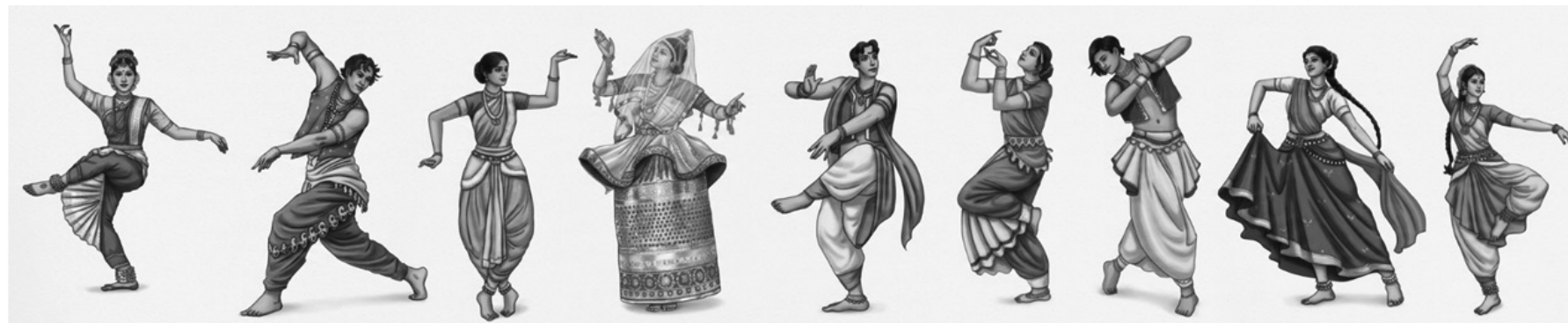
Look at the picture given below. Carefully observe the various poses of classical and folk dances of India. Can you identify which joints are involved? Also, what type of movement each joint allows?
[Pg. No. 40]
Answer:
Verified
| Joint | Location | Type of Movement Allowed |
|---|---|---|
| Ball-and-socket joint | Shoulder and hip | Movement in all directions, including rotation |
| Hinge joint | Elbow and knee | Bending and straightening in one plane |
| Pivot joint | Neck | Rotation of the head from side to side |
| Gliding joint | Wrist and ankle | Small sliding movements and provide flexibility |
In the dance poses shown in the given image, the shoulders and hips allow the arms and legs to move in various directions, the elbows and knees help in bending and stretching, and the neck allows the head to turn. The coordinated action of these joints enables dancers to perform different classical and folk dance movements.