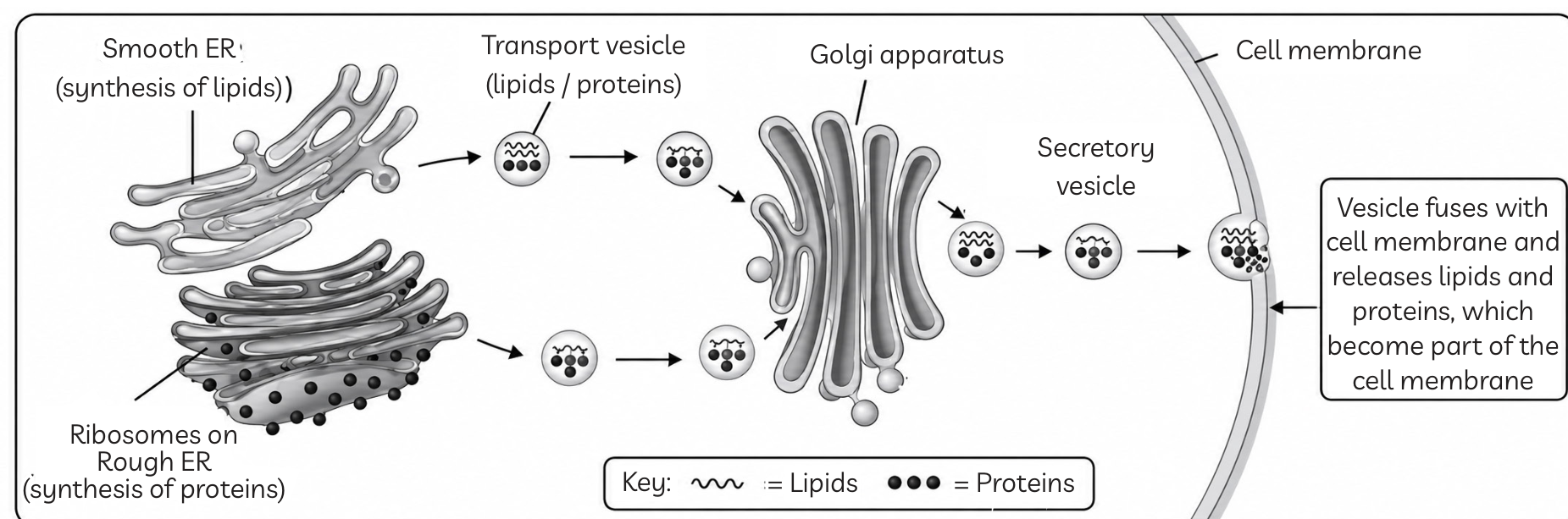
The cell membrane of a cell is made up of proteins and lipids. Which cell organelles help in the synthesis of cell membrane? Write the path of these compounds from their site of synthesis to the cell membrane and show this through a labelled diagram.
The cell membrane is mainly composed of proteins and lipids (phospholipids). Carbohydrates and steroids (such as cholesterol) are also present in minute quantities.
Organelles involved in synthesis:
Ribosomes: Ribosomes (free in the cytoplasm or attached to the RER) are the sites of protein synthesis. The proteins destined for the cell membrane are synthesised on ribosomes attached to the Rough Endoplasmic Reticulum (RER).
Rough Endoplasmic Reticulum (RER): Membrane proteins are synthesised by ribosomes on the RER surface and are then processed and transported within the RER membrane or lumen.
Smooth Endoplasmic Reticulum (SER): Lipids (phospholipids) and steroids (hormones) required for the cell membrane bilayer are synthesised in the SER.
Golgi Apparatus: The Golgi apparatus receives proteins and lipids from the ER via vesicles. It modifies, sorts, and packages them into vesicles for delivery to the cell membrane.
Pathway from synthesis to cell membrane: